



 (726) 233-6044
Bottom line upfront: If your AC just stopped, check the thermostat setting, the air filter, and the breaker panel first — those three account for a large share of after-hours calls for emergency AC repair in Bulverde TX. Shut the system off immediately if you smell burning, see smoke or sparks, or find water pooling indoors. Then call for service and focus on keeping your household cool while you wait.
It is late, the house is climbing past 85 degrees, and the air conditioner has quit. That is a bad night in the Hill Country, and it is worth being clear about something up front: this is not only a comfort problem. In a Texas summer, a house without cooling gets dangerous for some people faster than most homeowners expect, making emergency AC repair in Bulverde TX a critical service.
So this guide covers three things in order — what to check right now, when to stop and shut the system off, and how to keep everyone safe while you wait for a technician.
The First Ten Minutes: Five Things to Check
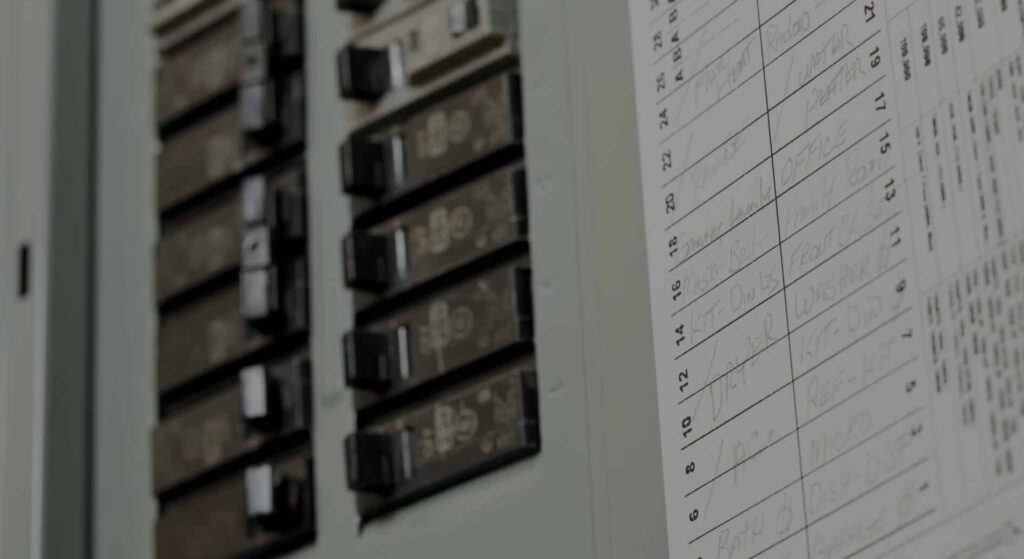
If you’re considering your options, seeking emergency AC repair in Bulverde TX can provide peace of mind and swift assistance.
Work through these five checks in order before calling. A meaningful share of after-hours calls turn out to be a tripped breaker, a thermostat that got switched, or a filter so clogged the system iced over. Each takes under two minutes, and if you do need a technician, knowing the answers gets you help faster.
- Check the thermostat. Confirm it is set to COOL, not FAN or OFF, and that the setpoint is below the current room temperature. Replace the batteries if the screen is blank or dim — a dying thermostat can shut down a perfectly healthy system.
- Check the breaker panel. Look for the AC or air handler breaker sitting between ON and OFF. Flip it fully off, then back on — once. If it trips again, leave it off.
- Pull the air filter. If you cannot see light through it, that is likely your cause. A clogged filter can freeze the indoor coil, which then blocks airflow completely.
- Look at the outdoor unit. Is the large fan spinning? A humming unit with a motionless fan usually means a failed capacitor. Shut the system off at the thermostat if you see this.
- Check the copper line and the indoor unit. Ice on the refrigerant line means the system needs to be turned off and thawed. Water pooling around the indoor unit means a blocked condensate drain.
⚠ Never reset a breaker twice. A breaker that trips repeatedly is doing its job — telling you there is an electrical fault downstream. Forcing it back on can destroy the compressor or start a fire. Leave it off and call.
When to Shut the System Off Immediately
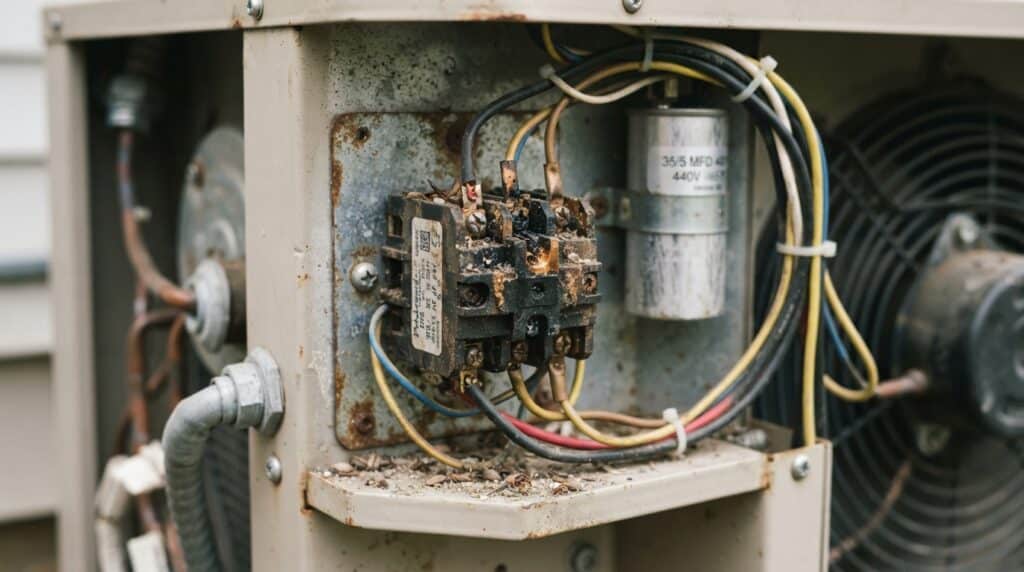
Turn the system off at the thermostat and the breaker if you notice burning smells, smoke or sparks, a strong chemical odor near the indoor unit, grinding or screeching noises, water actively leaking indoors, or a breaker that trips more than once. These are not wait-until-morning problems.
Running a system through any of these turns a repair into a replacement, and in the electrical cases it is a genuine safety hazard rather than an inconvenience.
Shut it off now
- Burning smell, smoke, or visible sparks from either unit
- Strong chemical odor near the indoor unit — possible refrigerant leak
- Grinding, screeching, or loud banging
- Water pooling or dripping from the indoor unit or ceiling
- Breaker trips again after one reset
- Outdoor unit humming with the fan not turning
A refrigerant leak in particular is not something to work around. Refrigerant handling requires EPA Section 608 certification, and a chemical smell indoors should be assessed rather than scheduled for later in the week. Honeycomb handles refrigerant leak repair as a distinct service for exactly this reason.
Staying Safe in the Heat While You Wait
Move to the coolest part of the house, drink water before you feel thirsty, wear loose lightweight clothing, avoid using the oven, and check on older adults, young children, and anyone with a health condition. If the heat index is in the high 90s or above, a fan may make things worse rather than better.
That last point surprises people, so it is worth stating plainly. The instinct when the AC dies is to point every fan in the house at yourself. But the National Weather Service advises using a fan when heat index values are below the high 90s — above that, blowing hot air across skin can raise body temperature rather than lower it. In a Bulverde August, indoor conditions can reach that range within a few hours of a system failure.
106°F in 10–15 minutes — how fast body temperature can climb once heat stroke sets in, according to CDC and NIOSH. Heat stroke occurs when the body can no longer regulate its own temperature and the sweating mechanism fails. Source: CDC / NIOSH
What to do while you wait
- Move everyone to the lowest and shadiest part of the house — heat rises, so upstairs will be worst
- Drink water regularly, before you feel thirsty
- Take a cool shower or bath, or apply cool damp cloths
- Wear loose, lightweight, light-colored clothing
- Close blinds and curtains on sun-facing windows
- Skip the oven and stove — they add real heat to the house
- Check on older adults, infants, and anyone with a chronic health condition
- Make sure pets have cool water and shade
- If the house is not holding a safe temperature, relocate to a cooler building for a few hours
Ready.gov recommends finding a cooling center when air conditioning is not available at home. In Comal County, check with county or City of Bulverde public information for current locations during heat events, or plan on a public library, shopping center, or a family member’s home for the hottest part of the day.
Know the difference between heat exhaustion and heat stroke
Heat exhaustion — heavy sweating; cool, pale, clammy skin; fast weak pulse; muscle cramps; dizziness, headache, nausea, or fainting. Move the person somewhere cooler, loosen clothing, and give sips of water. Seek medical attention if symptoms worsen, if they vomit, or if symptoms last longer than an hour.
Heat stroke — throbbing headache, confusion, hot red dry or damp skin, rapid strong pulse, body temperature above 103°F, or loss of consciousness. This is a medical emergency. Call 911 immediately. Move the person to a cooler place and cool them with cold wet cloths or ice packs on the head, neck, armpits, and groin. Do not give fluids to someone who is unconscious or confused.
If you are dealing with symptoms like these, call 911 first. An HVAC company is not the right call in that moment.
Source: National Weather Service, Ready.gov, and CDC.
Is This Actually an Emergency, or Can It Wait?
Treat it as an emergency if there is a safety hazard, if water is actively causing damage, or if someone in the home is at higher risk from heat. A system that is cooling poorly but still running, on a mild night, with healthy adults at home, can usually wait for a scheduled appointment — and you will likely pay less.
Being honest about this matters, because after-hours calls are priced differently. Here is how we would sort it if it were our own house:
| Situation | Call now or wait? | Why |
|---|---|---|
| Burning smell, smoke, sparks | Shut off + call now | Safety hazard, not a comfort issue |
| Water actively leaking indoors | Call now | Ceiling and floor damage compounds by the hour |
| Someone at higher heat risk at home | Call now | Infants, older adults, chronic conditions |
| Breaker tripping repeatedly | Shut off + call now | Electrical fault that can escalate |
| No cooling at all during a heat advisory | Call now | Indoor temperature climbs fast overnight |
| Cooling weakly, mild night, healthy adults | Can usually wait | Scheduled visit, and the diagnostic costs less |
| One room warmer than the rest | Can wait | Usually airflow or ductwork, not a failure |
A note on after-hours pricing. Honeycomb’s standard diagnostic fee is $75, waived for Comfy Club members. Emergency, weekend, and after-hours calls are priced differently — confirm the rate when you book. The repair itself is priced from the same seven-level schedule either way, starting at $105. If your situation genuinely can wait until morning, waiting will cost you less, and we would rather tell you that than take the call. For a fuller breakdown, see our guide on what AC repair costs in Bulverde.
What Happens When You Call
You can book a request 24 hours a day by phone or online. Emergency requests are moved ahead of routine appointments and dispatched as fast as the schedule allows. A technician diagnoses the system onsite, gives you a price from the documented repair tiers before starting, and completes the repair in the same visit when the part is on the truck.
Worth being straight about this: booking is available around the clock, but we are not a guaranteed instant-dispatch service. Response time depends on the current schedule and how many emergency calls are ahead of yours. Any company promising a technician at your door within the hour, every time, in peak August, is telling you what you want to hear.
- Call or book online, any time. The booking line takes requests 24/7, including nights, weekends, and holidays.
- Priority scheduling. Emergency requests move up the queue ahead of routine appointments.
- Onsite diagnosis. A licensed technician identifies the actual failed component rather than guessing from symptoms.
- Price before work. You get the price from the documented repair tiers before any repair begins — the same as a scheduled visit.
- Same-visit repair when possible. Most common failures are resolved in one trip when the part is on the truck.
Honeycomb technicians including Aaron Botts, Steven Leon, and Gil Mompaz cover Bulverde, Timberwood Park, and Stone Oak. For full details see our emergency AC repair service, or AC repair in Bulverde for everything we handle locally.
How to Not Be in This Situation Again
Most emergency AC failures are not sudden. They are gradual problems that finally gave out on the hottest night of the year. A weakening capacitor, a fouled condenser coil, and a scaling drain line all announce themselves months before they strand you — if someone is looking.
In Bulverde specifically, three conditions do most of the damage: cedar pollen from December through March overwhelming filters, caliche construction dust packing behind condenser coil fins, and Trinity Aquifer hard water scaling condensate drain lines. All three are catchable during a routine tune-up and none of them are visible to a homeowner.
If your system is already limping — running constantly without cooling properly — that is the warning stage, not the failure stage. Our guide to why an AC runs but does not cool covers what to check before it becomes a midnight problem.
Related Services from Honeycomb Heating & Cooling
Emergency AC Repair
Priority scheduling for system failures, electrical faults, and indoor leaks.
AC Repair
Diagnosis first, documented tier price second, then you decide.
AC Tune-Up
Catches the failures that strand people on the hottest night of the year.
The Comfy Club
Scheduled maintenance, priority service, and no service call fees.
Frequently Asked Questions
Sources & References
- National Weather Service. (2026). Heat cramps, exhaustion, and stroke. National Oceanic and Atmospheric Administration.
- Ready.gov. (2026). Extreme heat safety. Federal Emergency Management Agency.
- Centers for Disease Control and Prevention / National Institute for Occupational Safety and Health. (2026). Heat-related illnesses. CDC.
- U.S. Environmental Protection Agency. (2026). Section 608 refrigerant certification requirements. U.S. Environmental Protection Agency.
- Bulverde field observations — cedar pollen loading, caliche dust coil fouling, and Trinity Aquifer drain-line scaling — drawn from Honeycomb Heating & Cooling service records.
Brandon Caputo
Owner & Founder · Honeycomb Heating & Cooling · San Antonio, TX · License TACLA140435E
Brandon came into HVAC the long way around. He started at a painting company in college in Virginia and worked his way up to manager, then moved to San Antonio and spent years in flooring and general contracting doing home remodels — which is where he began learning the mechanical trades from the inside out. He founded Honeycomb Heating & Cooling after seeing how few homeowners had a contractor they could actually trust to charge a fair rate and do the work right the first time.
Honeycomb serves Bulverde, Timberwood Park, Stone Oak, Helotes, Shavano Park, Converse, and the surrounding Hill Country communities. The company is BBB accredited, holds a 5.0 Google rating across 800+ reviews, and was voted 3rd Best HVAC Contractor in San Antonio by MySA. Outside of work, Brandon is a fitness and basketball guy, and his son Grayson is — by his own account — Honeycomb’s biggest fan.
Learn more about the technicians who service your neighborhood.
Do Not Wait Out a Texas August
Book a request any time, day or night. Emergency calls move to the front of the queue, and you get the repair price before any work starts.
Serving Bulverde, Timberwood Park, Spring Branch, Stone Oak, and the surrounding Hill Country.