(726) 233-6044

5.0 RATING (715+ Reviews)
Radiant Heater Services China Grove
Honeycomb Heating & Cooling installs electric and gas-fired radiant heaters for China Grove garages, agricultural workshops, covered outdoor structures, and detached buildings on US-87 corridor properties where central forced-air heat is impractical. Infrared heating warms objects and people directly without needing to heat the entire air volume of an uninsulated space. Free in-home estimate, installation typically completed in 2 to 4 hours. Licensed TACLA140435E, 5.0★ from 715+ neighbors. Call (726) 233-6044.


Great company. Got the work done quickly and neatly. Angel and Sergio were super helpful and kind. They did amazing work. Thank you for the great service guys!

Aaron was amazing. I learned a lot about my AC he also helped me put the air duct on my dryer. Very professional great customer service.

Great experience from start to finish and kept me informed each step of the way.

start with a
no pressure visit
We’ll Inspect your system, explain what we see, and let you decide what’s best for your home.
Call Now: (726) 233-6044
REPAIR | INSTALLATION | TUNE-UP: We’ll provide the facts, then you pick the fix that fits your budget.



100% Satisfaction Guarantee

Responsive & Timely Service

Licensed, Bonded, & Insured
Why Forced-Air Heat Fails China Grove’s Detached Structures and Outbuildings
China Grove’s character as a rural community along the US-87 corridor east of San Antonio means a significant portion of its residential properties include structures that do not appear on standard HVAC service calls: metal agricultural buildings, detached workshops on acreage lots, equipment storage sheds with converted work areas, chicken coops and small livestock shelters, and the occasional RV garage or boat storage building. These structures share a common problem during the December-to-February cold season: central forced-air heat cannot serve them.
The physics of forced-air heating create an inherent disadvantage in large, uninsulated, or partially open structures. A furnace heats air, which then rises to the ceiling by natural convection and stratifies there, far above where people or animals are working. In a structure with a 12-foot or 14-foot ceiling common to metal agricultural buildings, heated air at ceiling level provides essentially no benefit to someone working at floor level. The heating system runs continuously, consuming gas or electricity, while comfort at floor level remains poor.
Radiant infrared heating works by an entirely different mechanism. Infrared emitters mounted on the ceiling direct electromagnetic radiation downward toward the floor, tools, livestock, and people. That energy converts to heat when it contacts solid objects, exactly as sunlight warms you on a cool day even when the surrounding air temperature is cold. The air temperature inside the structure may still be relatively cool, but the people and objects in the radiant zone are warm. This is why radiant heating is the standard solution for automotive shops, aircraft hangars, agricultural buildings, and large commercial spaces globally.
For China Grove properties, radiant heating solves the detached-structure heating problem without requiring duct runs, structural modifications, or gas line extensions across a property. Honeycomb installs ceiling-mounted radiant heaters sized to the specific dimensions and use patterns of each space. The Honeycomb installation team has experience with the diverse structure types found on east Bexar County rural properties. Current installation specials are available seasonally before peak winter demand arrives.

Six China Grove Structure Types Where Radiant Heating Delivers Results That Forced Air Cannot
Each of these structure types presents specific challenges that make conventional heating impractical. Radiant infrared installation addresses those challenges without requiring duct modifications or whole-home system changes.
Detached Agricultural Workshops
Metal workshop buildings on China Grove acreage lots are typically uninsulated and large, ranging from 800 to 2,400 square feet with ceiling heights of 12 to 16 feet. These dimensions make forced-air heating cost-prohibitive because the volume of cold air is enormous. A gas-fired infrared tube heater mounted at ceiling level radiates heat downward to the work zone, keeping the mechanic, welder, or woodworker warm without trying to raise the temperature of the entire building volume. Most installations in this category use natural gas or propane depending on available service.
Most Common China Grove Install
Detached Residential Garages
A standard two-car detached garage on a China Grove rural property is outside the home’s HVAC footprint. During December-to-February cold fronts when overnight temperatures drop below freezing, an unheated garage makes vehicle maintenance, hobby work, and equipment storage difficult. A ceiling-mounted electric radiant heater in the 4,000 to 7,500-watt range, controlled by a wall thermostat, provides on-demand warmth for the hours the garage is occupied without conditioning the space continuously.
Electric or Gas Options
Covered Outdoor Structures and Patios
Covered patios, outdoor kitchens, and equipment staging areas with partial roofs are common on China Grove rural properties. These spaces cannot be heated by conventional systems because they are not enclosed. Wall-mounted or ceiling-mounted electric infrared heaters direct warmth downward to occupants seated or standing below, extending usable time in outdoor spaces through South Texas cold fronts without heating the open air around them. Weatherproof-rated units are specified for exposure to humidity and dust.
Weatherproof Rated Units
Poultry and Small Livestock Structures
Chicken coops and small livestock shelters on China Grove properties need supplemental heat during hard freezes to protect animals and maintain egg production in laying hens. Electric infrared heaters designed for agricultural poultry applications mount overhead and provide targeted warmth to the litter floor and perch zones without combustion byproducts that could harm birds in an enclosed space. Sizing for these installations accounts for the thermal mass of the birds and the shelter’s insulation level rather than standard square footage calculations.
Agricultural Application
Casitas and Converted Structures
Detached casitas, converted storage buildings, and repurposed structures on China Grove properties often have their own electrical service but no duct connection to the main home. Running new ductwork from the house to a detached structure typically costs more than radiant installation and results in significant heat loss in the underground or overhead duct run. A wall-mounted electric radiant heater or a small ceiling unit provides independent heat for the casita without any connection to the main HVAC system.
Independent Heat Source
RV Storage and Implement Sheds
Large implement sheds and RV storage buildings on China Grove rural properties have ceiling heights of 14 to 18 feet and floor areas that can exceed 2,000 square feet. These dimensions place them in radiant heater territory where no other heating approach is practical. Long-wave gas-fired infrared tube heaters rated for the volume of these structures can maintain above-freezing temperatures to protect equipment and allow occasional winter maintenance work. Honeycomb sizes these installations based on structure volume and minimum temperature requirements.
High-Clearance Structures

Why Honeycomb
How Infrared Heating Works
1. Energy Emission
The electric heating element or gas burner produces electromagnetic radiation in the infrared spectrum, ranging from 3 to 10 microns wavelength for the types used in residential and agricultural applications.
2. Directed Downward by Reflectors
Polished aluminum reflectors mounted above or around the heating element focus and direct infrared radiation toward the floor zone. Reflector condition significantly affects heating efficiency and should be checked during annual maintenance.
3. Absorption by Solid Objects
The infrared radiation passes through air without heating it and is absorbed by solid objects in its path. Concrete floors, metal workbenches, tools, vehicles, and people absorb the radiation and convert it to thermal energy. This is the same mechanism as solar warming on a cool day.
4. Secondary Air Warming
Once the floor and objects are warmed, they radiate secondary heat back into the space through convection, gradually raising ambient air temperature as a secondary effect. This is why a properly radiated space feels warmer than the air thermometer suggests.
5. Thermostat Control
A wall-mounted thermostat or manual switch controls the heater. For occupied-only use patterns common to China Grove workshops, a simple on-off switch or 7-day programmable thermostat provides appropriate control without complex scheduling.
Sizing Reference
How Radiant Heater Output Requirements Are Calculated for China Grove Property Structures
Proper sizing is the single most important factor in radiant heater performance. An undersized unit fails during China Grove cold fronts. An oversized unit wastes energy. These estimates are starting points for common structure types in this area.
What the in-home estimate adjusts for:
The output requirements in the table above assume uninsulated construction and a December cold front minimum of approximately 25 to 30 degrees Fahrenheit, which represents the coldest conditions most China Grove properties encounter. Structures with insulated walls and ceilings may be adequately served by units 30 to 50 percent smaller. Structures that are frequently open during cold weather, such as equipment bays with doors often open, require additional capacity.
Ceiling height has a larger effect than most homeowners expect. A gas tube heater loses approximately 10 percent of its effective floor-level output for every additional 2 feet of ceiling height above the 8-foot baseline. A 50,000 BTU heater at a 14-foot ceiling delivers effective floor-level heating closer to what a 35,000 BTU unit would provide at 8 feet. Honeycomb accounts for ceiling height in all sizing calculations at the free estimate. Financing options are available for qualifying installations.
Single-Car Garage
200–300
3,000–4,500W
8-foot ceiling, uninsulated. Adequate for occasional use during SA cold fronts.
Two-Car Garage (Most Common)
400–600
5,000–9,000W
Standard China Grove detached garage. Free estimate determines exact unit count and placement.
Small Workshop
600–900
10,000–20,000 BTU
Uninsulated at 10-foot ceiling. Gas-fired tube heater often more practical at this size.
Agricultural Building
1,200–2,400
50,000–100,000 BTU
Metal building at 12 to 16-foot ceiling. Multiple gas tube heaters. Propane or natural gas.
Local Regulations
Permit Requirements for Radiant Heater Installation in China Grove and Bexar County
Bexar County Unincorporated Areas
The majority of China Grove rural properties fall within unincorporated Bexar County jurisdiction rather than within a city’s municipal limits. For gas-fired radiant heater installations in unincorporated Bexar County, a mechanical permit is typically required because the installation involves a new gas appliance connection. Electric radiant heater installations that require a new dedicated 240V circuit generally require an electrical permit as well.
Honeycomb holds Texas HVAC License TACLA140435E and coordinates permit applications and inspection scheduling for all permitted radiant heater installations. Homeowners do not need to manage permit documents separately. The permit process for standard residential radiant heater installations typically takes 3 to 7 business days for approval before installation can proceed. Honeycomb factors this timeline into the installation scheduling process.
For combustion appliance safety standards applicable to gas-fired radiant heaters in Texas, the Texas Commission on Environmental Quality maintains residential combustion safety guidance relevant to South Texas property owners.
Source: Bexar County · City of San Antonio Development Services (for properties within city ETJ)
China Grove Area Technicians
Honeycomb Technicians Who Install and Service China Grove Radiant Heaters
Sergio Alfaro
Install Technician · 5 Years
Sergio handles radiant heater installations across Honeycomb’s service area with particular skill in ceiling mounting, reflector alignment, and electrical wiring for fixed infrared heater systems. His five years of installation experience include diverse San Antonio area property types from compact residential garages to larger workshop spaces in Stone Oak and the Hill Country fringe. Sergio’s attention to penetration sealing and wire routing ensures clean, professional installations that hold up in dusty rural environments like those common on China Grove properties.
Primary Areas: Stone Oak · Alamo Ranch · Monte Vista · East Bexar County
Angel Alfaro
Install Technician · 5 Years
Angel brings five years of installation experience spanning San Antonio’s most varied property types, which is directly relevant to China Grove’s diverse structure mix of historic casitas, metal agricultural buildings, and newer rural residential construction. His experience with both historic interior constraints and open agricultural structures means he can assess the best mounting approach for whatever the in-home estimate reveals. Angel enjoys singing and performing outside of work.
Primary Areas: King William · Stone Oak · Helotes · Rural East SA
Gil Mompaz
Service & Install Tech · 4 Years
Gil handles both radiant heater service calls and new installations, which makes him effective when an existing system repair visit reveals that replacement is more practical than continued service. His combined service and installation background means he can troubleshoot an existing radiant system, determine whether the element, reflector, thermostat, or gas components are the issue, and execute either a repair or a complete replacement in the same appointment when parts are available. Likes fishing and soccer. Honeycomb is recognized as one of the best HVAC companies in San Antonio.
Primary Areas: Converse · Universal City · Schertz · China Grove
Aaron Botts
Service Technician · 5 Years
Aaron handles radiant heater service diagnostics and repair alongside his heating system service work. He is experienced in electric infrared element testing, reflector assessment, thermostat replacement, and the gas-fired tube heater maintenance specific to South Texas systems that sit dormant through the long summer. His clear communication style means homeowners understand what failed, why it failed, and what the repair involves before the invoice is presented. Aaron paints murals outside of work.
Primary Areas: Timberwood Park · Alamo Heights · Stone Oak · Bulverde
Schedule Service
Schedule Radiant Heater San Antonio
If your heating system isn’t performing the way it should, don’t wait for the next cold front. In San Antonio, heating demand may be shorter typically December through February but when temperatures drop to average lows of 37–42°F, your radiant heater needs to work reliably. With an extended idle season from March to November, many systems go months without use, which is why issues often show up right when you need heat the most.
Honeycomb Heating & Cooling provides Radiant Heater San Antonio service with fast, flexible scheduling across the city. The best time to schedule installation or maintenance is October to November, before sudden cold fronts hit and appointment demand spikes. Whether you need a quick repair or a full system evaluation, our technicians ensure your heater is ready for San Antonio’s short but unpredictable winter season.
Call now or request service online to get started. Most appointments available within 1–2 business days.

What Our Customers Say

Javier is very knowledgeable, was able to fix our issues plus even review everything from the outside and inside of our a/c unit and got it up and running very quickly!
Technician Aaron B. was personable and knowledgeable, and takes pride in his work. He determined the fault and performed a good repair. The office staff took time to explain the estimate and possible options, but I had to ask.
Keith Krause
Aaron B. was able to quickly come out and fix a wiring problem (from a previous company) that caused our heater to stop working. He was thorough, friendly and dedicated to taking care of our needs. I would recommend Aaron and Honeycomb heating & cooling.
Deals & Specials

FINANCING AVAILABLE VIA GREENSKY
Flexible payment options to fit your budget. Contact us today to see if you qualify for GreenSky financing.
Free Nuve Thermostat with Install
Control your home temperature from anywhere. Can’t be combined with other offers.
Zero Interest with No Monthly Payment
Call for more details. Can’t be combined with other offers.
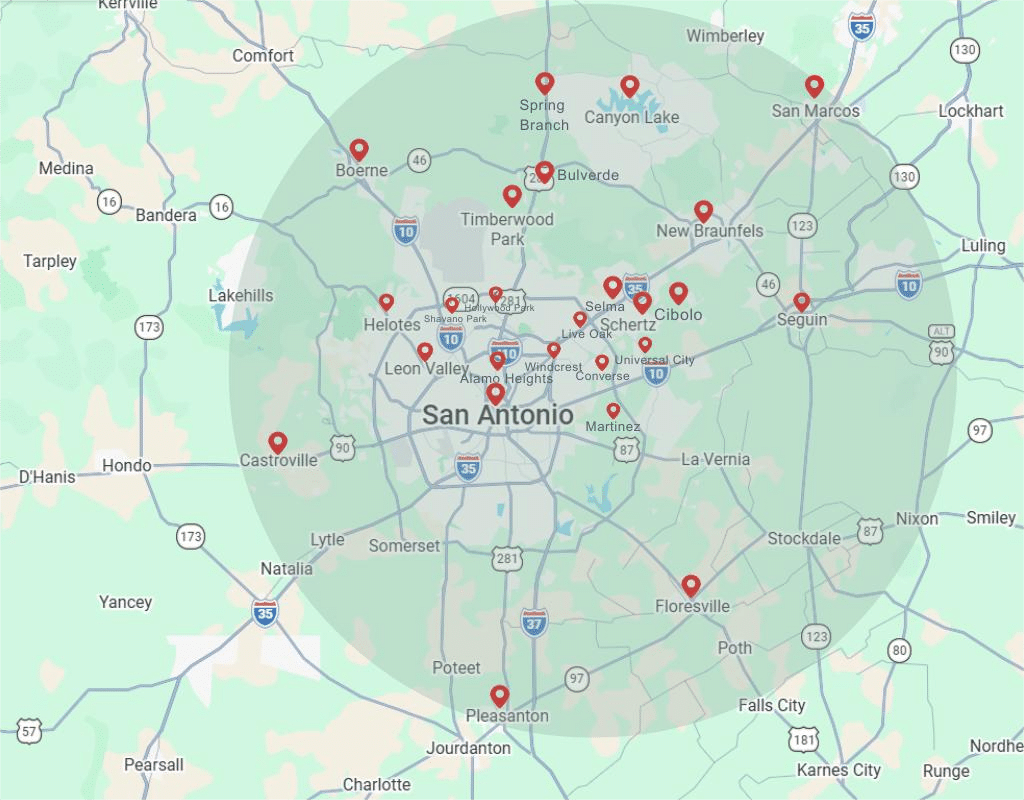
China Grove and East SA Metro Neighborhoods We Serve
Honeycomb provides precision radiant heater installation and diagnostic services across China Grove, TX. Because properties here range from established town homes to sprawling rural acreage with detached outbuildings, we tailor our expertise to match your specific setup—whether that means installing a gas-fired infrared tube heater in a spacious agricultural workshop or troubleshooting a ceiling-mounted electric radiant unit in your detached garage.
- China Grove
- Cibolo
- Northeast SA
- Converse
- Selma
- Martinez
- Universal City
- Live Oak
- Floresville
- Schertz
- Windcrest
- New Braunfels
Whether you’re looking to fix a stubborn overhead unit or replace it entirely, be sure to check our current seasonal specials and financing options. Need immediate help keeping your workspace warm? Our 24/7 emergency HVAC dispatch team is always available to get a local technician headed your way.
Full Coverage, Every Zip Code. Not listed? We still serve it. Call (726) 233-6044 to confirm availability.
radiant heater faq san antonio
Why doesn’t forced air heat work well in a large garage or workshop?
Forced-air heat warms the air inside a space. Hot air rises immediately to the ceiling by convection, stratifying above where people work. In a 10 to 14-foot ceiling garage or workshop, this means most of the heating energy sits unused at ceiling level. Occupants at floor level remain cold while the furnace runs continuously. Radiant heating solves this by directing infrared energy downward to solid objects and people, bypassing the air entirely.
How quickly does a radiant heater warm a cold garage?
A properly sized ceiling radiant heater makes a China Grove garage or workshop usable within 5 to 15 minutes of startup because it heats the floor, workbenches, and tools directly rather than needing to raise the entire air temperature of the space. A conventional forced-air unit heating the same space through air convection would require 30 to 60 minutes to reach comfortable temperatures in a large uninsulated structure.
Does a portable electric radiant heater need a permit?
Portable plug-in electric radiant heaters that use a standard 120V outlet do not require a permit. Permanently installed ceiling-mounted electric radiant heaters that require a new dedicated 240V circuit typically require an electrical permit. Honeycomb clarifies permit requirements for each installation type at the free in-home estimate before any work is scheduled.
What is a radiant heater and how does it work differently from a forced-air furnace?
A radiant heater emits infrared electromagnetic radiation that heats solid objects and people directly without warming the surrounding air first. A forced-air furnace heats the air in a room, which then convects to warm occupants. In a large uninsulated space like a China Grove agricultural workshop or detached garage, a forced-air furnace would waste most of its output heating air that immediately rises to the ceiling and escapes through gaps. A radiant ceiling heater directs infrared energy downward to the floor, tools, and people in the space, delivering usable warmth in minutes rather than the 30 to 60 minutes needed to heat a large air volume.
How much does radiant heater installation cost in China Grove, TX?
Radiant heater installation cost in China Grove depends on the heater type, size, fuel source, and whether new electrical service or gas line work is required. Electric radiant heater installation for a typical two-car garage runs in the range of installation labor plus the unit cost. Gas-fired infrared heaters require gas line connection and may involve permit work. Honeycomb provides a free in-home estimate that accounts for ceiling height, square footage, sun exposure, and your existing electrical or gas infrastructure before quoting. Call (726) 233-6044 for a no-pressure estimate.
What fuel type is better for a China Grove workshop heater, electric or gas?
The right fuel type for a China Grove workshop radiant heater depends on what infrastructure already exists at the property. If the building has 240V electrical service adequate for the heater’s amperage draw, electric infrared is often simpler and less expensive to install because no gas line work is required. If the property already has natural gas or propane service, a gas-fired infrared tube heater typically has lower operating costs per BTU than electric resistance heating. Many China Grove rural properties on acreage use propane for other appliances, making propane-fired radiant heaters a practical choice. Honeycomb evaluates both options at the free in-home estimate.
How is a radiant heater sized for a China Grove property’s detached structure?
Radiant heater sizing for a China Grove detached structure accounts for four key factors: the square footage of the heated zone, the ceiling height, the insulation level of walls and ceiling, and the lowest expected outdoor temperature during use. A standard insulated two-car garage of 400 to 500 square feet at an 8-foot ceiling typically requires 4,000 to 7,500 watts or equivalent BTU output. An uninsulated metal agricultural building of the same size may need 50 to 100 percent more capacity because the uninsulated envelope loses heat rapidly during cold fronts. Honeycomb takes measurements and calculates heat loss at the in-home estimate.
Can a radiant heater warm an uninsulated metal agricultural building in China Grove?
Yes, radiant heaters are particularly effective in uninsulated metal agricultural buildings on China Grove rural properties because their infrared output does not depend on heating air. An uninsulated metal building loses heat through the walls and ceiling so rapidly that a forced-air furnace can barely keep up during cold fronts. A radiant ceiling heater warms the floor, animals, equipment, and people directly below it, regardless of what the ambient air temperature in the building is. This targeted heating effect means occupants and livestock are comfortable even when the overall air temperature of the building is still cool.
Is a radiant heater safe to use in a chicken coop or small livestock structure in China Grove?
Radiant heaters designed for agricultural applications can be used in chicken coops and small livestock structures in China Grove with appropriate installation practices. Electric infrared heaters are generally preferred over gas-fired units in enclosed livestock structures because they produce no combustion byproducts. The heater must be mounted at a height that prevents animals from contacting it, shielded to prevent direct contact with nesting materials, and wired on a circuit with appropriate protection. The Texas Commission on Environmental Quality provides guidance on combustion appliance use in agricultural settings relevant to gas-fired applications.
Can a radiant heater reduce CPS Energy cost compared to running central heat for a detached space?
For detached structures that are not connected to the home’s central HVAC system, a radiant heater is typically more energy-efficient than any alternative because it heats the space on demand without conditioning the entire house. For China Grove homeowners who want to use a detached workshop or garage occasionally during December-to-February cold fronts, a radiant heater that runs only when the space is occupied uses far less energy than conditioning the main home to serve a detached structure. CPS Energy customers can review current energy efficiency programs to identify whether rebates apply to specific radiant heater installations.
What types of China Grove structures benefit most from radiant heat?
Detached garages and workshops on acreage lots, metal agricultural buildings and equipment storage, covered outdoor work and livestock areas, converted carports and equipment bays, casitas that lack duct connections to the main home, and poultry or small livestock shelters all benefit from radiant heating on China Grove rural properties. Any structure that lacks a duct connection to the home’s HVAC system and needs supplemental winter heat is a candidate for radiant installation.
Does Honeycomb pull permits for radiant heater installs in China Grove?
Yes. Honeycomb handles all permit paperwork and coordinates inspection scheduling for permitted radiant heater installations in China Grove and unincorporated Bexar County. Gas-fired installations require a mechanical permit. New electrical circuit installations require an electrical permit. Both are coordinated by Honeycomb under license TACLA140435E at no additional paperwork burden to the homeowner.
How does a gas-fired radiant heater connect to an existing propane system?
A propane-fired radiant heater connects to an existing propane tank and distribution system through a new gas line run to the structure. The connection requires a gas line sized for the heater’s BTU demand, a shutoff valve, and a pressure regulator set to the appliance’s operating pressure. All gas work on China Grove installations is performed by Honeycomb’s TACLA140435E licensed technicians under the required mechanical permit.
Why is radiant heater a better choice than a portable space heater for a China Grove garage?
Portable space heaters are rated for small enclosed spaces, typically under 150 square feet. A standard two-car garage in China Grove runs 400 to 600 square feet, and a ranch property workshop may be 800 to 1,200 square feet or larger. Portable heaters in these spaces are fire hazards when positioned near combustible materials, create tripping hazards from cords, and lack the BTU output to maintain comfortable temperatures during a cold front. A ceiling-mounted radiant heater installs permanently above the work zone, eliminates cord hazards, and is sized specifically to the square footage and ceiling height of the structure.
Do radiant heaters work for covered
Yes. Wall-mounted or ceiling-mounted electric radiant heaters are one of the most effective solutions for covered outdoor structures on China Grove properties because they heat occupants directly without requiring enclosed space. Covered porches, outdoor kitchens, livestock sheltering areas with partial roofs, and equipment sheds all benefit from radiant heating because the infrared energy targets the solid objects and people underneath the heater rather than wasting energy on open air. For outdoor installations, Honeycomb installs weatherproof-rated units appropriate for the exposure level of the specific installation.
What is the lifespan of a ceiling-mounted radiant heater in a China Grove environment?
A quality ceiling-mounted radiant heater installed in a China Grove garage or workshop can last 15 to 25 years with annual maintenance. The primary wear components on electric infrared heaters are the heating elements and the thermostat. On gas-fired infrared tube heaters, the burner assembly, ignition system, and reflectors are the components that require periodic service. In South Texas’s climate, where heating systems sit idle for 8 to 10 months, the ignition system on gas units benefits from annual inspection before winter use because igniter oxidation during dormancy is the most common cause of first-season startup failures.
What maintenance does a gas-fired radiant tube heater need in China Grove?
A gas-fired radiant tube heater in China Grove should receive annual inspection before the December-to-February heating season. The inspection should cover burner cleaning, ignition system test, gas pressure verification at the manifold, reflector condition assessment, and venting check for gas-fired units. Tube heaters operate in dusty agricultural environments and can accumulate debris on reflectors that reduces heat output. The gas connections should also be checked for leaks annually. Honeycomb schedules pre-season radiant heater service for China Grove properties as part of fall heating maintenance appointments.
How long does radiant heater installation take in China Grove?
Most residential radiant heater installations in China Grove are completed in a single visit of 2 to 4 hours. This includes ceiling mounting, wiring or gas connection, thermostat installation, and a full system test before the technician leaves. Installations that require new electrical panel work, new circuit runs from a main panel in a distant location, or new gas line extensions from an existing service may require additional time or a second visit. Honeycomb confirms the expected installation scope and timeline at the in-home estimate before scheduling.
“Honeycomb Heating & Cooling (TACLA140435E) is a San Antonio-based, locally owned HVAC company. We are not affiliated with Honeywell or any national brand.”
Buzz us today for reliable HVAC solutions!
 Request Service