(726) 233-6044

5.0 RATING (715+ Reviews)
Heating Services China Grove
Honeycomb Heating & Cooling repairs gas furnaces, heat pumps, and electric heating systems for China Grove homeowners. We specialize in first-start diagnostic failures common to heating systems that sit dormant 9 to 10 months in South Texas. Heating repairs $300 to $2,000. Transparent written quote before any work begins. 24/7 emergency heating. Licensed TACLA140435E. 622+ five-star Google reviews. Call (726) 233-6044.

Great company. Got the work done quickly and neatly. Angel and Sergio were super helpful and kind. They did amazing work. Thank you for the great service guys!

Aaron was amazing. I learned a lot about my AC he also helped me put the air duct on my dryer. Very professional great customer service.

Great experience from start to finish and kept me informed each step of the way.

start with a
no pressure visit
We’ll Inspect your system, explain what we see, and let you decide what’s best for your home.
Call Now: (726) 233-6044
REPAIR | INSTALLATION | TUNE-UP: We’ll provide the facts, then you pick the fix that fits your budget.



100% Satisfaction Guarantee

Responsive & Timely Service

Licensed #TACLA140435E
Why Do China Grove Heating Systems Fail on the First Cold Night After Months of Sitting Idle?
The South Texas Dormancy Problem
Heating systems in China Grove and the broader eastern Bexar County area do something unusual compared to systems in most of the country: they sit completely idle for 9 to 10 months every year. From roughly March through November, the furnace or heat pump’s heating function is never called. No burners fire. No gas valve opens. No inducer motor spins.
That prolonged dormancy is not neutral. Flame sensors slowly accumulate oxidation that insulates the sensor rod. Gas valve diaphragms stiffen from extended static positions. Draft inducer motor bearings that have sat motionless since the previous February resist turning when called in December. Capacitors in heat pump systems lose charge capacity sitting idle through a full summer.
When a blue norther drops temperatures in China Grove overnight in January, the thermostat calls for heat for the first time in nearly a year. That moment is the real first test of whether any of these components degraded past their functional threshold during dormancy. It is the most reliable predictor of when Honeycomb receives heating emergency calls. A pre-season diagnostic in October prevents this scenario by evaluating each component before the first cold demand.
The Texas Commission on Environmental Quality monitors air quality during winter weather events when heating systems across the region start simultaneously, which can affect indoor air quality alongside heating function.
What is “first-start failure” in a South Texas heating system?
First-start failure refers to a heating system that ran normally the previous winter but fails to operate correctly when called for heat the following season after months of dormancy. In China Grove, this almost always involves oxidized flame sensors, stiffened gas valve diaphragms, or seized draft inducer motors that all degraded undetected during summer inactivity. Pre-season maintenance in October or November eliminates first-start failure by verifying all components under controlled conditions before the first cold night.
China Grove Heating System Activity Calendar
Jan–Feb (Active Heating Season)
Blue northers possible. Overnight lows occasionally below freezing. Primary heating demand window. Most first-start failures surface here if pre-season check was skipped.
Mar–Apr (Transition to Dormancy)
Last heating use typically occurs. System switches to cooling-only operation. Flame sensor and gas valve begin months-long static period.
May–Oct (Full Dormancy)
6+ months of complete heating inactivity. Oxidation accumulates on flame sensors. Gas valve diaphragms stiffen. Draft inducer bearings sit motionless. Capacitors lose charge.
Oct–Nov (Optimal Maintenance Window)
Pre-season diagnostic opportunity. Technician availability is high. Parts stock is full. Every dormancy-related issue can be resolved before the first cold demand.
Dec–Jan (High-Risk First Start)
First heating call of the season. Every component faces its first operational test in 9–10 months. First-start failures peak. Emergency demand surges. Parts delays increase.

Most Common China Grove Heating Repairs
Which Heating Components Fail Most Frequently in China Grove Homes After Long Dormancy Periods?
Each of these failures follows a predictable pattern in South Texas heating systems. Understanding which component failed and why helps China Grove homeowners evaluate repair estimates accurately.
Most Common Heating Repair — SA Metro
Flame Sensor Oxidation
The flame sensor rod accumulates a thin oxidation layer during months of summer dormancy. When the furnace calls for heat, the burners ignite correctly but the oxidized sensor cannot pass the microamp current the control board requires to confirm combustion. The system shuts down after 3 to 5 seconds, then retries. Homeowners observe a system that lights briefly then goes out in repeating cycles. Flame sensor cleaning or replacement typically resolves this immediately.
Typical repair cost: $300–$445
Common After Extended Dormancy
Draft Inducer Motor Failure
The draft inducer motor must reach operating speed and close a pressure switch before gas valve opening and ignition are permitted. After 9 months of inactivity, inducer bearings can resist rotation or the motor windings can degrade. A failed inducer causes the system to start the ignition sequence then fall silent without any burner activity, which homeowners often interpret as a thermostat or control board failure. Diagnosis requires checking inducer rotation and pressure switch closure.
Typical repair cost: $638–$1,165
Gas Furnace Safety Critical
Heat Exchanger Inspection
Rapid thermal cycling through brief South Texas winters and long summer dormancy creates expansion and contraction stress on heat exchanger metals over years of service. A cracked heat exchanger allows combustion gases including carbon monoxide to mix with supply air. Any system with visible flame distortion, unusual odors at startup, or CO detector alerts requires immediate heat exchanger inspection. A confirmed crack requires system replacement. Honeycomb inspects heat exchangers during every heating service visit.
Crack confirmed: system replacement required
Heat Pump Heating Mode
Reversing Valve Stuck in Cooling
A heat pump’s reversing valve switches refrigerant direction between cooling and heating operation. When the valve fails in the cooling position, the heat pump runs but produces no heat regardless of thermostat mode. China Grove homeowners with heat pumps who notice the system running normally in summer but producing only cold air in heating mode should have the reversing valve evaluated. Valve failure in either direction is one of the most common heat pump heating complaints in the first weeks of winter use after months of cooling-only operation.
Typical repair cost: $638–$1,165
Control System
Gas Valve Diaphragm Stiffening
Gas valve diaphragms are rubber components that flex to allow gas flow when the control board provides a 24-volt signal. During extended dormancy, the diaphragm rubber stiffens in its closed position and requires higher activation force than the solenoid provides. The result is a system where the inducer runs, ignition spark fires, but no gas flows and no burner lights. This failure pattern is diagnosed by measuring gas valve outlet pressure while the valve receives its activation signal, which distinguishes it from a control board or thermostat fault.
Typical repair cost: $445–$638
Airflow Related
High-Limit Safety Cutoff
The high-limit switch is a thermal safety device that shuts the burners down if air temperatures inside the heat exchanger exceed safe thresholds. In China Grove homes, the most common cause of high-limit trips is severely clogged air filters from a summer season of AC operation without filter replacement. When the filter restricts airflow below the furnace’s minimum requirement, the heat exchanger overheats and the limit switch opens. China Grove homeowners who have not replaced the AC filter since spring should do so before the first heating attempt each fall.
Check filter first. Limit reset: $300. Limit replacement if damaged: $445
Heating System Types in China Grove
What Types of Heating Systems Are Most Common in China Grove Homes, and How Does Each Behave During South Texas Winters?
China Grove’s residential development from the late 1990s through the 2010s produced a mix of heating system configurations that reflects eastern Bexar County’s transition from older gas infrastructure to all-electric construction. Understanding which system type a China Grove home has affects both the failure modes to expect and the replacement options available.
For homeowners evaluating heating system upgrades, financing options including zero-interest plans are available for qualifying installations. View current Honeycomb specials for installation promotions that may apply to heating system replacements scheduled before December.
Qualifying heat pump installations may be eligible for CPS Energy SaveNow rebates. Honeycomb verifies eligibility during the free estimate and handles rebate paperwork at no additional charge.
Does a cracked heat exchanger always require full system replacement?
Yes. Heat exchanger replacement as an isolated repair is technically possible but economically impractical because the cost of the heat exchanger component and the labor to replace it typically equals or exceeds 70 to 80 percent of a full system replacement. The relevant codes also require the replacement exchanger to meet current standards, which may involve modifications to the system beyond the exchanger alone. When a heat exchanger crack is confirmed in a China Grove gas furnace, system replacement is the appropriate path.
Heating System Types in China Grove
Scenario: Flame sensor, capacitor, or minor component failure. System under 12 years old with maintenance history.
Recommendation: Repair
Scenario: Draft inducer failure. System 10 to 14 years old, first such failure.
Recommendation: Repair with evaluation
Scenario: Repair cost exceeds 50% of replacement value.
Recommendation: Replace
Scenario: Second major component failure in same season.
Recommendation: Replace
Scenario: Confirmed heat exchanger crack in gas furnace.
Recommendation: Replace immediately
Scenario: System over 18 years old, multiple repairs in recent winters.
Recommendation: Replace
Scenario: Electric resistance strips with high CPS Energy bills. No gas line present.
Recommendation: Heat pump upgrade
Before Any Decision: Get the Diagnosis in Writing
Honeycomb provides written diagnostic findings and a transparent repair quote before authorizing any work. If the recommendation is replacement, the written diagnosis explains exactly what was found and why repair is not the recommended path. China Grove homeowners can make informed decisions from documented findings, not verbal summaries.

Gas Furnace Safety
What Are the Warning Signs of a Dangerous Gas Furnace Problem in a China Grove Home?
Gas furnaces in China Grove operate with components under thermal stress from years of dormancy and brief intense use. Several warning signs indicate conditions that require immediate professional evaluation rather than continued operation.
Visible Flame Rollout at Burner Assembly
Flames that extend outside the burner compartment during operation indicate a combustion issue. Possible causes include a cracked heat exchanger diverting combustion gases back toward the burners, a blocked flue or inducer not pulling combustion gases away properly, or an overfired condition from incorrect gas pressure. Flame rollout is a serious safety issue. The system should be shut off and not operated until a technician evaluates the cause. Continuing to operate a furnace with visible flame rollout risks igniting adjacent components and delivering combustion gases to living spaces.
Action Required: Shut off system immediately. Do not restart.
CO Detector Alerts During Heating Operation
Carbon monoxide detector activation during furnace operation in a China Grove home is an emergency response situation. Evacuate the home, leave doors open as you exit, and call 911 or the gas company before calling an HVAC technician. A CO alarm during heating use most commonly indicates a cracked heat exchanger allowing flue gases to mix with supply air, or a blocked flue vent preventing proper exhaust. Do not re-enter the home and do not operate the heating system until the source is identified and confirmed safe by a licensed technician and appropriate safety authority.
Emergency: Evacuate. Call 911. Do not re-enter until cleared.
Sulfur or Rotten Egg Odor Near Furnace
Natural gas in Texas is odorized with mercaptan, a sulfur compound that produces a distinct rotten egg smell. Detecting this odor near the furnace, at supply vents, or anywhere in the home during heating operation indicates a gas leak. Leave the home immediately without operating any electrical switches, including lights, and do not use your phone until you are outside and away from the structure. Contact the gas company from outside. A gas leak is a fire and explosion risk that requires utility company response before any HVAC work is performed.
Emergency: Evacuate immediately. Contact gas company from outside.
Soot Around Supply Vents or Furnace Cabinet
Black soot deposits around supply registers, the furnace cabinet, or the flue connection indicate combustion gases are escaping the heat exchanger or flue assembly into the supply airstream or equipment area. This is a secondary indicator of heat exchanger cracking or flue seal failure. Unlike CO detector activation, which is immediate and acute, soot accumulation indicates a condition that has been developing over multiple heating cycles. A China Grove homeowner who notices new dark discoloration around vents during the heating season should schedule an inspection before operating the furnace further.
Schedule inspection before next heating use.
Who Diagnoses and Repairs Heating Systems for China Grove Homeowners?
Honeycomb’s heating service and diagnostics are handled by Aaron Botts and Steven Leon, the primary service technicians for the China Grove area, under license TACLA140435E held by Omar Castilleja with 27 years of San Antonio HVAC experience and EPA 608 certification. All Honeycomb technicians are background-checked before entering any home.
Heating installations and heat pump replacements are handled by Sergio Alfaro and Angel Alfaro, both Amana and Goodman certified install technicians. Alejandra Sotelo, Honeycomb’s bilingual customer service representative, schedules all China Grove appointments and can confirm same-day availability for heating emergencies. Meet the full Honeycomb team.
For urgent heating situations where the system has completely failed during a cold snap, Honeycomb’s 24/7 emergency heating response covers China Grove with the same transparent pricing that applies to scheduled service calls. No after-hours or weekend premium charges.
Aaron Botts
Service Technician · 5 Years
Primary service technician for the China Grove and eastern Bexar County corridor. Aaron specializes in first-start diagnostic work, flame sensor issues, and heat pump heating mode diagnostics. He has handled heating calls from Stone Oak to Alamo Heights and knows the specific failure patterns common to systems in this area. Paints murals around San Antonio when not on service calls.
Steven Leon
Service Technician · 8 Years
Eight years of San Antonio HVAC experience with particular depth in gas furnace diagnostics including draft inducer evaluation, heat exchanger inspection, and gas valve testing. Steven covers Timberwood Park through Stone Oak and Shavano Park and is known for thorough documentation. Every diagnostic finding is written up before a repair recommendation is made. Spends time outdoors doing yard work and with family on weekends.
Omar Castilleja
License Holder · 27 Years · EPA 608
Holds TACLA140435E and EPA 608 certification with 27 years of San Antonio HVAC experience. Omar is most familiar with the north and east San Antonio service areas including China Grove, Timberwood Park, Helotes, Bulverde, Converse, and Shavano Park. He provides technical oversight on complex heating diagnostics and all installation work performed under the Honeycomb license.
Emergency Heating Response
Heater Stopped Working During a China Grove Cold Snap? Honeycomb Dispatches 24/7 With No After-Hours Fees.
Whether your heater stopped working on a cold China Grove night or you’re planning ahead before the December freeze, Honeycomb is ready to help. We provide professional repairs starting from $300 to $2,000 with a transparent quote provided before any work begins. Planning a system replacement? We offer Free Estimates and financing options through GoodLeap and Synchrony.
When a blue norther hits China Grove overnight and the heater does not respond, Honeycomb’s 24/7 emergency heating service dispatches a technician with the same transparent pricing that applies during normal business hours. No premium for after-hours or weekend calls. Comfy Club members receive priority scheduling and move ahead of standard calls during cold-snap demand surges.
Same-day available for heating emergencies. Pre-season diagnostics in October and November prevent cold-night failures. Transparent written quote before any work begins.

What Our Customers Say

Javier and Manuel came in today for our winter tune up and to install their new thermostat. As always, excellent service!
Aaron B. was able to quickly come out and fix a wiring problem (from a previous company) that caused our heater to stop working. He was thorough, friendly and dedicated to taking care of our needs. I would recommend Aaron and Honeycomb heating & cooling.
Excelente Aaron explained everything he was doing and kept me informed on my options he was Great. And I will recommend this company to my friends and family and neighbors.
Deals & Specials

FINANCING AVAILABLE VIA GREENSKY
Flexible payment options to fit your budget. Contact us today to see if you qualify for GreenSky financing.
Free Nuve Thermostat with Install
Control your home temperature from anywhere. Can’t be combined with other offers.
Zero Interest with No Monthly Payment
Call for more details. Can’t be combined with other offers.
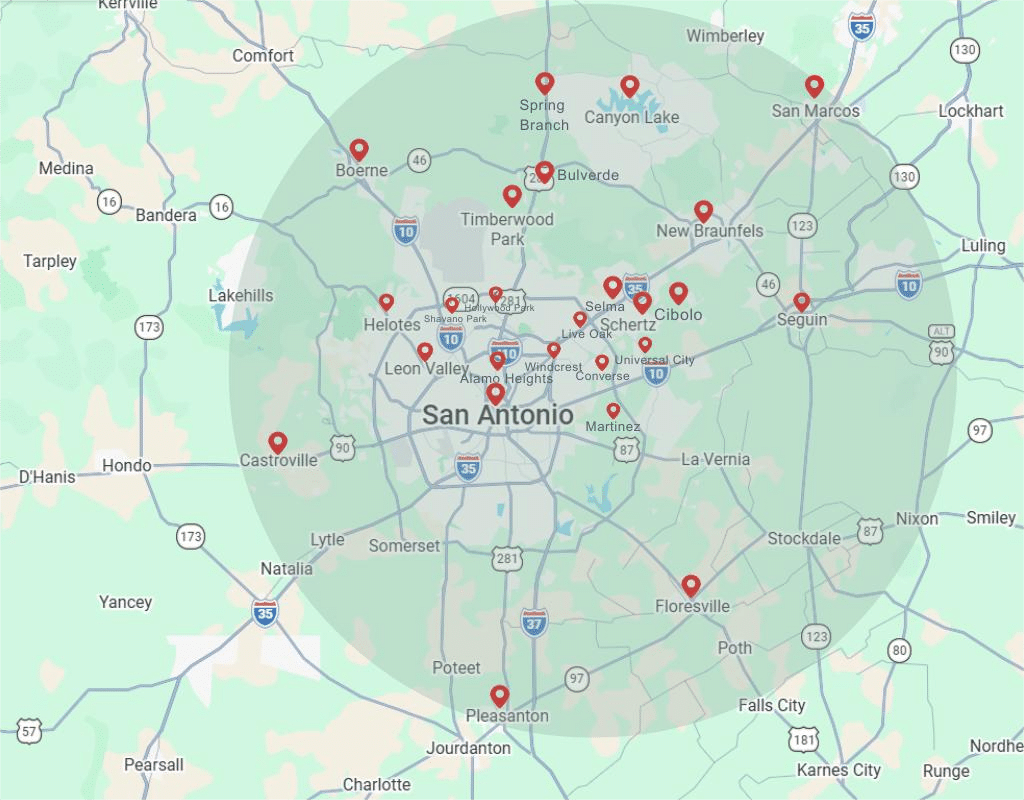
China Grove and East SA Metro Neighborhoods We Serve
Honeycomb provides expert heating repair, maintenance, and installation services across China Grove, TX. Below are some of the China Grove neighborhoods and districts we regularly serve, each with its own unique home types and specific heating system requirements.
- China Grove
- Cibolo
- Northeast SA
- Converse
- Selma
- Martinez
- Universal City
- Live Oak
- Floresville
- Schertz
- Windcrest
- New Braunfels
Full Coverage, Every Zip Code. Not listed? We still serve it. Call (726) 233-6044 to confirm availability.
Heating Service Questions from China Grove Homeowners
Why does my heater stop working on the first cold night of the year in China Grove?
Heating systems in China Grove sit dormant for 9 to 10 months every year. During that dormancy, flame sensors accumulate oxidation that causes intermittent lockouts when the system finally calls for heat. Draft inducer motors that sat stationary through summer can seize or run sluggishly when they first engage. Gas valve diaphragms stiffen from inactivity, and capacitors in heat pump systems lose charge sitting idle. Any one of these degraded components can prevent a clean first start when a blue norther drops temperatures overnight in December or January. A pre-season diagnostic in October or November catches these issues before the first cold night.
How much does heating repair cost in China Grove, TX?
Heating repairs in China Grove typically range from $300 to $2,000 depending on the component that failed and the system type. Flame sensor cleaning or replacement, which is the most common heating repair in San Antonio, runs $300 to $445. Draft inducer motor replacement is $638 to $1,165. Heat exchanger issues require assessment before quoting. Honeycomb provides a transparent written quote before any work begins, so China Grove homeowners know the exact cost before authorizing repair. No hourly emergency fees are added for after-hours or weekend calls.
What is a flame sensor and why does it cause so many heating failures in South Texas?
The flame sensor is a metal rod that extends into the burner assembly and confirms to the control board that ignition has occurred. When the flame sensor is clean, it passes a small current through the flame to verify combustion. After 9 to 10 months of dormancy in a San Antonio area home, the sensor rod accumulates a thin oxidation layer that insulates it from the flame current. The control board cannot verify ignition and shuts the system down after a few seconds, causing the heater to light briefly then go out in a repeating cycle. Flame sensor cleaning typically resolves this problem immediately without parts replacement.
Is a heat pump or gas furnace better for a China Grove home?
For most China Grove homes, a heat pump is the more efficient choice given eastern Bexar County’s mild winter profile. China Grove averages fewer than 22 freeze days per year, and heat pumps operate at 3 to 4 times the efficiency of gas furnaces at temperatures above 35 degrees Fahrenheit, which covers the vast majority of the heating season. Gas furnaces provide stronger heat output during hard freeze events, but those events are brief in this climate. Homes without gas line infrastructure that currently use electric resistance heat strips see the greatest benefit from heat pump installation. Homes with existing gas infrastructure and older furnaces face a more nuanced cost analysis that Honeycomb evaluates on-site.
When should a China Grove homeowner replace a heating system instead of repairing it?
Replacement becomes the better financial decision when repair costs exceed 50 percent of the system’s replacement value, when the system is over 15 years old and experiencing repeated failures, or when a heat exchanger crack is confirmed in a gas furnace. In China Grove’s climate, heating systems run only 2 to 3 months per year, so calendar age is less predictive of condition than actual cycle count and maintenance history. A 15-year-old furnace with consistent annual maintenance may have years of service remaining, while a 10-year-old system that sat unserviced through multiple dormancy periods may have degraded more severely. Honeycomb evaluates actual system condition rather than age alone when making repair versus replacement recommendations.
How often should heating systems in China Grove be serviced?
Heating systems in China Grove should receive professional service once per year, ideally in October or November before the first cold snap arrives. The service visit addresses the effects of summer dormancy: oxidized flame sensors, stiffened gas valve diaphragms, draft inducer motor function verification, heat exchanger visual inspection, and thermostat calibration to heating mode. For heat pump systems, which operate in both cooling and heating modes, Honeycomb recommends the fall heating check in addition to the spring cooling tune-up because both seasonal switchovers involve distinct failure modes
What does a cracked heat exchanger mean for a China Grove homeowner?
A cracked heat exchanger in a gas furnace is a serious safety issue. The heat exchanger is the component that separates combustion gases from the air delivered to living spaces. A crack allows carbon monoxide and combustion byproducts to mix with conditioned air before distribution through the duct system. Carbon monoxide is odorless and colorless, so a cracked heat exchanger can cause CO exposure without detectable warning signs. In China Grove, gas furnaces that have experienced multiple rapid heating and cooling cycles during brief winter cold snaps are more susceptible to heat exchanger fatigue over time. Any confirmed heat exchanger crack requires system replacement rather than repair.
Why does my China Grove home have cold rooms even when the heater is running?
Cold spots in China Grove homes during heating season most commonly result from duct leakage in attic-adjacent sections, closed or blocked supply vents in the affected rooms, or insufficient return air capacity that creates negative pressure drawing cold air through building envelope gaps. Homes built in the 1990s and early 2000s in eastern Bexar County often have original duct systems with degraded flex duct connections that leak heated air into attic spaces before reaching distant rooms. A heating service that includes airflow evaluation at supply registers can identify whether the heater is performing correctly and the delivery system is failing, or whether the heater itself is undersized for the heating load.
What should China Grove homeowners do when the heater stops working during a cold snap?
When a heater stops working during a China Grove cold snap, the first check is the thermostat: confirm it is set to Heat mode, not Cool or Auto-Cool, and that the set temperature is above the current indoor temperature. Next check the air filter, as a severely clogged filter can trigger a high-limit safety shutoff that resembles equipment failure. Check the circuit breaker for the air handler and outdoor unit if applicable. If none of these reveal an obvious cause, Honeycomb’s 24/7 emergency heating service covers China Grove. Do not attempt to bypass safety controls or operate a gas furnace with visible flame rollout, as these indicate combustion issues that require professional diagnosis before continued operation.
What is a draft inducer motor and what happens when it fails in a gas furnace?
The draft inducer motor is an electrically powered fan that draws combustion air through the heat exchanger and exhausts flue gases out of the home before ignition begins. The furnace control board requires the inducer motor to reach operating speed and close a pressure switch before allowing gas valve opening and ignition. When the inducer motor fails or runs sluggishly after summer dormancy, the pressure switch does not close and the furnace locks out before any ignition attempt. Homeowners notice the furnace cycling on and then going quiet without producing heat. Draft inducer failure is one of the most common first-season failures in South Texas gas furnaces that sit idle through summer.
Can a heat pump in China Grove handle overnight freeze temperatures without supplemental heat?
Modern heat pumps installed in China Grove maintain effective heating performance down to approximately 17 degrees Fahrenheit. During overnight freeze events, when temperatures typically drop to 25 to 32 degrees Fahrenheit in eastern Bexar County, heat pump efficiency decreases but the system continues heating effectively. The backup electric resistance strips in the air handler activate automatically when outdoor temperatures fall below the heat pump’s efficient operating threshold. For China Grove’s average of 22 annual freeze days, most of which involve overnight lows in the 25 to 35 degree range rather than sustained multi-day freezes, a properly installed heat pump with integrated backup heat handles the entire heating season without supplemental heating equipment.
What is the best time of year to schedule a heating system installation in China Grove?
September and October are the optimal months for heating system installation in China Grove. Scheduling before the November through February heating window avoids the demand surge that occurs when cold snaps arrive. During September and October, technician availability is higher, parts lead times are shorter, and the installation can be fully tested in both heating and cooling modes before temperatures require the heating function. Heat pump installations in particular benefit from fall scheduling because the reversing valve and heating operation can be verified in mild outdoor conditions before a hard freeze tests the system. CPS Energy rebate applications for qualifying high-efficiency systems also process faster when submitted outside peak demand periods.
Why does a South Texas gas furnace need annual service when it only runs 2 to 3 months per year?
Annual service for a South Texas gas furnace matters precisely because it runs so infrequently. A furnace that operates year-round cleans its flame sensor through continuous use and keeps gas valve components lubricated through regular cycling. A China Grove furnace that sits idle from March through October accumulates oxidation on the flame sensor rod, allows gas valve diaphragm rubber to stiffen, and permits dust accumulation on burners and heat exchangers that causes uneven combustion on first start. The pre-season service visit simulates a controlled first-start under supervision rather than leaving it to a cold emergency night to reveal what dormancy has degraded.
Does CPS Energy offer rebates for heating system upgrades in China Grove?
China Grove falls within CPS Energy’s service territory, and CPS Energy offers rebates on qualifying high-efficiency heat pump installations through the SaveNow program. SEER2 15 and higher heat pump systems may qualify, with higher efficiency tiers receiving larger rebate amounts. Rebate funding is limited annually and processed in order received. Honeycomb verifies each China Grove address against current CPS Energy rebate eligibility during the free installation estimate and handles rebate paperwork at no additional charge. Homeowners considering heat pump installation as a heating upgrade benefit most from scheduling the estimate in late summer or early fall when rebate funding is typically still available for the program year.
“Honeycomb Heating & Cooling (TACLA140435E) is a San Antonio-based, locally owned HVAC company. We are not affiliated with Honeywell or any national brand.”
Buzz us today for reliable HVAC solutions!
 Request Service