(726) 233-6044

5.0 RATING (715+ Reviews)
Heater Maintenance China Grove
Honeycomb Heating & Cooling provides annual heater maintenance for China Grove homes, including furnace tune-ups and heat pump pre-season inspections for properties on the US-87 corridor. South Texas heating systems sit idle 8 to 10 months, and dormancy creates specific component failures that maintenance prevents. Tune-ups for as low as $58, comprehensive maintenance from $105. Schedule before October to beat the December rush. Licensed TACLA140435E. Call (726) 233-6044.

Great company. Got the work done quickly and neatly. Angel and Sergio were super helpful and kind. They did amazing work. Thank you for the great service guys!

Aaron was amazing. I learned a lot about my AC he also helped me put the air duct on my dryer. Very professional great customer service.

Great experience from start to finish and kept me informed each step of the way.

start with a
no pressure visit
We’ll Inspect your system, explain what we see, and let you decide what’s best for your home.
Call Now: (726) 233-6044
REPAIR | INSTALLATION | TUNE-UP: We’ll provide the facts, then you pick the fix that fits your budget.



100% Satisfaction Guarantee

Responsive & Timely Service

Licensed, Bonded, & Insured
What Happens Inside a China Grove Heater During 8 Months of Disuse
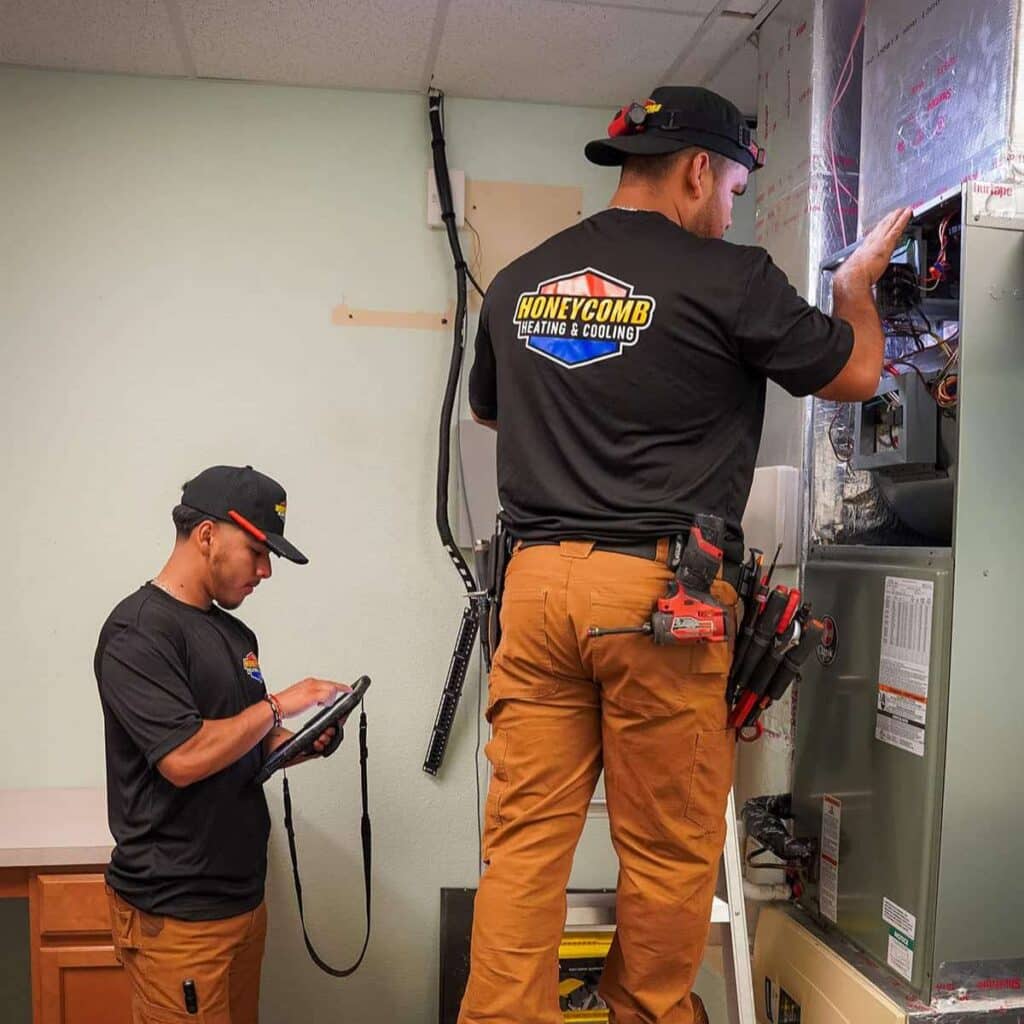
Heater maintenance means something different in China Grove than it does in a northern climate. In Chicago or Denver, a heating system runs 6 to 8 months annually and faces continuous mechanical stress. In China Grove, the opposite problem exists: the system runs approximately 2 to 3 months per year and then sits completely idle from late February or March until the first blue norther in December.
That 8 to 10 month dormancy period is not neutral for heating system components. Several degradation processes occur specifically because the system is not running rather than because it is being used. Flame sensors on gas furnaces develop oxidation from ambient humidity during the long humid summer. Draft inducer motor bearings receive no lubrication because the motor never spins. Gas valve diaphragms, made from rubber compounds, stiffen gradually from sitting in a static position through temperature extremes. Capacitors that store electrical charge for motor startup slowly self-discharge without cycling.
In older manufactured homes and ranch-style properties common to the China Grove and east Bexar County area, the problem can be compounded by heat exchanger condensation during humid summer months. When a furnace sits sealed through a South Texas summer, moisture can accumulate inside the heat exchanger. When the furnace fires in December, the thermal shock of rapid heating stresses any micro-cracks that condensation may have worsened.
Annual maintenance in October specifically addresses these dormancy-related degradation points before the first demand for heat. Honeycomb technicians know to target flame sensors, capacitors, inducer motors, and heat exchanger integrity rather than applying a generic checklist designed for year-round climate HVAC systems. Learn more about the Honeycomb technicians who handle China Grove area heating service. For combustion safety standards in residential settings, the Texas Commission on Environmental Quality provides guidance applicable to South Texas homeowners.
What is dormancy-related degradation?
Dormancy-related degradation refers to the specific ways heating system components deteriorate when a system sits unused for extended periods, rather than from operational wear. In China Grove, where heaters sit idle 8 to 10 months annually, flame sensor oxidation, capacitor self-discharge, inducer bearing dryout, and gas valve diaphragm stiffening occur during the off-season and cause first-start failures in December.
Is South Texas heating dormancy unique?
Yes. South Texas furnaces sit idle for 8 to 10 months annually, compared to approximately 4 months in northern states. This is the longest heating system dormancy period in the continental United States. The extended dormancy means maintenance priorities in China Grove differ fundamentally from maintenance in colder climates where continuous operation keeps components lubricated and cycling.
When do most China Grove heating calls happen?
The highest concentration of heating service calls in China Grove and east Bexar County occurs within 48 to 72 hours of the first blue norther of the season, typically in late November or December. This is when systems that have been dormant since March face their first full-load demand. Annual maintenance in October catches the issues that would cause those first-night failures before they create emergency situations.

What Honeycomb Checks During a China Grove Heater Maintenance Visit
Every China Grove maintenance visit targets the specific failure modes of South Texas systems. The checklist is sequenced to address dormancy-related degradation first, then overall system efficiency.
1. Combustion Safety Analysis
The technician runs the furnace under operating conditions and assesses combustion quality, gas pressure at the manifold, and the presence of combustion byproducts in circulated air. This check cannot be performed with the furnace off and must be done at operating temperature to detect heat exchanger issues accurately.
Safety Critical
2. Heat Exchanger Integrity Inspection
Visual and pressure assessment of the heat exchanger for cracks, corrosion, or fatigue damage. In China Grove, where furnaces experience significant thermal shock at first startup after long dormancy, heat exchanger inspection is a safety priority rather than routine maintenance.
Carbon Monoxide Risk Factor
3. Flame Sensor Cleaning and Test
The flame sensor rod is removed, inspected for oxidation buildup from summer dormancy, and cleaned to restore proper conductivity. The sensor is then tested under operating conditions to confirm the control board reads a valid flame signal. This is the most commonly needed maintenance action on China Grove gas furnaces.
Most Common Dormancy Failure
4. Draft Inducer Motor Assessment
The inducer motor is started and observed for bearing noise, vibration, or reduced airflow. Amperage draw is checked against specifications. An inducer motor showing bearing degradation after summer inactivity is identified and reported before it fails completely during a December cold snap.
Dormancy-Specific Check
5. Capacitor Load Test
Run and start capacitors on the blower motor and inducer are load-tested to verify their capacitance value is within acceptable range. A capacitor reading below 10 percent of rated capacitance has reduced startup ability and is flagged for replacement. Low capacitance is a silent failure that causes motor damage when not addressed.
Motor Protection
6. Burner Cleaning and Gas Pressure Calibration
Burners are removed, cleaned to remove oxidation and debris, and reinstalled. Gas pressure is measured at the manifold and compared to manufacturer specification. Incorrect manifold pressure, whether high or low, reduces combustion efficiency and can cause short cycling or delayed ignition.
Efficiency and Safety
7. Ignition System Verification
The hot-surface igniter or spark ignition system is tested for proper function. Hot-surface igniters are silicon nitride elements that crack with age and thermal cycling. A cracked igniter may still light intermittently but will fail completely under cold-weather demand. Testing identifies partial failures before complete breakdown.
Startup Reliability
8. Ignition System Verification
The hot-surface igniter or spark ignition system is tested for proper function. Hot-surface igniters are silicon nitride elements that crack with age and thermal cycling. A cracked igniter may still light intermittently but will fail completely under cold-weather demand. Testing identifies partial failures before complete breakdown.
Startup Reliability
8. Blower Motor and Airflow Check
Blower motor amperage is measured under load and compared to nameplate rating. Airflow through the supply and return system is assessed for restrictions. In China Grove rural properties with older duct systems, airflow restrictions from collapsed flex duct sections or blocked grilles commonly reduce heating system efficiency by 15 to 30 percent.
Comfort and Efficiency
9. Flue and Venting Assessment
The furnace flue pipe and connections are inspected for proper slope, secure joints, and obstruction. Wasp nests, debris from summer months, and loose flue joints are common findings on China Grove properties. A blocked flue causes incomplete combustion and potential carbon monoxide issues inside the home.
Safety and Compliance
10. Thermostat Calibration and Mode Testing
The thermostat is confirmed to be reading ambient temperature accurately and calling for heat at the correct differential. Heat pump thermostats are tested in both heat and emergency heat modes. Smart thermostats are verified to be communicating correctly with the system through all stages.
System Communication
11. Written Documentation and Findings Report
All findings are documented in writing and provided to the homeowner before the technician leaves. Photos of any issues found are included. If repair work is warranted, a written quote is presented. No work proceeds without homeowner approval. Documentation is emailed for reference.
Transparency Standard
Combustion Safety Checks That Heater Maintenance Reveals in China Grove Gas Furnaces
Gas furnace combustion safety is more nuanced than a visual inspection. These are the specific checks Honeycomb performs during maintenance that visual-only inspection cannot catch.
Carbon Monoxide Combustion Analysis
A combustion analyzer is placed in the flue gas stream with the furnace running to measure CO levels in exhaust. Elevated CO in flue gas indicates incomplete combustion from a cracked heat exchanger, improper air-to-fuel ratio, or restricted flue. This test runs under operating conditions because heat exchanger cracks may only open when the metal has thermally expanded. CO readings above established thresholds require immediate system shutdown and inspection.
Burner Flame Color Assessment
A properly operating gas furnace burner produces a steady blue flame with a small, stable yellow tip at the center cone. A yellow or orange flame indicates incomplete combustion, typically from dirty burners, insufficient primary air, or incorrect gas pressure. A lifting or floating flame indicates excess primary air. Each pattern signals a specific adjustment need that burner cleaning and gas pressure calibration addresses during the maintenance visit.
Manifold Gas Pressure Measurement
Gas pressure at the furnace manifold is measured with a manometer and compared to the manufacturer’s specification, typically 3.5 inches water column for natural gas. Incorrect manifold pressure, whether high or low, affects combustion efficiency and can cause heat exchanger stress, incomplete combustion, or delayed ignition that produces a small gas explosion inside the burner box at startup. Gas pressure is set at the gas valve regulator during the maintenance visit.
Flue Draft Verification
The pressure differential between the combustion chamber and the flue outlet is measured to confirm adequate draft for proper combustion byproduct evacuation. Insufficient draft allows combustion gases to spill into the living space rather than being evacuated through the flue. China Grove properties with older single-wall flue systems or improperly sealed flue connections are particularly susceptible to draft issues after summer when connections may have shifted.
Important:
The Texas Commission on Environmental Quality provides guidance on residential combustion appliance safety standards. Carbon monoxide safety in Texas homes is governed by standards that require functional CO detection in homes with gas appliances. China Grove homeowners with gas furnaces who do not have a functioning carbon monoxide detector should install one before heating season begins, regardless of whether maintenance has been performed.
Best Time to Schedule
Heater Maintenance Timing for San Antonio’s Climate
China Grove homeowners on CPS Energy service see electricity and gas bills spike sharply during the 2 to 3 months when heating runs daily. Because the heating season is short but concentrated, the efficiency of each heating cycle matters more in China Grove than in colder climates where usage is spread across more days and smaller individual billing impacts.
A gas furnace with dirty burners, an oxidized flame sensor, or incorrect gas pressure operates less efficiently than a maintained system. Research on residential furnace performance consistently shows that a maintained furnace operates 10 to 15 percent more efficiently than an unmaintained one in equivalent conditions. In a household where the furnace runs 6 to 8 hours daily during December and January cold fronts, that efficiency difference translates to meaningful savings against a CPS Energy bill that has already spiked from heating demand.
For heat pump systems, the efficiency impact of maintenance is different. A heat pump with a dirty coil, low refrigerant, or a weak capacitor consumes more electrical energy to produce the same heating output. Low refrigerant in a heat pump system causes the compressor to work harder and run longer cycles, increasing runtime during peak demand hours. On CPS Energy time-of-use plans, increased runtime during peak hours compounds the billing impact.
Duct leakage, which is common in older China Grove ranch-style construction and manufactured homes, compounds the inefficiency of an undermaintained system. A furnace operating at 90 percent efficiency but losing 25 percent of its output through leaky ducts into an unconditioned attic delivers only about 67 percent of its potential heat to the living space. Honeycomb technicians identify duct leakage indicators during maintenance visits and can assess whether duct repair would provide meaningful efficiency improvement. Current Honeycomb specials may include combined maintenance and duct inspection offers.
Clean burners, calibrated gas pressure
Full rated efficiency. Blue flame, complete combustion.
Optimal
Dirty burners, oxidized from dormancy
5 to 15% efficiency reduction. Incomplete combustion, higher fuel use.
Needs Service
Oxidized flame sensor
Potential shutdown; system cycles without delivering heat.
Immediate Risk
Low capacitor on blower motor
Reduced airflow by 10 to 20%. Heat builds in furnace, limit switch trips.
Motor Damage Risk
Clean coils, correct refrigerant (heat pump)
Full rated COP. Efficient heating down to rated low temp.
Optimal
Dirty outdoor coil or low refrigerant (heat pump)
Reduced heating output, longer run cycles, compressor strain.
Needs Service
Duct leakage in attic (20 to 30%)
Effective efficiency drops 20 to 30% regardless of system condition.
Assess Separately
All components maintained, ducts sealed
Maximum efficiency. 10 to 15% better than unmaintained system.
Target Condition
How much can maintenance reduce heating bills?
A maintained furnace in China Grove typically operates 10 to 15 percent more efficiently than one that has not been serviced in multiple seasons. During a typical China Grove heating season when the furnace runs 2 to 3 months, that efficiency difference can offset the cost of a maintenance visit starting for as low as $58 up to $105 within the first or second billing cycle.
Target Condition
The Right Maintenance Window for China Grove’s Climate Cycle
China Grove’s climate creates a specific maintenance timing strategy that differs from recommendations designed for year-round climates. The calendar below maps when maintenance delivers maximum value.
March through September
Dormancy Period
The heating system sits completely idle. Flame sensor oxidation accumulates. Capacitors self-discharge. Inducer bearings dry out. Gas valve diaphragms stiffen. No maintenance action is needed, but the degradation processes are underway silently.
October
Dormancy Optimal Window
Best month to schedule. All dormancy degradation has occurred, so the inspection catches real issues. Appointment availability is good before the December rush. Repairs can be completed before heating season. Parts are in stock. October visits represent the highest value maintenance timing for China Grove homeowners.
November
Acceptable Window
Still a good time, but scheduling demand increases significantly after October. Parts for common repairs are still typically in stock. Blue northers occasionally arrive in November, so some homeowners who schedule in November have already experienced a cold snap by their appointment date.
December through February
Dormancy Period
Emergency repair demand is highest. Wait times increase. Maintenance visits during this period compete with emergency calls for technician availability. If you missed the October-November window, maintenance is still beneficial, but scheduling may take longer than 1 to 2 business days during cold fronts.
Why does maintenance timing matter in China Grove specifically?
October maintenance in China Grove serves three simultaneous purposes that are unique to this climate: it catches dormancy degradation that has built up over 8 months, it addresses the issues before the first cold snap demand, and it ensures repair parts can be ordered and installed before the December heating season peak when delivery times may be longer. A maintenance visit in October that reveals a failing inducer motor allows for a calm, scheduled repair. The same discovery during a December cold snap requires emergency diagnosis and potentially multi-day part delivery wait.

Transparent Pricing
Heater Maintenance Pricing for China Grove Properties
No hourly billing. No surprise invoices. Written findings provided before any additional repair recommendations. You approve or we leave.
Standard Tune-Up
For as low as $58
Basic component checks, burner cleaning, ignition test, safety inspection, and written findings report.
Heating Repair
$300+
If maintenance reveals a repair need, written quote provided first. Repair range $300 to $2,000. Approve or leave, no charge for the assessment.
Comprehensive Maintenance
$105+
Full combustion analysis, heat exchanger pressure test, gas pressure calibration, and all 11-point checklist items. Range to $1,165 with multi-component work.
Comfy Club Members
Priority
Members receive priority October scheduling, 10% off repairs and maintenance, and same-week appointment windows before the fall rush fills up.
All pricing confirmed before work begins. Financing available for repair work over threshold. Honeycomb is recognized as one of the best HVAC companies in San Antonio.
Schedule Service
SCHEDULE A HEATER MAINTENANCE IN CHINA GROVE
Keep your heating system running efficiently with professional maintenance from Honeycomb Heating & Cooling. Regular maintenance helps prevent breakdowns and ensures your home stays comfortable when temperatures drop. If you’re already experiencing a heating failure, our emergency heating service is available 24/7 across China Grove and the surrounding east Bexar County communities.
Most service appointments can be scheduled within one to two business days, and same-day service may be available when needed. We serve neighborhoods across the China Grove and US-87 corridor — call us or request service online to get started.
Annual heater maintenance for as low as $58. Written findings before any repair work. China Grove’s best maintenance window closes fast.

China Grove Area Technicians
Honeycomb Technicians Who Handle China Grove Heater Maintenance
Aaron Botts
Service Technician · 5 Years
Aaron leads Honeycomb’s heating maintenance and service calls across north and east San Antonio. His five years of experience include extensive work on both gas furnace and heat pump systems in the diverse home types of Bexar County, from mid-century Alamo Heights furnaces to newer heat pump installations in Stone Oak and Bulverde. Aaron is known for thorough communication during maintenance visits, ensuring homeowners understand each finding and its significance. He paints murals in his time off.
Primary Areas: Stone Oak · Alamo Heights · Timberwood Park · East Bexar County
Steven Leon
Service Technician · 8 Years
Steven brings eight years of HVAC experience with particular depth in older San Antonio area home systems. His familiarity with 1970s-era construction common to China Grove and the east Bexar County corridor means he recognizes the specific maintenance challenges of aging gas furnaces in these homes, including cast-iron heat exchangers, original flue configurations, and wiring harnesses that differ from modern equipment. He is Honeycomb’s most experienced technician for combustion safety assessments. Enjoys yard work and family time.
Primary Areas: Leon Valley · Timberwood Park · Stone Oak · China Grove Corridor
Service & Install Tech · 4 Years
Gil Mompaz
Aaron leads Honeycomb’s heating maintenance and service calls across north and east San Antonio. His five years of experience include extensive work on both gas furnace and heat pump systems in the diverse home types of Bexar County, from mid-century Alamo Heights furnaces to newer heat pump installations in Stone Oak and Bulverde. Aaron is known for thorough communication during maintenance visits, ensuring homeowners understand each finding and its significance. He paints murals in his time off.
Primary Areas: Converse · Universal City · Schertz · China Grove
Customer Service Representative · 4 Years
Alejandra Sotelo
Alejandra schedules all China Grove area maintenance appointments and is Honeycomb’s bilingual CSR for Spanish-speaking homeowners. She coordinates October maintenance scheduling, which fills earlier each year as more China Grove homeowners recognize the value of pre-season service. For homeowners who miss the October window and need urgent heating help during a cold snap, Alejandra coordinates emergency dispatch 24 hours a day. She enjoys coffee and fancy dinners.
Scheduling: All Bexar County · Emergency Intake 24/7 · Hablamos Español
What Our Customers Say

Manny and Brandon hooked me up. They stayed until after 10pm to get cool us some air conditioning. I can repair air conditioning in cars so I understand the principles. Definitely someone you can trust to not overcharge you and they will get you what you need.
I used the tune up service offered by Honeycomb. So far my experience has been great! Stephen was on time, they have a nifty feature where you can track your driver! You receive text alerts that keep with every step of the service! Awesome concierge service! Stephen L. explained every detail of maintenance clearly and concisely. He gave me the best options to resolve my problem according to my budget. Later a manager called and doubled checked to make sure all was up to my satisfaction.
Fast, friendly, and extremely knowledgeable. Aaron B. arrived at my home within an hour of my call and quickly had my AC running again. He took the time to clearly explain everything, answered all of my questions, and provided helpful insight into my system. I was so impressed that I signed up for their membership program, which will help extend the life of my unit. Before leaving, Aaron performed a full walkthrough and showed me the recommended repairs, clearly outlining what was urgent and what could wait. Excellent service from start to finish.
Deals & Specials

FINANCING AVAILABLE VIA GREENSKY
Flexible payment options to fit your budget. Contact us today to see if you qualify for GreenSky financing.
Free Nuve Thermostat with Install
Control your home temperature from anywhere. Can’t be combined with other offers.
Zero Interest with No Monthly Payment
Call for more details. Can’t be combined with other offers.
San Antonio Neighborhoods We Serve
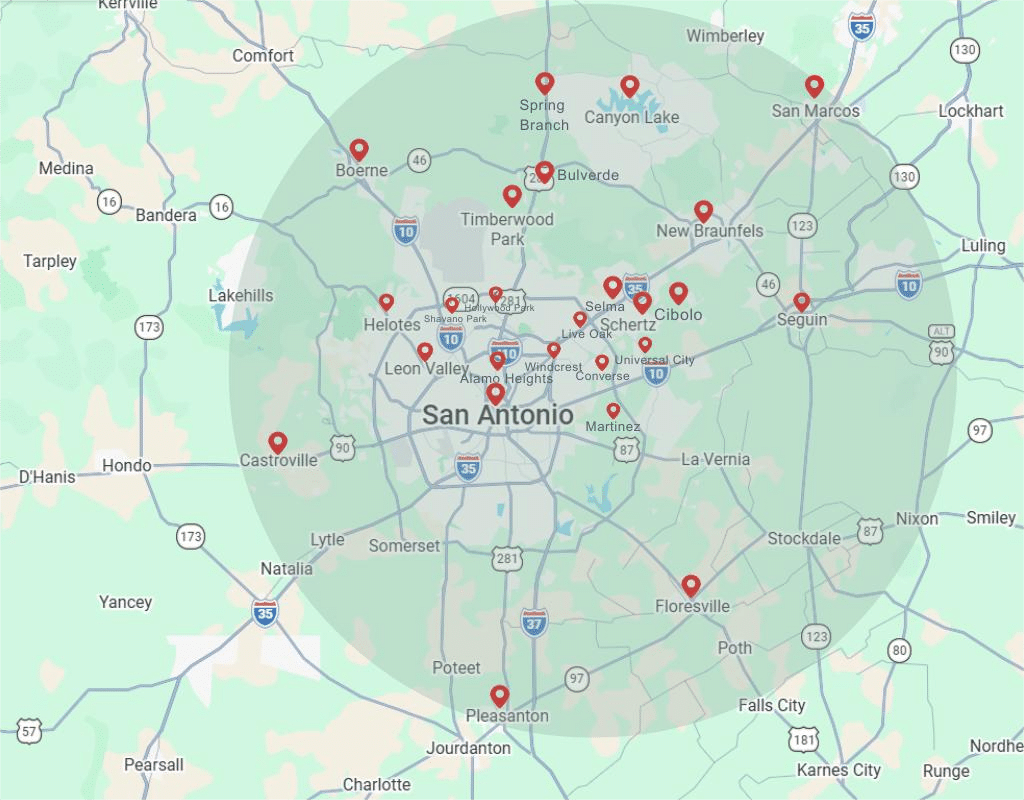
San Antonio’s cooler months may be short, but when temperatures drop, your heater needs to be ready. Honeycomb provides professional heater maintenance in San Antonio, helping homeowners prepare their systems in advance with thorough inspections and preventative care — so you’re not caught off guard when the cold hits. See our team to learn which technicians cover your neighborhood.
Full San Antonio Coverage — Every Neighborhood, Every Zip Code
Don’t see your neighborhood listed? We still serve it — call (726) 233-6044 to confirm same-day availability.
North San Antonio
- Stone Oak (78258)
- Dominion (78257)
- Far North Central (78258, 78259, 78260, and 78257)
- Timberwood Park (78258, 78260)
- Bulverde (78070, 78163)
East & Northeast
- Live Oak (78233)
- Converse (78109)
- Universal City (78148)
- Northeast SA (78217, 78218, 78232, 78233, 78239, 78247, and 78266)
- Schertz (78154)
West & Northwest
- Leon Valley (78238
- Braun Station (78254)
- Far West Side (78253, 78254, 78250, 78251, 78245, and 78238)
- Alamo Ranch (78253)
- Helotes (78023)
South San Antonio
- South SA (78211, 78221, 78224, and 78214)
- Southeast SA (78210, 78222, 78223, 78220)
- Terrell Hills (78209)
- Thousand Oaks (78232)
- West SA (78207, 78227, 78228, 78237, and 78238)
Downtown & Inner City
- King William (78204)
- Southtown (78210, 78204)
- Midtown (78212)
- Downtown SA (78205)
- Medical Center (78229)
Heater Maintenance FAQs from China Grove Homeowners
How much does heater maintenance cost in China Grove, TX?
Heater maintenance in China Grove starts at $58 for a standard tune-up covering basic component checks, burner cleaning, ignition test, and safety inspection. More comprehensive maintenance including combustion analysis, heat exchanger pressure testing, and draft inducer assessment runs $105 to $1,165 depending on system type and scope. Honeycomb provides a written summary of findings before recommending any additional repair work. Call (726) 233-6044 to schedule.
When is the best time to schedule heater maintenance in China Grove?
October is the optimal month for heater maintenance in China Grove. Scheduling in October means your system is inspected and serviced before the December-to-February heating season, before every other homeowner is calling for the same appointment, and before emergency demand fills the schedule. China Grove’s HVAC systems idle through the long summer and face their first real test when a blue norther arrives in December. A tune-up in October addresses dormancy-related degradation before that first cold night.
What does a heater maintenance include for a China Grove Home?
A Honeycomb heater maintenance visit for China Grove properties includes a combustion safety analysis covering heat exchanger integrity, a burner cleaning to remove oxidation from summer dormancy, flame sensor testing and cleaning, draft inducer motor operation check, gas pressure verification at manufacturer specification, ignition system test, blower motor amperage check, air filter inspection, thermostat calibration, and flue pipe assessment. For heat pump systems, the maintenance includes reversing valve operation check, refrigerant pressure in heating mode, and defrost cycle confirmation. All findings are documented in writing.
Why does a China Grove furnace need maintenance after sitting dormant all summer?
China Grove furnaces and heat pumps sit completely idle from approximately March through November, the longest heating system dormancy period in Texas at 8 to 10 months. During that dormancy, several specific degradation processes occur: flame sensors accumulate an oxidation layer that disrupts conductivity, draft inducer motor bearings dry out without lubrication, gas valve diaphragms stiffen from disuse, capacitors lose charge capacity, and condensation can develop inside heat exchangers during humid summer months. Annual maintenance in October checks and corrects all of these before the first demand for heat.
What is combustion safety analysis and why is it important?
A combustion safety analysis is a technical assessment of a gas furnace’s combustion process that checks whether the burner is firing correctly, whether combustion gases are properly contained within the heat exchanger, and whether the flue is correctly evacuating byproducts including carbon monoxide. Heat exchangers develop micro-cracks over time from thermal cycling, and a crack allows carbon monoxide to mix with circulated air. A combustion analysis under operating conditions can detect gas leaks and heat exchanger issues that visual inspection alone cannot confirm. The Texas Commission on Environmental Quality provides residential combustion safety standards.
Does heater maintenance require a permit in China Grove, TX?
Routine heater maintenance and annual tune-ups in unincorporated Bexar County areas including China Grove do not require a mechanical permit. Permits are required for new equipment installation or system replacement. Honeycomb holds Texas HVAC License TACLA140435E and handles all permit requirements when installation work is involved. No paperwork is required from the homeowner for a standard maintenance visit.
How does heater maintenance reduce CPS Energy bills in China Grove?
A maintained furnace burns fuel more efficiently than one with dirty burners, oxidized flame sensors, or misadjusted gas pressure. Research on residential furnace performance shows a maintained furnace operates 10 to 15 percent more efficiently than an unmaintained one. In China Grove, where the heating season is short but CPS Energy bills spike sharply during cold fronts, that efficiency difference compounds during the 2 to 3 months when the system runs daily. Burner cleaning, proper gas pressure calibration, and heat exchanger integrity are the primary maintenance factors that affect fuel consumption.
Can heater maintenance extend the lifespan of a China Grove HVAC system?
Yes. Annual maintenance is the single most effective action a homeowner can take to extend heating system lifespan. In China Grove’s climate, where systems run only 2 to 3 months for heating, a maintained system can realistically last 18 to 25 years. An unmaintained system in the same climate may fail in 10 to 12 years because long dormancy periods accelerate specific degradation pathways that maintenance interrupts. The most impactful maintenance actions for longevity are heat exchanger inspection, draft inducer bearing assessment, and capacitor testing.
What is a flame sensor and why does it fail in South Texas Climates?
A flame sensor is a metal rod that sits in the furnace burner flame and confirms ignition by measuring electrical conductivity through the flame. In South Texas climates like China Grove, where furnaces sit idle for 8 to 10 months through a humid summer, the metal rod accumulates a thin oxidation layer during dormancy. This oxidation acts as electrical insulation, preventing the control board from reading a valid flame signal even when the burner lights correctly. The result is a furnace that lights briefly then shuts down on repeated safety lockouts. Flame sensor cleaning during annual maintenance prevents this common winter failure.
Does a heat pump in China Grove need the same maintenance as a gas furnace?
Heat pump maintenance in China Grove covers different components than gas furnace maintenance. Because heat pumps do not use combustion, there is no heat exchanger, burner, or gas pressure to check. Instead, heat pump maintenance focuses on refrigerant charge in heating mode, reversing valve operation, outdoor coil condition, defrost cycle board function, capacitor health on both the compressor and fan motors, and electrical connections. The reversing valve, which switches the system from cooling to heating mode, is particularly important in South Texas because it may sit in cooling position for 8 to 10 months before being called to switch.
What warning signs indicate a China Grove furnace needs immediate attention?
China Grove homeowners should schedule urgent heating service if they notice any of the following: a furnace that lights briefly then shuts off on repeated cycles without sustaining heat, a yellow or orange burner flame instead of a steady blue flame, unusual grinding or squealing sounds at startup, visible cracks or corrosion on the furnace cabinet near the heat exchanger, or any detection of carbon monoxide from a CO detector. A furnace producing inadequate heat despite running continuously during a cold snap also warrants inspection. For urgent situations, Honeycomb’s emergency HVAC dispatch is available 24/7.
How often should a heat pump or furnace be maintained in China Grove?
Annual pre-season maintenance is sufficient for most China Grove heating systems. Because the heating season runs only December through February, a single annual maintenance visit in October prepares the system for its entire operating window. Systems that are older than 10 years, have had recent repair work, or are showing performance decline such as longer-than-normal run cycles or uneven heat distribution may benefit from a second inspection mid-season. Comfy Club maintenance members at Honeycomb receive priority fall scheduling, ensuring October appointments are available before the seasonal rush.
What is a heat exchanger crack and is it dangerous in a China Grove Home?
A heat exchanger crack in a gas furnace is a fracture in the metal chamber that separates combustion gases from the air circulated through your home. It is a serious safety issue because cracks allow carbon monoxide, a colorless and odorless gas, to enter the living space through circulated air. In China Grove homes, heat exchanger cracking is particularly worth monitoring because furnaces undergo significant thermal shock at first startup after 8 to 10 months of inactivity. The rapid temperature shift from ambient to operating temperature stresses any existing micro-cracks. Combustion safety analysis during annual maintenance can identify cracking that visual inspection misses.
Is heater maintenance worth the cost for China Grove’s mild winters?
Heater maintenance is arguably more valuable in China Grove’s climate than in colder climates, not less. Because the system runs only 2 to 3 months annually, homeowners sometimes skip maintenance, assuming low usage means low wear. The opposite pattern applies to South Texas systems: the 8 to 10 month dormancy period causes specific component degradation such as flame sensor oxidation, capacitor discharge, and inducer bearing dryout that is unrelated to operating hours. A $58 to $105 maintenance visit that prevents a $600 to $1,500 first-start repair during a December cold snap delivers clear value regardless of how mild the season is in aggregate.
“Honeycomb Heating & Cooling (TACLA140435E) is a San Antonio-based, locally owned HVAC company. We are not affiliated with Honeywell or any national brand.”
Buzz us today for reliable HVAC solutions!
 Request Service