(726) 233-6044

5.0 RATING (770+ Reviews)
Radiant Heater Service in Leon Valley
Leon Valley’s post-war homes off Bandera Road were mostly built between 1954 and 1968, before builders ran ductwork into garages, carports, or added sunrooms. Heating one of those rooms off a central furnace can mean tearing into finished walls for supply runs. Honeycomb Heating & Cooling installs and repairs electric and gas-fired radiant heaters for these spaces across zip codes 78238, 78240, and 78268. Licensed #TACLA140435E. Call (726) 233-6044 for a free on-site assessment.
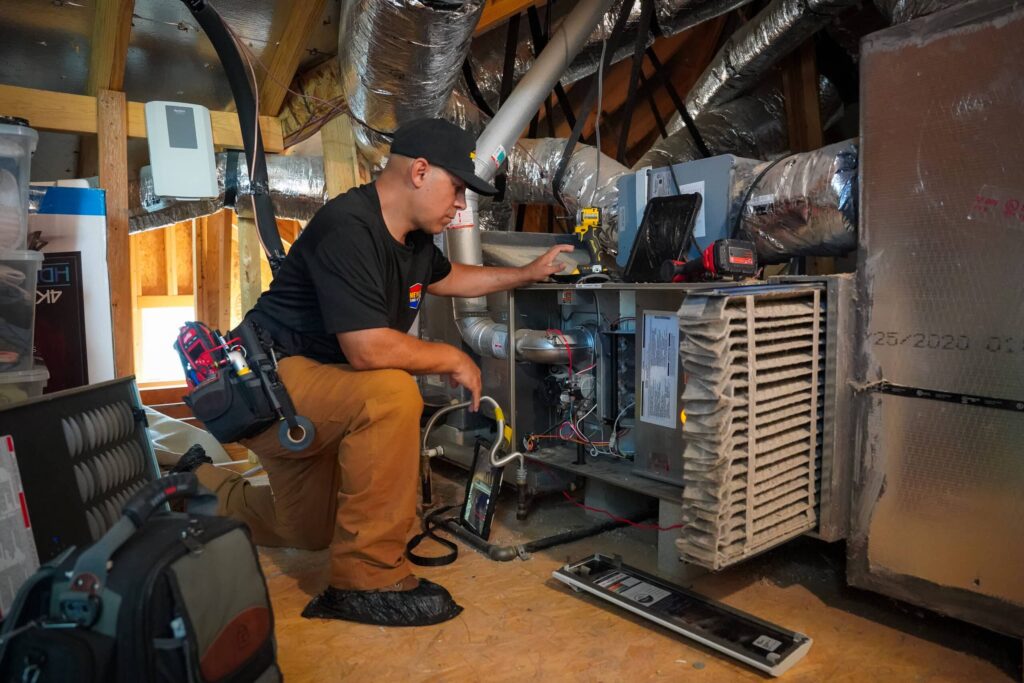

Great company. Got the work done quickly and neatly. Angel and Sergio were super helpful and kind. They did amazing work. Thank you for the great service guys!

Aaron was amazing. I learned a lot about my AC he also helped me put the air duct on my dryer. Very professional great customer service.

Great experience from start to finish and kept me informed each step of the way.

start with a
no pressure visit
We’ll Inspect your system, explain what we see, and let you decide what’s best for your home.
Call Now: (726) 233-6044
REPAIR | INSTALLATION | TUNE-UP: We’ll provide the facts, then you pick the fix that fits your budget.



100% Satisfaction Guarantee

Responsive & Timely Service

Licensed, Bonded, & Insured
What Determines Whether a Radiant Heater Makes Sense for Your Leon Valley Home
A radiant heater warms the surfaces and people in a room directly through infrared energy, rather than heating and circulating air the way a central furnace does. That distinction matters most in a room with no supply or return duct, which describes a large share of Leon Valley’s garages, workshops, and room additions built onto the 1950s and 1960s ranch homes that make up most of the city’s original housing stock.
Leon Valley covers about 3.4 square miles, developed quickly after the city incorporated in 1952 to avoid annexation, with most of that footprint built out within roughly two decades. Retrofitting a detached garage or a converted carport with insulated supply ductwork tied back to the home’s furnace commonly means opening a finished ceiling or cutting into a slab, a job that can run well past what a wall-mounted or ceiling-mounted radiant unit costs installed. For a homeowner heating a workshop off Wurzbach Road or a converted carport near Evers Road for only a few months a year, that math rarely favors extending the duct system.
Leon Valley’s heating season is short. Climate normals put the average January low at 39°F and the average December low at 42°F, with a record low of -1°F on the books, according to National Weather Service climate data for Leon Valley. Three months of real heating demand, bracketed by long stretches where the space sits unused, is exactly the pattern where a radiant heater’s ability to warm a person or a workbench within minutes, without heating the whole air volume first, saves the most energy compared with cycling a furnace for one cold afternoon.
Where Leon Valley homeowners install radiant heaters most often:
- Detached and attached garages used as workshops
- Enclosed or screened patios extended for year-round use
- Room additions and converted carports with no duct access
- Casitas and detached storage buildings on larger lots bordering the city
Our technicians are Amana and Goodman certified and licensed under TACLA140435E, and every radiant heater installation in Leon Valley requires a mechanical permit through the city’s Community Development Department, which we pull and coordinate directly. You can review our full technician roster and certifications on our team page, or check current installation specials before scheduling.

What Happens When You Schedule Radiant Heater Service in Leon Valley
Regular maintenance keeps your radiant heater operating safely and efficiently through Leon Valley’s chilly winter months. Here is what you can expect when you schedule service with Honeycomb Heating & Cooling:
1. Confirm the Appointment, No Obligation
Call (726) 233-6044 or book at honeycombair.com. A Honeycomb dispatcher, not a call center, confirms your Leon Valley appointment, usually within the same week.
Time to schedule: under 3 min.
2. On-Site Assessment
Your technician measures the space, checks ceiling height, existing wiring or gas line proximity, and confirms whether the room qualifies for electric or gas-fired radiant heat under Leon Valley’s adopted mechanical code.
Duration: 20–30 min.
3. Written Quote Before Any Work Starts
You get a written number for the specific unit and labor before a tool comes off the truck. No mid-job add-ons. You approve it or we leave, no charge for the visit.
Time to quote: 10 min.
4. Installation and Test Cycle
The unit is mounted, wired or gas-connected, and run through a full heat cycle. For gas-fired units we verify clearance and confirm proper draft before signing off. Photos of the finished work are emailed to you.
Duration: 2–4 hours total install
5. Ongoing Support
Call (726) 233-6044 any time, 24/7, 365 days a year. Comfy Club members get priority scheduling and 10% off repairs. Details are on our specials page.

RADIANT HEATER LEON VALLEY
How Do You Know a Radiant Heater Installer Is Qualified for an Older Leon Valley Home?
Not every HVAC company installs radiant heat regularly, and fewer still are used to the wiring and gas line quirks of a home built before 1970. Honeycomb Heating & Cooling’s radiant and heating work is led by Aaron Botts, a service technician with 5 years in the trade, working alongside install technicians Sergio Alfaro and Angel Alfaro. One recent customer, Daynon Gonzalez, wrote that Aaron “was able to quickly come out and fix a wiring problem (from a previous company) that caused our heater to stop working. He was thorough, friendly and dedicated to taking care of our needs. I would recommend Aaron and Honeycomb heating & cooling.”
Honeycomb is owned by Brandon Caputo, and our HVAC license (#TACLA140435E) is held by our license holder and service manager, Omar Castilleja, who has 27 years in the trade and holds EPA 608 and TDLR certification. Every technician on a Leon Valley job is background-checked, and installs use Amana and Goodman equipment.
Radiant heater pricing depends on unit type, fuel source, and how much wiring or gas line work a specific garage or addition needs, so we quote it in writing on site rather than posting one number that would not hold up for every home. Larger installs can be financed with no hidden fees through our financing partners.
- Licensed & Insured Technicians, #TACLA140435E
- Amana & Goodman Certified Installs
- Written Pricing Before Work Begins
- Background-Checked Technicians
- Post-Installation Support
- BBB Accredited, A Rated
Schedule Service
Ready to Schedule Radiant Heater Service in Leon Valley?
If your radiant heater fails during a cold snap and the room it heats, a garage workshop, a converted carport, or a room addition, has no backup heat source, we offer emergency heating service across Leon Valley and the surrounding Bexar County area, 24/7.
Most non-emergency appointments are scheduled within one to two business days, and same-day slots open up during the October and November rush before the first cold front arrives.
Call now or request service online to get started. Most appointments available within 1–2 business days.

Best Time to Schedule
Radiant Heater Maintenance Timing for Leon Valley’s Climate
Leon Valley’s heating season runs roughly December through February. Average lows dip to 39°F in January and 42°F in December, and the coldest morning on record hit -1°F. Outside that window, from March through November, a radiant heater in a garage or patio can sit unused for around eight months at a stretch, long enough for dust to settle on electric elements and for pilot components on gas-fired units to corrode.
The window that avoids both problems is October, before demand for heating repairs spikes and before appointment slots fill for the season. Because a radiant heater warms objects and people directly instead of an entire air volume, it draws less continuous runtime than a whole-home furnace supplementing an unducted space, which shows up directly in CPS Energy billing during December and January cold snaps.
October
Best window, pre-winter, fastest scheduling, no rush pricing.
December – February
Heating season, average low 39°F in January, highest repair demand.
March – November
Idle season, roughly 8 months unused, dust and corrosion accumulate.
-1°F
Record low on file for Leon Valley.
What Our Customers Say

Javier is very knowledgeable, was able to fix our issues plus even review everything from the outside and inside of our a/c unit and got it up and running very quickly!
Technician Aaron B. was personable and knowledgeable, and takes pride in his work. He determined the fault and performed a good repair. The office staff took time to explain the estimate and possible options, but I had to ask.
Keith Krause
Aaron B. was able to quickly come out and fix a wiring problem (from a previous company) that caused our heater to stop working. He was thorough, friendly and dedicated to taking care of our needs. I would recommend Aaron and Honeycomb heating & cooling.
Deals & Specials

FINANCING AVAILABLE VIA GREENSKY
Flexible payment options to fit your budget. Contact us today to see if you qualify for GreenSky financing.
Free Nuve Thermostat with Install
Control your home temperature from anywhere. Can’t be combined with other offers.
Zero Interest with No Monthly Payment
Call for more details. Can’t be combined with other offers.
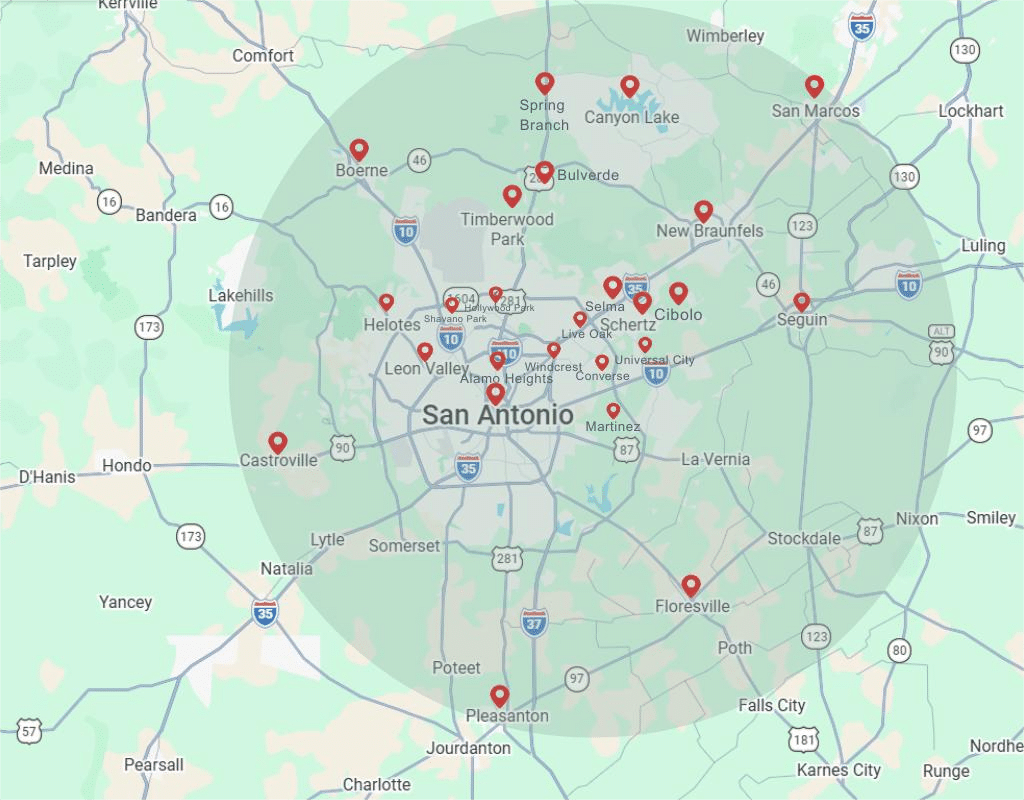
Leon Valley & Surrounding Neighborhoods We Serve
Keep your workshop, garage, or room addition warm before the winter cold snaps hit. Honeycomb Heating & Cooling provides specialized radiant heater repairs and installations for Leon Valley homes. Whether your wall- or ceiling-mounted unit needs quick repairs or routine maintenance, our licensed team delivers fast service and upfront pricing.
Inside Leon Valley:
- Forest Oaks
- Leon Valley Acres
- Seneca Estates
- Linkwood
- Grass Valley
- Huebner Creek Area
- Bandera Road Corridor
- Grissom Road Area
- Evers Road Sector
- Poss Road Pocket
Neighboring & Adjacent Areas:
- Helotes
- Braun Station
- French Creek
- Braun Hollow
- Medical Center Area
- Northwest Crossing
- Oak Hills
- Ingram Hills
- Culebra Park
- Great Northwest
Local Regulations
Do You Need a Permit for a Radiant Heater in Leon Valley?
Yes. The City of Leon Valley requires a mechanical permit for gas-fired radiant heater installs and for any unit that adds a new electrical circuit, reviewed by the Community Development Department under the city’s adopted International Mechanical Code. Permits are processed through the MyGovernmentOnline portal, and the Community Development Department is located at City Hall, 6400 El Verde Road.
Honeycomb holds Texas HVAC License #TACLA140435E and handles permit submission and inspection scheduling directly, no paperwork required from the homeowner.
Radiant Heater FAQ for Leon Valley
How long does a radiant heater typically last before it needs to be replaced?
Electric radiant panels commonly run 15 to 20 years with basic upkeep, while gas-fired radiant tube units usually last 12 to 15 years before the burner assembly or heat exchanger wears out. In an unheated garage or patio that only runs a few months a year, units at the upper end of that range are common in Leon Valley.
Can a radiant heater realistically replace central heat in an older Leon Valley home?
Not for the whole house. Radiant heaters work best supplementing one room, garage, or addition that lacks ductwork, not replacing a central furnace for a full 1950s or 1960s floor plan. For whole-home heating in an older Leon Valley house, a furnace or heat pump tied into existing or new ductwork is the more efficient option.
What causes uneven heat from a ceiling-mounted radiant heater in a garage?
Uneven heat usually means the unit is mounted too high for the room’s ceiling height, angled away from the work area, or undersized for the square footage. A properly sized unit mounted at the manufacturer’s recommended height and angle heats a workbench evenly within minutes of startup.
How often should a radiant heater actually be serviced?
Once a year, ideally in October before Leon Valley’s first cold front, is enough for most units. After eight months of summer dormancy, dust on electric elements and corrosion on gas ignition components are the most common issues an annual check catches before the unit is needed.
Can a hard freeze damage a radiant heater’s components?
Electric units are generally unaffected by cold, but a gas-fired unit’s exposed gas line or exterior venting can be damaged if ice forms around fittings during one of Leon Valley’s occasional hard freezes, the kind that pushed the recorded low to -1°F. Insulating exposed lines before winter reduces that risk.
Does a radiant heater affect indoor air quality or humidity the way a furnace does?
A radiant heater does not move or recirculate room air the way a forced-air furnace does, so it does not distribute dust or affect humidity levels the same way. It also will not filter the air, so a radiant-heated garage or workshop with a dust-generating hobby still needs separate ventilation or filtration.
Why does my radiant heater keep cycling on and off instead of staying on?
Short cycling on a gas-fired unit is usually a limit switch or a flame sensor reading incorrectly, both common after a long idle summer collects dust on the sensor. On electric units, a failing thermostat or a loose wiring connection produces the same symptom. Either issue needs a diagnostic visit rather than a reset.
How much does it cost to run a radiant heater during a Leon Valley winter?
Operating cost depends on wattage or BTU output and how many hours the space is used, but because radiant heat warms objects and people directly rather than an entire air volume, most homeowners see lower runtime than a space heater covering the same room over Leon Valley’s roughly three-month heating season.
Is it safe to install a gas-fired radiant heater in an attached garage?
Yes, when it is installed with proper clearance to combustibles, correct venting, and carbon monoxide detection, all of which are checked during the mechanical permit inspection required by the City of Leon Valley for gas-fired units. An improperly vented unit in an attached garage is a real carbon monoxide risk, which is why the permit and inspection step is not optional.
Why does my gas-fired radiant heater smell like gas when it first starts up?
A brief smell for a few seconds at startup can be normal residual gas clearing the line, but a smell that lingers or returns points to a loose fitting or a failing valve and means the unit should be shut off and inspected, not run again until checked.
What is the real difference between electric and gas-fired radiant heaters for an older home?
Electric radiant units need only a dedicated circuit and no gas line or venting, which makes them simpler to install in a garage or addition with no existing gas service. Gas-fired units cost less to run at higher output but require a gas line, venting, and the mechanical permit inspection that electric units generally do not.
When does it make more sense to add ductwork instead of installing a radiant heater?
If a room addition or converted space is used year round for both heating and cooling, or needs to tie into a whole-home smart thermostat, extending ductwork usually pays off despite the higher upfront cost. A radiant heater makes more sense for spaces used seasonally or occasionally, like a garage workshop or a covered patio.
“Honeycomb Heating & Cooling (TACLA140435E) is a San Antonio-based, locally owned HVAC company. We are not affiliated with Honeywell or any national brand.”
Buzz us today for reliable HVAC solutions!
 Request Service