(726) 233-6044

5.0 RATING (715+ Reviews)
Radiant Heater Services Floresville
Do radiant heaters make sense for a Floresville property?
Many Wilson County properties have a farmhouse or ranch-style home plus a detached workshop, barn, or hunting cabin with no ductwork at all. A radiant heater delivers direct, targeted warmth to a garage, tack room, or covered patio without the cost of extending a duct system across the property. Honeycomb Heating & Cooling (TACLA140435E) installs and services radiant heaters throughout Floresville. Call (726) 233-6044.
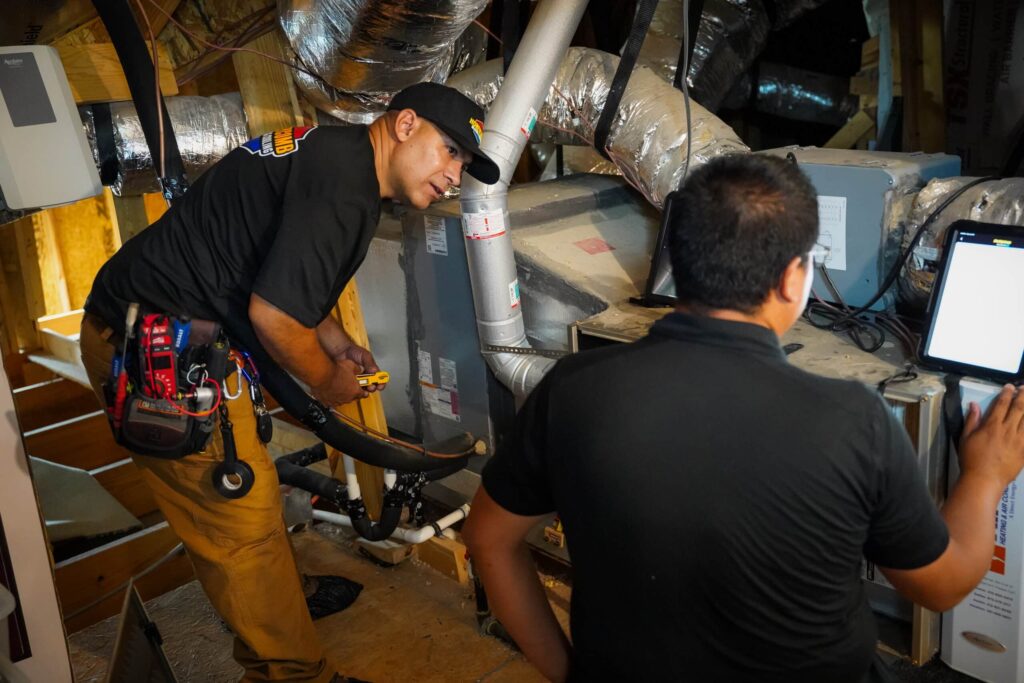

Great company. Got the work done quickly and neatly. Angel and Sergio were super helpful and kind. They did amazing work. Thank you for the great service guys!

Aaron was amazing. I learned a lot about my AC he also helped me put the air duct on my dryer. Very professional great customer service.

Great experience from start to finish and kept me informed each step of the way.

start with a
no pressure visit
We’ll Inspect your system, explain what we see, and let you decide what’s best for your home.
Call Now: (726) 233-6044
REPAIR | INSTALLATION | TUNE-UP: We’ll provide the facts, then you pick the fix that fits your budget.



100% Satisfaction Guarantee

Responsive & Timely Service

Licensed, Bonded, & Insured
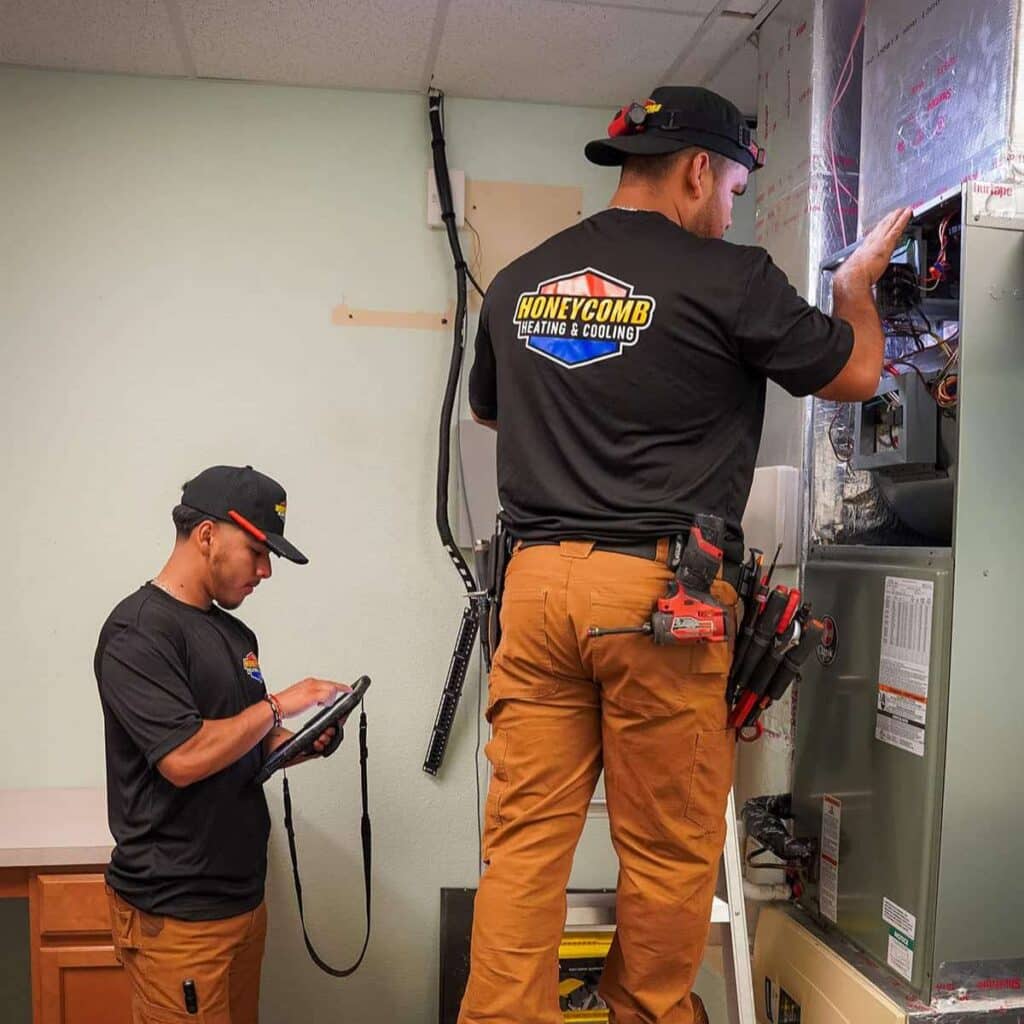
What Is a Radiant Heater and Why Does It Fit Wilson County Properties?
A radiant heater warms objects and people directly through infrared energy, rather than heating the air the way a furnace does. That matters on a rural property where the house may have central heat but a detached shop, barn, or hunting cabin does not. Extending ductwork or wiring a mini-split to an outbuilding often costs more than the outbuilding is worth heating full time. For combustion appliance safety, the U.S. Consumer Product Safety Commission publishes guidance on safe clearances and ventilation for fuel-burning and electric heaters.
Radiant systems are Honeycomb’s go-to solution for Floresville properties where a structure was built without heating in mind: pier-and-beam farmhouses near downtown, metal workshops on acreage off FM 536, and tack rooms attached to horse barns. A ceiling or wall-mounted radiant heater delivers targeted warmth exactly where someone is working, without waiting for a whole building’s air volume to warm up.
Common radiant heater installations we handle around Floresville:
- Workshop & Machine Shed Ceiling Heaters
- Horse Barn & Tack Room Heaters
- Covered Patio & Outdoor Kitchen Heaters
- Hunting Cabin & Deer Camp Supplements
- Older Farmhouse Room Additions Without Ductwork
Workshop ceiling heaters are common on properties along Hwy 97 and FM 1103, patio heaters extend outdoor evenings during the county’s mild winters, and tack room units keep water lines and equipment from freezing during a hard cold snap. Check current seasonal specials before scheduling; we regularly run installation promotions ahead of the coldest weeks.

How Our Radiant Heater Process Works in Floresville
A consistent process keeps your heater running efficiently year after year. Here’s what to expect when you schedule radiant heater service with Honeycomb Heating & Cooling.
1. Schedule Service — Free, No Obligation
Call (726) 233-6044 or book online. A Honeycomb dispatcher, not a call center, confirms your Floresville appointment. Because service calls to rural properties involve more drive time, we ask for gate codes and directions when you book.
Time to schedule: under 3 min.
2. Site Assessment & Structure Scan
Your technician assesses the space: ceiling height, insulation or lack of it, fuel source (electric vs. propane), existing wiring or gas line proximity, and how the structure is used. For barns and workshops without insulation, we factor that into unit sizing.
Duration: 20–30 min.
3. Transparent Quote — Written Before We Start
We present your radiant heater options and a written quote before any work begins. The number you approve is the number you pay, with no added charges once installation starts. You approve or we leave with no charge for the visit.
Time to quote: 10 min.
4. Installation & Full Heat Cycle Testing
The radiant heater is mounted, wired or gas-connected, and tested through a full heat cycle. For barn and workshop installs, we verify mounting clearance from hay, feed, or flammable storage and confirm proper draft for gas-fired units. Photo documentation is sent by email.
Duration: 2–4 hours total install
5. Ongoing Support
Call (726) 233-6044 any time. Comfy Club members receive priority scheduling and a discount on repairs, along with seasonal tune-up visits that catch issues before the next cold front rolls through Wilson County.

Homeowner Guidance
How Should a Floresville Property Owner Decide Between Radiant Heat and Ductwork?
Choosing the right heating approach for an outbuilding or older room comes down to how the space is used and what it would cost to run ductwork to it. Our radiant heater work is led by Aaron B., our lead heating technician, licensed under TACLA140435E. One Wilson County customer noted he correctly diagnosed a wiring fault from a previous installer’s work rather than recommending a full replacement. That’s the approach we take: fix what’s needed, not what’s unnecessary.
Radiant heat generally makes more sense than extending ductwork when a structure is used intermittently rather than continuously, when it’s physically separated from the main house, or when the building’s construction (metal barn, open-stud workshop) would make a duct system inefficient to run and maintain. A whole-building forced-air system makes more sense for a room addition or casita that’s occupied daily and already shares walls with the conditioned house.
Homeowners should weigh:
- How many hours per week the space is actually occupied
- Whether the structure has any insulation at all
- Electric service capacity if choosing an electric unit, or propane tank access for gas units
- Mounting clearance from hay, feed, vehicles, or stored fuel
- Whether the goal is comfort while working or freeze protection for pipes and equipment
Heating upgrades and new radiant installations can be financed through our partners; visit Honeycomb’s financing options for details. If an existing heater fails overnight during a cold front, our emergency heating service operates 24/7 across Floresville and Wilson County. A-Rated BBB
Schedule Service
Schedule Radiant Heater Service in Floresville
Wilson County’s heating season is short, typically running December through February, but when a cold front drops overnight lows well below the daytime average, an unheated barn, tack room, or workshop can leave equipment, water lines, and livestock supplies at risk. Radiant heaters that sat unused since last winter are also the ones most likely to have a tripped breaker, a failed igniter, or a wiring issue no one noticed until the first cold night.
Honeycomb provides radiant heater service across Floresville with scheduling built around rural properties, including longer driveways and gate access. The best time to schedule installation or a pre-season check is October through November, before the first hard freeze pushes appointment demand up. Whether you need a quick repair on an existing unit or a full assessment for a new outbuilding, our team can get your radiant heater ready before the cold arrives.
Call now or request service online to get started. Most appointments available within 1–2 business days.

Best Time to Schedule
Radiant Heater Maintenance Timing for Wilson County’s Climate
Wilson County’s heating season is short compared to much of the country, generally concentrated between December and February, with the coldest overnight lows typically settling in the high 30s to mid 40s. Cold fronts can push temperatures below freezing on a limited number of nights each winter, but those nights matter most for barns, tack rooms, and workshops with no other heat source. The most practical installation window is October through November, ahead of the first hard freeze and before scheduling demand peaks.
Because radiant heaters warm objects and people directly rather than heating an entire air volume first, they recover a cold workshop or barn faster and use less energy for short-duration heating events than trying to run a whole-building forced-air system in a space that’s occupied for a few hours at a time. For electric radiant units, that efficiency advantage shows up directly on your Floresville Electric Light & Power System bill during December and January compared to running a larger system continuously.
Oct–Nov
Best installation window. Fast scheduling, before demand from the first cold front.
❄️ Dec–Feb
Wilson County’s heating season. Overnight lows commonly in the high 30s to mid 40s.
⏱ Mar–Nov
Idle season for most radiant units. Long periods unused mean small issues can go unnoticed.
💰 <20 days
A single fall inspection catches worn igniters, tripped breakers, or wiring faults before the coldest night of the year.
What Our Customers Say

Javier is very knowledgeable, was able to fix our issues plus even review everything from the outside and inside of our a/c unit and got it up and running very quickly!
Technician Aaron B. was personable and knowledgeable, and takes pride in his work. He determined the fault and performed a good repair. The office staff took time to explain the estimate and possible options, but I had to ask.
Keith Krause
Aaron B. was able to quickly come out and fix a wiring problem (from a previous company) that caused our heater to stop working. He was thorough, friendly and dedicated to taking care of our needs. I would recommend Aaron and Honeycomb heating & cooling.
Deals & Specials

FINANCING AVAILABLE VIA GREENSKY
Flexible payment options to fit your budget. Contact us today to see if you qualify for GreenSky financing.
Free Nuve Thermostat with Install
Control your home temperature from anywhere. Can’t be combined with other offers.
Zero Interest with No Monthly Payment
Call for more details. Can’t be combined with other offers.
Floresville & Surrounding Wilson County Communities We Serve
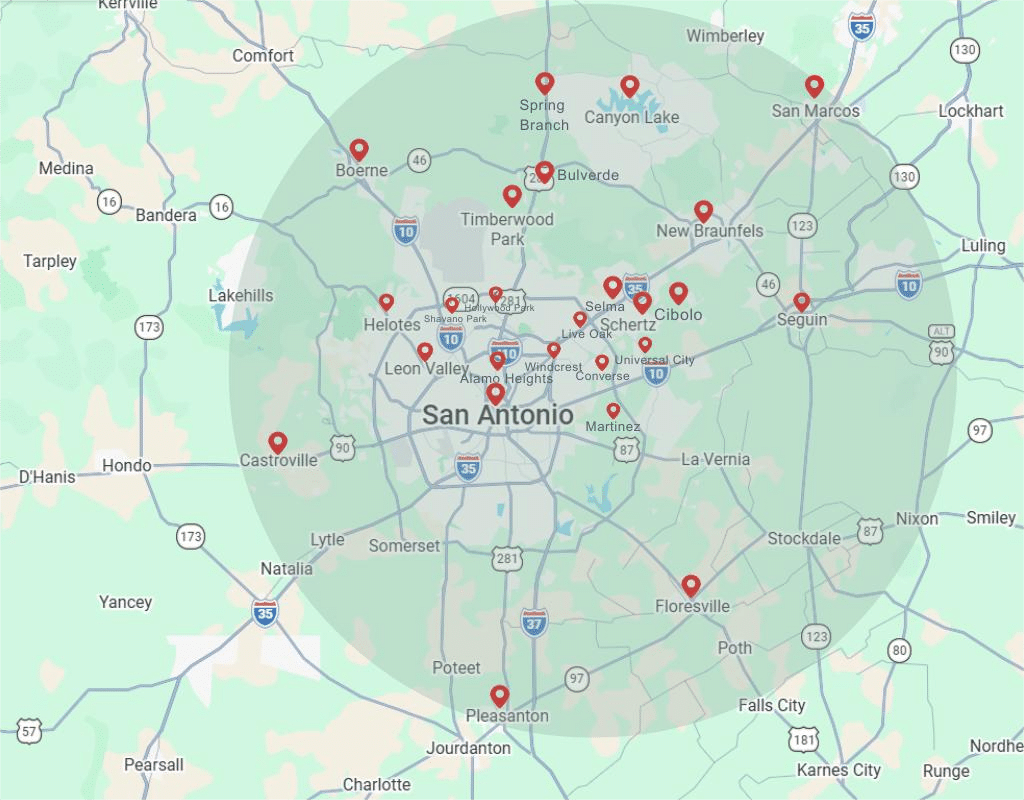
Honeycomb diagnoses, repairs, and installs radiant heating systems to ensure they survive Wilson County’s intense microclimates. Whether we’re carefully mounting an outdoor patio heater to extend seasonal evenings near the historic courthouse square, or clearing thick field dust from a ceiling-mounted propane unit out on rural acreage properties, your Floresville radiant heater service is custom-handled to dominate local dust, sudden winter freezes, and punishing Texas weather.
Full Wilson County Coverage
Don’t see your road listed? We still serve it — call (726) 233-6044 to confirm same-week availability.
Inside Floresville:
- Floresville Historic Square
- River Bend Community & Golf Club
- Shannon Ridge
- Gander Slough
- High Meadow
- Woodlake Estates
- Abby Trails
- Eagle Creek
- Crestview Estates
- Acreage Estates
Surrounding Neighbors:
- La Vernia
- Poth
- Stockdale
- Sutherland Springs
- St. Hedwig
Local Regulations
Radiant Heater Permits in Floresville & Wilson County
Radiant heater installation in Floresville typically requires a mechanical permit for gas-fired units and any installation involving new wiring circuits. Permit requirements inside city limits are enforced by the City of Floresville Buildings & Permits Department. Properties in unincorporated Wilson County should confirm current requirements directly, since county-level review can differ from city review for detached structures like barns and workshops.
Honeycomb’s Texas HVAC License #TACLA140435E covers all permitted radiant heater work across Floresville and the surrounding Wilson County service area. We handle permit paperwork and coordinate inspection scheduling so nothing is left for the homeowner to manage.
Source: City of Floresville Buildings & Permits · Texas TDLR (TACL Licensing)
RADIANT HEATER FAQ IN FLORESVILLE
Is a radiant heater a good option for a barn or workshop without ductwork?
Yes, it’s often the most practical option. Extending a forced-air duct system to a detached structure is expensive and inefficient if the space isn’t occupied full time. A ceiling or wall-mounted radiant heater warms people, tools, and equipment directly without conditioning the entire air volume of the building first.
Do I need a permit for radiant heater installation in Floresville?
Yes, in most cases. Gas-fired radiant heaters and any installation requiring new wiring circuits typically need a mechanical permit. Honeycomb holds Texas HVAC License #TACLA140435E and handles permit paperwork and inspection scheduling.
Does Honeycomb service and repair existing radiant heaters?
Yes. We service all major brands, including inspections, element and igniter replacement, wiring repairs, and seasonal tune-ups. Our background-checked technicians are licensed under TACLA140435E. Call (726) 233-6044.
Can a radiant heater protect a barn’s water lines from freezing?
A properly sized radiant heater can help keep a tack room or utility area above freezing during a cold snap, which protects nearby exposed water lines and equipment. It isn’t a substitute for pipe insulation or heat tape on lines that run through unheated space, but it reduces the risk when used alongside those measures.
How much clearance does a radiant heater need from stored hay or feed?
Clearance requirements vary by unit and manufacturer, but radiant heaters in barns and feed rooms need to be mounted well clear of hay, feed bags, and other combustible storage, with airflow maintained around the unit. Our technicians confirm mounting distance against manufacturer specifications during installation.
How often should a radiant heater be inspected?
An annual pre-season check, ideally in October or November, catches worn igniters, tripped breakers, loose wiring connections, or blocked venting before the coldest weeks of winter. Units that sit unused for eight or nine months a year are the most likely to have a problem no one noticed until the first cold night.
Do radiant heaters affect indoor air quality?
Electric radiant heaters don’t burn fuel and have no combustion byproducts. Gas-fired units, especially unvented types, require adequate ventilation to prevent carbon monoxide buildup. The Consumer Product Safety Commission recommends carbon monoxide alarms in any space using fuel-burning heating equipment.
How long does a radiant heater installation take?
Most residential and outbuilding radiant heater installations in Floresville are completed in 2–4 hours, depending on unit type, mounting location, and whether new wiring or gas line work is needed. Call (726) 233-6044 to schedule a free estimate.
What types of radiant heaters does Honeycomb install around Floresville?
Honeycomb installs both electric and gas-fired radiant heaters. Common applications include workshop and machine shed ceiling heaters, horse barn and tack room heaters, covered patio heaters, and supplemental heat for older farmhouse rooms that were never connected to central ductwork.
Why use a radiant heater instead of a portable space heater in a workshop?
A hardwired or gas-connected radiant heater is permanently mounted out of the way of foot traffic and equipment, unlike a portable unit that can be knocked over or left running near sawdust, feed, or fuel storage. Fixed radiant units also don’t need to be moved, plugged in, and unplugged each time the space is used.
Electric or gas radiant heater: which is better for a detached structure?
It depends on what utilities already reach the building. Electric radiant heaters are simpler to install if the structure already has adequate electrical service. Gas-fired units can deliver more heat output for larger spaces like a full workshop but require a fuel source, proper venting, and combustion safety clearances.
What’s the difference between a radiant heater and a heat pump for a workshop?
A heat pump conditions the entire air volume of a space and can also provide cooling in summer, but it requires proper insulation and ductwork or a mini-split setup to work efficiently. A radiant heater targets a specific work area or zone without needing to condition the whole structure, which is usually less costly for intermittent-use buildings.
Can a radiant heater be added to an older farmhouse room that lacks ductwork?
Yes. Many pre-1990s Floresville homes have additions or converted porches that were never tied into the main duct system. A wall or ceiling-mounted radiant unit can heat that specific room without the cost of retrofitting ductwork through an existing structure.
What size radiant heater does a typical Wilson County workshop need?
Sizing depends on ceiling height, insulation level, and how the space is used. An uninsulated metal workshop needs more heating capacity per square foot than an insulated one. Honeycomb’s site assessment measures these factors before recommending a specific unit size, rather than defaulting to a one-size-fits-all recommendation.
“Honeycomb Heating & Cooling (TACLA140435E) is a San Antonio-based, locally owned HVAC company. We are not affiliated with Honeywell or any national brand.”
Buzz us today for reliable HVAC solutions!
 Request Service