(726) 233-6044

5.0 RATING (715+ Reviews)
Smart Thermostat Installation China Grove
Honeycomb Heating & Cooling installs WiFi-connected smart thermostats for China Grove homeowners, including rural properties and manufactured homes on the US-87 corridor. Every installation includes a full wiring compatibility check, a C-wire adapter where your home’s existing wiring requires it, complete CPS Energy peak-rate scheduling configuration, and mobile app setup before we leave. Professional installation from $800 to $1,500. Licensed TACLA140435E, 5.0★ from 715+ neighbors. Call (726) 233-6044.


Great company. Got the work done quickly and neatly. Angel and Sergio were super helpful and kind. They did amazing work. Thank you for the great service guys!

Aaron was amazing. I learned a lot about my AC he also helped me put the air duct on my dryer. Very professional great customer service.

Great experience from start to finish and kept me informed each step of the way.

start with a
no pressure visit
We’ll Inspect your system, explain what we see, and let you decide what’s best for your home.
Call Now: (726) 233-6044
REPAIR | INSTALLATION | TUNE-UP: We’ll provide the facts, then you pick the fix that fits your budget.



100% Satisfaction Guarantee

Responsive & Timely Service

Licensed #TACLA140435E
Why China Grove Homes Frequently Fail the C-Wire Test
The C-wire, also called the common wire, is the thermostat terminal that supplies constant 24-volt power to a smart thermostat’s WiFi radio, display, and sensors. Without it, smart thermostats attempt to harvest power from other wires in the harness, a process that causes unpredictable behavior ranging from brief HVAC short-cycling to system lockouts.
China Grove’s housing stock creates a particular wiring challenge. Rural ranch homes built in the 1970s through the early 1990s, manufactured homes placed on private acreage, and agricultural property conversions frequently have two-wire or four-wire thermostat configurations that predate smart thermostat requirements. These wiring setups worked perfectly for the basic thermostats they were designed for, but they lack the common wire that any WiFi-connected unit requires to operate reliably.
Before quoting any installation, Honeycomb technicians Aaron Botts or Steven Leon perform a complete wiring identification at the thermostat and air handler. They trace each terminal wire to confirm the system type, stage count, and whether a C-wire is present, connected but not wired to the thermostat terminal, or absent entirely. This diagnostic step is included in the installation appointment at no additional charge.
When a C-wire is not present, Honeycomb includes a C-wire adapter at no extra cost. The adapter taps the air handler’s control board to supply constant power to the thermostat without requiring new wire to be run through the walls. For homes where even an adapter is not viable due to older control board design, Honeycomb discusses the options honestly before proceeding. Learn more about the Honeycomb technicians who handle China Grove area installations.
Two-stage and variable-speed HVAC systems add another compatibility layer. These systems use additional thermostat terminals for second-stage cooling (Y2), second-stage heating (W2), and variable fan control (G with modulation signals). A smart thermostat that does not support these additional terminals will operate the system in single-stage mode only, defeating the efficiency and comfort advantages that multi-stage equipment provides. Full multi-stage compatibility verification is part of every Honeycomb installation in China Grove.
Wiring Compatibility by Home Type & Era
Ranch Homes (1960s–1985)
- Typical Wiring: 2-wire or 4-wire
- C-Wire Status: Usually absent
Manufactured Homes (Pre-1995)
- Typical Wiring: 4-wire, compact runs
- C-Wire Status: Rarely present
New Builds (Post-2000)
- Typical Wiring: 5-wire standard
- C-Wire Status: Present
Site-Built Additions on Older Home
- Typical Wiring: Varies by addition date
- C-Wire Status: Must verify
HVAC Replaced After 2010
- Typical Wiring: Often 5-wire at handler
- C-Wire Status: Usually present
Dual-Fuel Heat Pump Systems
- Typical Wiring: 6-wire or 8-wire
- C-Wire Status: Compatibility check required
What is a C-wire adapter?
A C-wire adapter is a small device that connects to the air handler’s 24-volt control board terminals and provides a dedicated common-wire supply to the thermostat without requiring new wire to be run through the walls. Honeycomb includes this adapter at no additional charge on every installation where the existing wiring lacks a C-wire.
Will a smart thermostat work on a two-stage HVAC?
Only if the thermostat supports Y2 and W2 terminals and the technician wires them correctly. Honeycomb verifies multi-stage compatibility on every installation and confirms the thermostat communicates with both stages before leaving. An improperly wired two-stage system runs in single-stage mode and loses significant efficiency.

CPS Energy & HVAC Automation
How Smart Thermostat Scheduling Interacts With CPS Energy Billing in China Grove
China Grove’s position in the CPS Energy service territory means smart thermostat programming has a direct, measurable impact on monthly electricity costs. Understanding the billing structure is the first step to configuring the thermostat correctly.
1. Identify Your CPS Energy Rate Plan
CPS Energy offers several residential rate structures. Time-of-use plans charge more during the peak billing window, typically 2pm to 8pm on summer weekdays. Confirming your rate type is the first step before programming a pre-cooling schedule. Honeycomb technicians walk through rate identification during the installation appointment. Visit CPS Energy’s rate information directly to verify your current plan.
Done at installation visit
2. Configure Pre-Cooling Schedules
Pre-cooling means lowering your home’s temperature before the peak billing window begins, then allowing the thermostat to setback during peak hours while the home’s thermal mass absorbs the heat slowly. A China Grove home pre-cooled to 72 degrees Fahrenheit by 1:45pm can often coast to 3pm or beyond before needing compressor run time, avoiding the most expensive billing hours entirely.
Configured during app walkthrough
3. Set Occupancy Parameters for Rural Schedules
China Grove homeowners with agricultural, ranching, or work-from-home schedules often have occupancy patterns that differ significantly from the typical suburban 9-to-5 assumption baked into standard thermostat templates. Honeycomb configures occupancy windows to match your actual daily routine so the thermostat does not waste energy cooling an empty house or leave you arriving home to a hot building.
Customized to your household
4. Enable Remote Override for Unpredictable Days
Agricultural work, weather-dependent schedules, and rural property management mean China Grove homeowners rarely follow a perfectly predictable daily routine. The mobile app remote override lets you start cooling from your phone before arriving home unexpectedly, without altering the underlying programmed schedule. Honeycomb downloads and configures the app during the installation visit.
App downloaded during install
5. Monitor Runtime and Spot System Inefficiencies
Smart thermostat runtime data shows how many hours the compressor ran each day, which reveals HVAC inefficiencies that are otherwise invisible. A system running 14 or more hours in a single day during mild weather, or one that never reaches setpoint during afternoon heat, signals a refrigerant, airflow, or capacity issue that warrants investigation. This data is accessible through the app at any time.
Ongoing system visibility
Learning Algorithm
How the Thermostat Adapts to Your Home’s Thermal Behavior
A smart thermostat learns how quickly your specific home cools down and how long it holds that temperature. A well-insulated brick home in China Grove holds conditioned air longer than an older manufactured home with minimal attic insulation. The algorithm accounts for this difference automatically, starting pre-cooling earlier or later depending on what the home’s actual thermal mass requires to reach setpoint on time.
South Texas Context
What Is Why China Grove Systems Run More Than National AveragesPeak Billing Window?
San Antonio area AC systems run approximately 3,000 or more hours per year, compared to roughly 1,000 hours in moderate northern climates. For China Grove properties without shade trees or with metal-roof structures on rural lots, heat gain through the building envelope is higher than urban areas with mature landscaping. Every hour of runtime avoided during peak billing hours compounds across a full season.
CPS Energy Billing
What Is the Peak Billing Window?
CPS Energy’s peak billing window on time-of-use plans typically runs 2pm to 8pm Monday through Friday during summer months. Electricity consumed during this window costs more per kilowatt-hour than usage outside it. A properly programmed smart thermostat pre-cools the home before 2pm and reduces compressor run time during peak hours, avoiding the highest-cost portion of your summer electricity bill.
Feature Selection Guide
Which Smart Thermostat Capabilities Matter Most for China Grove Properties
Not every smart thermostat feature delivers equal value in every location. These are the capabilities that directly address conditions specific to China Grove and east Bexar County rural properties.
Geofencing Departure Detection
Geofencing uses your phone’s GPS location to detect when you leave and return to a radius around the property. For China Grove homeowners who drive into San Antonio or to other parts of the county for work, geofencing triggers a setback automatically when you leave and starts re-cooling before you arrive home, without requiring a fixed daily schedule. This is particularly useful on days when departure and return times vary by several hours.
CO2 and Air Quality Alerts
Indoor CO2 concentrations above 1,000 parts per million impair cognitive performance and sleep quality. In tightly sealed China Grove homes during summer when windows stay closed against heat and humidity, CO2 can accumulate from occupants and cooking without obvious signs. A smart thermostat with CO2 monitoring alerts you when indoor air quality requires ventilation action, giving you information that a standard thermostat provides no indication of at all. The Texas Commission on Environmental Quality monitors outdoor air quality across the region.
Cedar Fever Season Air Monitoring
Mountain cedar pollen peaks December through February across the Hill Country and Bexar County, affecting a large portion of the China Grove population. A thermostat with particulate and air quality sensors can alert households when indoor particle counts rise, which often occurs when doors or windows are opened briefly during high-pollen periods. This information allows households with pollen sensitivities to make informed ventilation decisions during the cedar season.
Remote Access for Multi-Structure Properties
Many China Grove acreage properties include a main residence plus a guest house, workshop, or secondary structure with its own HVAC system. Smart thermostats with multi-device app control let you monitor and adjust temperature in multiple buildings from a single phone interface. This is more practical than walking to a detached structure to adjust a thermostat manually, and it allows you to set the secondary structure to an energy-saving setback when it is not in use.
Runtime History for Maintenance Planning
Smart thermostats record daily compressor runtime and make it accessible through the app. Reviewing runtime trends over a cooling season reveals whether an AC system is losing efficiency, a filter change is overdue, or a refrigerant issue is causing longer-than-normal run cycles. China Grove homeowners who compare June runtime to September runtime for the same outdoor temperature conditions can spot gradual efficiency decline before it becomes an emergency repair. Honeycomb’s emergency AC repair team is available 24/7 if runtime data reveals an urgent issue.
Smart Home Integration
Smart thermostats that integrate with Amazon Alexa, Google Home, or Apple HomeKit allow voice-controlled temperature adjustment and can participate in automation routines. A China Grove homeowner might configure an automation that sets the thermostat to a cooling setpoint when a smart door sensor detects they have arrived home, or that adjusts the setpoint based on outdoor temperature data from a connected weather station. Honeycomb configures basic integration during the installation visit upon request.
Occupancy & Runtime Intelligence
How Occupancy-Based HVAC Control Differs from Manual Scheduling in Rural Properties
Standard programmable thermostats operate on fixed time-of-day schedules. A morning schedule lowers the setpoint at 7am, an away schedule raises it at 8am, and an evening schedule returns it at 6pm. This model assumes the household follows a consistent daily routine, which many China Grove households do not. Agricultural schedules, self-employment, shift work at the Converse or Schertz employment centers, and multi-generational households with varying occupancy patterns all create situations where a fixed schedule either wastes energy conditioning an empty home or forces occupants to manually override the thermostat repeatedly.
Occupancy-based control takes a fundamentally different approach. The thermostat monitors actual presence through passive infrared sensors and, in more advanced units, through WiFi-connected device detection that identifies when household phones are present on the home network. When the thermostat confirms occupancy, it maintains the comfort setpoint. When occupancy is absent for a specified period, it transitions to an energy-saving setback mode automatically. This removes the assumption about when people are home and responds to what is actually happening in the property.
For China Grove properties used seasonally or occupied by part-time residents, occupancy-based control eliminates the energy waste of a schedule that runs heating or cooling for a home that sits empty for extended periods. The thermostat defaults to a protective temperature range to prevent pipe damage or excessive heat buildup, but does not actively condition the space until occupancy is detected.
The transition from occupancy setback to active conditioning requires lead time in a South Texas summer. A China Grove home at an 85-degree setback temperature in the afternoon may take 45 minutes or more of compressor runtime to reach a 74-degree comfort setpoint during July. Honeycomb configures the thermostat’s pre-conditioning anticipation window during setup so the system begins recovery at the right time relative to expected occupancy, rather than leaving occupants waiting in an uncomfortable home. See current Honeycomb specials and promotions for available offers on smart thermostat installations.
China Grove Context
3,000+ hrs
Annual AC runtime in South Texas vs approximately 1,000 hours national average. Every avoided runtime hour during peak billing hours contributes to meaningful seasonal savings.
Occupancy Setback Value
25–30%
Estimated cooling energy reduction from occupancy-based control compared to no-schedule operation, under typical South Texas conditions with 8 or more hours of daily unoccupied time.
Learning Period
7–10 days
Days required for a smart thermostat learning algorithm to build a reliable household occupancy profile. After the learning period, manual adjustments become rare for most households.
What is a passive infrared sensor in a thermostat?
A passive infrared (PIR) sensor detects movement and body heat within its field of view. Smart thermostats with PIR sensors confirm occupancy without requiring phone detection, which is useful in households where some occupants do not carry connected devices or where guests are present. PIR-based occupancy detection is typically accurate within a standard room-sized space.
CPS Energy & HVAC Automation

Energy Economics
Estimating Smart Thermostat Payback for China Grove Homeowners
The payback period for a smart thermostat installation depends on three variables: the installation cost, the reduction in compressor runtime achieved through scheduling and occupancy control, and the local cost of electricity. China Grove homeowners served by CPS Energy have a particularly favorable combination of factors because the high annual runtime means more opportunities to avoid peak-rate consumption than in cooler climates.
A household running the AC approximately 2,500 to 3,000 hours per year on a system with a 3-ton capacity at around 2.5 kilowatts per hour consumes between 6,000 and 7,500 kilowatt-hours of cooling electricity annually. Even modest runtime reductions of 10 to 15 percent from optimized scheduling represent 600 to 1,100 kilowatt-hours. At typical CPS Energy residential rates, this reduction often corresponds to $60 to $120 per year in savings on cooling alone, before accounting for peak-rate avoidance which can amplify savings further.
At those savings rates, a $900 to $1,200 installed thermostat pays for itself in 7 to 15 years on cooling savings alone. However, the thermostat also delivers non-financial benefits that homeowners consistently value: the comfort of pre-cooled rooms before arriving home, the ability to monitor and adjust temperature remotely during travel, and the runtime data that signals maintenance needs before they become emergency repairs.
Financing options through Honeycomb’s lending partners are available for qualifying installations, which eliminates the upfront cost consideration and lets monthly energy savings work against the financed amount from the first billing cycle. Honeycomb has been recognized as one of the best HVAC companies in San Antonio for transparent pricing and honest service recommendations.
| Variable | China Grove Estimate |
|---|---|
| Annual AC runtime | 2,500–3,200 hours |
| Cooling energy consumption (3-ton) | 6,000–8,000 kWh/yr |
| Runtime reduction from scheduling | 10–20% |
| Annual kWh avoided | 600–1,600 kWh |
| Estimated annual savings | $60–$180/yr |
| Installation cost range | $800–$1,500 |
| Estimated payback period | 6–15 years |
| Peak-rate avoidance bonus | Additional savings possible |
What is a passive infrared sensor in a thermostat?
A passive infrared (PIR) sensor detects movement and body heat within its field of view. Smart thermostats with PIR sensors confirm occupancy without requiring phone detection, which is useful in households where some occupants do not carry connected devices or where guests are present. PIR-based occupancy detection is typically accurate within a standard room-sized space.
Your China Grove Technicians
The Honeycomb Technicians Who Handle China Grove Smart Thermostat Installations
Aaron Botts
Service Technician · 5 Years
Aaron leads smart thermostat installations across Honeycomb’s service area and specializes in wiring compatibility assessments for older San Antonio home systems. He is known among customers for clear communication, ensuring homeowners understand their thermostat’s features and scheduling options before he leaves. One customer noted they “learned a lot about my AC during the visit.” Aaron also paints murals in his time outside of work.
Primary Areas: Stone Oak · Alamo Heights · Timberwood Park · Bulverde
Steven Leon
Service Technician · 8 Years
With eight years of HVAC service experience, Steven specializes in older San Antonio area home systems and is Honeycomb’s go-to technician for C-wire assessments and wiring retrofit installations. His depth of experience with 1970s-era construction, including the Leon Valley and China Grove ranch home stock, means he has encountered nearly every wiring configuration that requires a non-standard solution. He enjoys yard work and spending time with family.
Primary Areas: Leon Valley · Timberwood Park · Stone Oak · East Bexar County
Gil Mompaz
Service & Install Tech · 4 Years
Gil handles both service calls and installations, making him effective on combination visits where a thermostat upgrade accompanies a system repair or tune-up. His dual role gives him a strong understanding of how thermostat settings interact with HVAC mechanical performance, which is valuable when runtime data from an installed thermostat reveals an underlying system issue that needs diagnosis. He likes fishing and soccer outside of work.
Primary Areas: Converse · Universal City · Schertz · China Grove
Alejandra Sotelo
Customer Service Representative · 4 Years
Alejandra schedules all China Grove area installation appointments and is Honeycomb’s bilingual CSR for Spanish-speaking homeowners. She confirms technician availability, coordinates same-day scheduling when possible, and handles follow-up after installations are complete. Homeowners calling from rural China Grove addresses can confirm same-day or next-day availability by calling (726) 233-6044 and speaking directly with Alejandra. She enjoys coffee and fancy dinners.
Scheduling: All San Antonio & Bexar County · Hablamos Español
Schedule Service
Ready to Automate Your
China Grove Home Comfort?
Free quote for installation. Same-day service when available. Written price before any work begins.
All pricing confirmed at time of quote. Financing options available for qualifying installations. Free Nuve thermostat with qualifying AC installation, call to confirm availability. Cannot be combined with other offers.

Transparent Pricing
Smart Thermostat Installation Pricing for China Grove Homes
Written quote before any work begins. No hourly billing. You approve the price or we leave, no charge for the assessment.
Most Popular
$800–$1,500
Smart thermostat installation range. Includes wiring check, C-wire adapter if needed, WiFi setup, app download, and CPS Energy scheduling walkthrough.
Most Popular
For as low as $58
Annual tune-up to ensure your HVAC system performs at peak efficiency for the summer season. Often combined with thermostat upgrade visits.
AC Repair
$300–$2,500
Repair range for most common AC issues. Diagnostic included in service call. Same-day service when not fully booked.
Comfy Club Members
10% Off
Comfy Club members receive priority scheduling and 10% off all future repairs and service visits, including thermostat-related calls.
Deals & Specials

FINANCING AVAILABLE VIA GREENSKY
Flexible payment options to fit your budget. Contact us today to see if you qualify for GreenSky financing.
Free Nuve Thermostat with Install
Control your home temperature from anywhere. Can’t be combined with other offers.
Zero Interest with No Monthly Payment
Call for more details. Can’t be combined with other offers.
What Our Customers Say

Excelente Aaron explained everything he was doing and kept me informed on my options he was Great. And I will recommend this company to my friends and family and neighbors.
Javier and Manaul came in today for our winter tune up and to install their new thermostat. As always, excellent service!
Aaron B. was able to quickly come out and fix a wiring problem (from a previous company) that caused our heater to stop working. He was thorough, friendly and dedicated to taking care of our needs. I would recommend Aaron and Honeycomb heating & cooling.
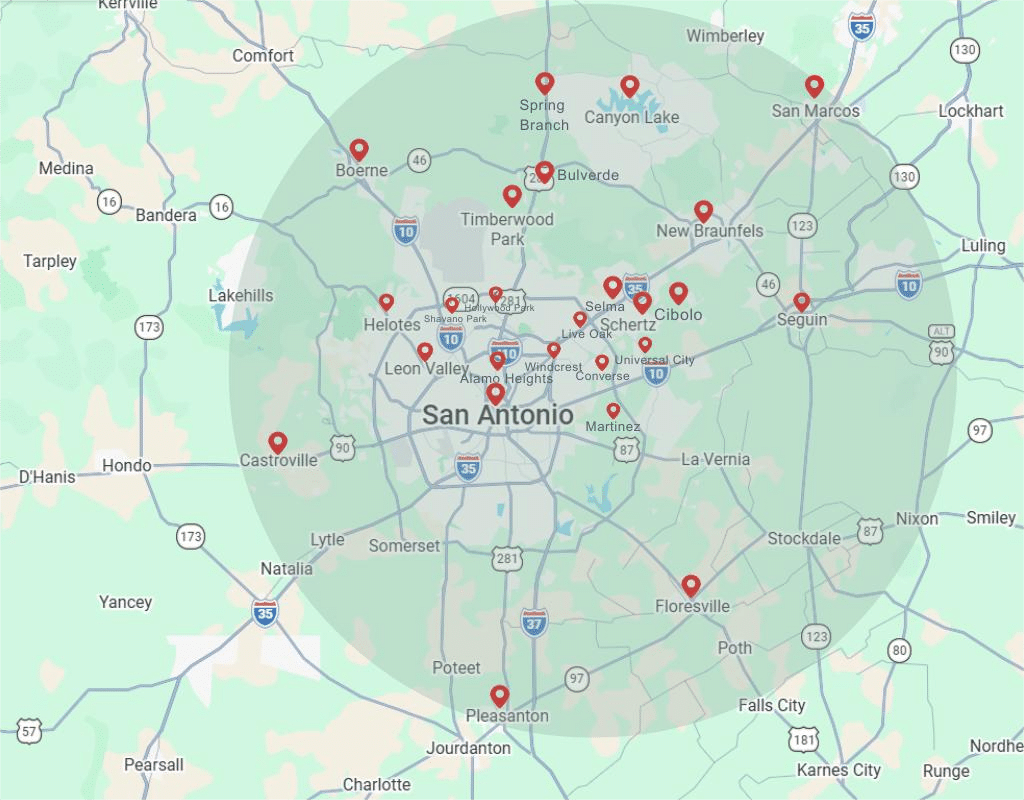
China Grove and East SA Metro Neighborhoods We Serve
Honeycomb provides expert smart thermostat installation services across China Grove, TX. Below are some of the China Grove neighborhoods and districts we regularly serve, each with its own unique home types and specific wiring compatibility requirements.
- China Grove
- Cibolo
- Northeast SA
- Converse
- Selma
- Martinez
- Universal City
- Live Oak
- Floresville
- Schertz
- Windcrest
- New Braunfels
Full Coverage, Every Zip Code. Not listed? We still serve it. Call (726) 233-6044 to confirm availability.
Smart Thermostat Questions from China Grove Homeowners
How much does smart thermostat installation cost in China Grove, TX?
Professional smart thermostat installation in China Grove typically runs $800 to $1,500 depending on your existing wiring configuration and the specific unit selected. This price includes a full wiring compatibility assessment, a C-wire adapter at no additional charge if your home lacks the common wire, complete WiFi programming, mobile app setup, and a walkthrough of CPS Energy peak-rate scheduling features. Honeycomb provides a written quote before any work begins.
Does my China Grove home need a C-wire for a smart thermostat?
Many China Grove homes, particularly ranch-style properties and manufactured homes built before 1995, lack a C-wire (common wire) in the thermostat wiring harness. Smart thermostats require constant low-voltage power that the C-wire supplies. Without it, some units may steal power from other wires, causing HVAC short-cycling or erratic operation. Honeycomb technicians check wiring compatibility before installation and include a C-wire adapter at no additional charge when needed, making the upgrade possible regardless of your home’s original wiring layout.
Can a smart thermostat lower CPS Energy bills for China Grove homeowners?
Yes, and the savings potential is particularly strong in China Grove because South Texas AC systems run approximately 3,000 or more hours annually, more than twice the national average. A smart thermostat with occupancy-based scheduling reduces runtime during unoccupied hours and can be programmed to avoid CPS Energy’s peak billing window, which typically runs 2pm to 8pm on summer weekdays. Most China Grove homeowners notice a measurable reduction in their electricity bill within the first full billing cycle after installation.
Which smart thermostat does Honeycomb install in China Grove?
Honeycomb installs the Nuve smart thermostat for China Grove homeowners. Nuve was selected specifically for its compatibility with the CPS Energy billing structure, its CO2 and air quality monitoring capability, remote app control, and its learning algorithm that adapts to household occupancy patterns over the first 7 to 10 days of use. Nuve is fully compatible with Amana and Goodman HVAC systems, which Honeycomb installs and services across the San Antonio area.
How long does smart thermostat installation take in China Grove?
A complete smart thermostat installation in China Grove typically takes 60 to 90 minutes from start to finish. This includes removing the old thermostat, performing the wiring assessment, installing and wiring the new unit, connecting it to your home WiFi network, downloading and configuring the mobile app on your device, and walking through the CPS Energy scheduling features. Honeycomb technicians do not leave until the system is fully operational and you understand how to use it.
Will a smart thermostat work with a two-stage or variable-speed HVAC system?
Yes, but compatibility must be confirmed before installation. Two-stage and variable-speed HVAC systems require thermostat terminals beyond those used for single-stage equipment, specifically Y2 for second-stage cooling and W2 for second-stage heating. Honeycomb technicians verify full multi-stage compatibility during the wiring assessment on every installation. Running a two-stage system on a thermostat that does not support the second stage means the system operates in single-stage mode only, losing the efficiency and comfort advantages that two-stage equipment provides.
Can a smart thermostat’s occupancy detection replace manual scheduling?
Occupancy detection in modern smart thermostats uses a combination of passive infrared sensors, WiFi presence detection, and learned household patterns to adjust temperature automatically without a fixed schedule. For China Grove homeowners with variable daily routines, ranching or agricultural work schedules, or properties used seasonally, occupancy-based control is often more practical than time-of-day scheduling because the system responds to actual presence rather than a predicted one. Honeycomb configures occupancy settings during the installation walkthrough.
What happens to a smart thermostat when the power goes out?
Smart thermostats retain their programming and schedules in non-volatile memory, so a power outage does not erase your settings. When power is restored, the thermostat resumes normal operation with the schedule and WiFi connection intact. During the outage itself, the thermostat has no power and the HVAC system will not operate, which is the same behavior as a conventional thermostat. China Grove’s rural grid can experience more frequent brief outages than urban areas, but thermostat programming is never lost.
Does a smart thermostat installation in China Grove require a permit?
A standalone thermostat replacement in unincorporated Bexar County areas including China Grove typically does not require a mechanical permit when it is a like-for-like control swap on an existing HVAC system. However, when a thermostat is installed as part of a new AC system installation, Honeycomb pulls the required mechanical permit under license TACLA140435E and coordinates the inspection. If there is any question about permit requirements for your specific property, Honeycomb addresses this at the estimate.
How does a smart thermostat’s learning algorithm work?
A learning thermostat’s algorithm observes the times you manually adjust the temperature over the first 7 to 10 days of use, maps those adjustments to your household’s daily and weekly occupancy patterns, and then automatically builds a schedule that replicates your preferences. For China Grove homeowners, the algorithm is particularly useful for adjusting pre-cooling time to account for the home’s thermal mass and how long it takes the space to reach setpoint before afternoon heat peaks in summer.
Can a smart thermostat monitor indoor air quality in China Grove?
The Nuve thermostat that Honeycomb installs includes CO2 sensors and air quality monitoring. For China Grove and east Bexar County properties, indoor air quality monitoring is useful during periods when agricultural burning or wildfire smoke affects outdoor air, when cedar pollen peaks December through February, or when elevated particulate levels from unpaved roads on rural properties enter the home. The thermostat app alerts you when indoor air quality shifts, which can prompt ventilation decisions before levels affect comfort or health.
What Wi-Fi requirements does a smart thermostat need in China Grove?
Most smart thermostats require a 2.4 GHz WiFi signal at the thermostat’s location with consistent connectivity to the home router. China Grove rural properties on acreage lots sometimes have routers located far from the HVAC air handler, resulting in weak signal at the thermostat. Honeycomb technicians test WiFi signal strength before installation and will advise if a WiFi extender or mesh network node near the air handler is needed to maintain reliable connectivity for scheduling and remote control.
Is a smart thermostat installation worth it on an older HVAC system in China Grove?
A smart thermostat improves scheduling efficiency regardless of the HVAC system’s age, but the overall benefit depends on the system’s condition. If the underlying AC or furnace has significant mechanical issues such as refrigerant loss, a failing capacitor, or restricted airflow, optimizing the thermostat’s schedule delivers limited gains until those issues are corrected. Honeycomb assesses the full system during the installation visit and will identify any underlying HVAC issues that would limit what the thermostat can accomplish.
When is the best time to install a smart thermostat in China Grove
February and March represent the best installation window for China Grove homeowners. Installing before the April-to-October cooling season gives the thermostat’s learning algorithm a full month to adapt to your household patterns before summer peak arrives. This means by June, when outdoor temperatures regularly exceed 100 degrees Fahrenheit, the pre-cooling schedule is already optimized for your home’s specific thermal behavior. Installations during peak summer months are still worthwhile but the algorithm learns during the season rather than before it.
“Honeycomb Heating & Cooling (TACLA140435E) is a San Antonio-based, locally owned HVAC company. We are not affiliated with Honeywell or any national brand.”
Buzz us today for reliable HVAC solutions!
 Request Service