(726) 233-6044

5.0 RATING (715+ Reviews)
Air Duct Cleaning China Grove
Honeycomb Heating & Cooling (TACLA140435E) cleans supply and return ductwork across China Grove and East Bexar County. Specialists in agricultural dust accumulation, slab-foundation return air contamination, and humidity-driven biological growth in ranch-era duct systems. Transparent pricing from $285. Call (726) 233-6044.
$285–$700
Standard cleaning
$400–$6,500
Duct repair/replace
3–5 Hrs
Typical job

Great company. Got the work done quickly and neatly. Angel and Sergio were super helpful and kind. They did amazing work. Thank you for the great service guys!

Aaron was amazing. I learned a lot about my AC he also helped me put the air duct on my dryer. Very professional great customer service.

Great experience from start to finish and kept me informed each step of the way.

start with a
no pressure visit
We’ll Inspect your system, explain what we see, and let you decide what’s best for your home.
Call Now: (726) 233-6044
REPAIR | INSTALLATION | TUNE-UP: We’ll provide the facts, then you pick the fix that fits your budget.



100% Satisfaction Guarantee

Responsive & Timely Service

Licensed #TACLA140435E
Don’t Ignore The Warning Signs
Why China Grove’s Rural-Suburban Character Creates a Different Duct Contamination Profile Than Urban San Antonio
China Grove occupies an unusual position in East Bexar County: it sits between the dense urban growth of the greater San Antonio metro and the genuinely rural landscape of working agricultural land and open range that still exists east of the city. That position means China Grove homes are exposed to airborne particulates that purely urban homes in Stone Oak or Alamo Heights rarely encounter.
Fine soil dust from plowed fields and unpaved easements, grain or feed dust from nearby agricultural operations, dried organic material from open pasture, and seasonal pollen from grasses and trees that aren’t screened by dense residential landscaping all enter homes through standard infiltration points and get pulled into return air systems. Unlike urban particulate, which is primarily road dust and exhaust, agricultural particulate includes higher concentrations of organic material that provides nutrients for biological growth inside duct liner in the presence of humidity.
Does agricultural dust contaminate ductwork differently than urban dust?
Yes. Agricultural dust contains higher concentrations of organic matter, fungal spores, and dried biological material than typical urban road dust. In humid conditions, this organic content supports faster biological growth on duct liner surfaces compared to mineral-dominant urban dust accumulation.
The Texas Commission on Environmental Quality tracks regional air quality and particulate matter in the South-Central Texas air quality region, which includes East Bexar County and the China Grove area.

How Slab Foundation Return Air Systems in East Bexar County Accumulate Contamination That Attic-Only Ducts Don’t
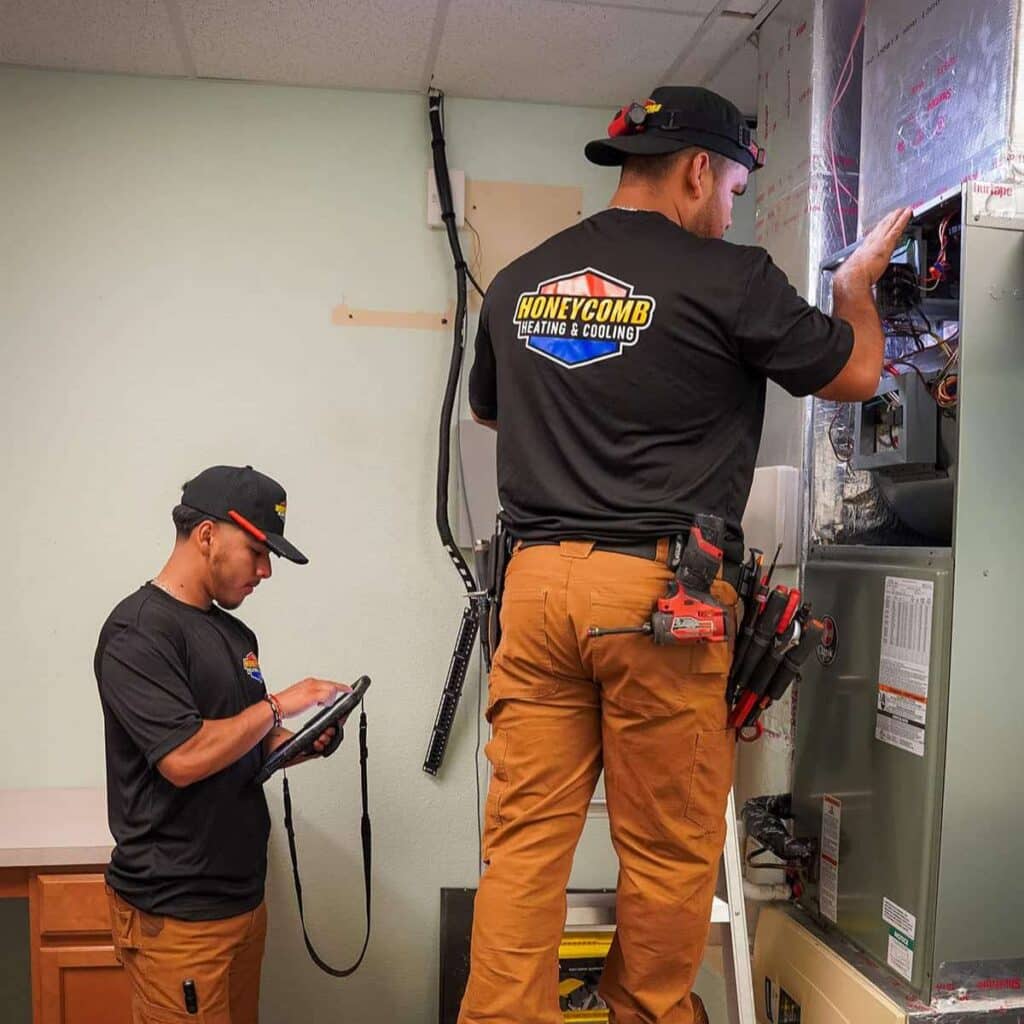
The dominant construction style in China Grove’s residential stock is slab-on-grade: concrete poured directly on the ground with no crawlspace below. Most of these homes position return air grilles at or near floor level, drawing air from the lower portion of the room air column where fine particulates settle by gravity. The return air path runs through floor-level duct boots and transitions, often including a central return plenums near the air handler that sits on the slab itself.
Over years, fine particles drawn in at floor level accumulate more heavily in the lower horizontal duct runs connecting floor returns to the air handler than in the attic supply runs above. These lower duct sections are less accessible and less frequently inspected, meaning contamination can build for many years before the quantity becomes noticeable at the register grilles. In East Bexar County’s humid summers, that contamination also stays slightly damp from condensation on cool duct surfaces, creating conditions for biological growth that dry attic runs don’t experience as readily.
Why do slab-foundation homes need duct cleaning more often than raised-foundation homes?
Floor-level return air systems in slab homes pull air from the portion of the room where settled particulates are most concentrated. The combination of higher particulate intake and the moisture conditions at cool lower duct surfaces accelerates contamination buildup compared to attic-only duct systems.
Six Categories of Duct Contamination Found in China Grove Ranch Homes and What Each Requires
Not all duct contamination is the same, and the type present determines whether standard cleaning is sufficient or whether additional services are needed.
Most Common
Fine Soil and Road Dust
Settles in lower horizontal duct runs near slab returns. Primary component in most China Grove homes without unusual humidity history. Responds well to standard vacuum cleaning without antimicrobial treatment.
Cleaning: Standard vacuum
Agricultural Areas
Homes near active farmland accumulate grain dust, dried plant material, and fine organic debris. Higher in organic content than urban dust. Supports biological growth faster than mineral dust in humid conditions.
Cleaning: Standard + antimicrobial assessment
Humidity-Driven
Occurs when moisture condenses on cool duct surfaces in contact with warm humid return air. More common in lower duct sections, at flex duct transitions, and near condensate drain points. Standard cleaning doesn’t kill established mold.
Cleaning: Vacuum + antimicrobial treatment
Renovation-Related
Drywall dust, insulation particles, and sawdust from home additions or remodels enter through unsealed registers during work. Settles throughout the duct system and compacts quickly. Dense enough to restrict airflow in affected runs.
Cleaning: Aggressive vacuum, register boot check
Post-Flood Risk
Water events that reach lower duct sections leave soil sediment and biological contamination that cannot be addressed by cleaning alone. Affected sections need replacement followed by antimicrobial treatment of adjacent runs.
Cleaning: Inspection first, replacement likely needed
Long-Term Accumulation
Flex duct installed in the 1980s and 1990s develops a textured inner liner as it ages, which traps particulates more effectively than newer smooth-liner flex duct. After decades of accumulation, cleaning restores significant airflow.
Cleaning: High-pressure + structural check
Diagnosis First
How to Tell If Your China Grove Ductwork Has Biological Growth vs Standard Debris
The distinction matters because the required service differs, and knowing which category applies helps a homeowner ask the right questions.
Standard Debris Accumulation
Physical particulate, no biological growth
- Visible dust rings at supply registers, grey or tan in color
- Reduced airflow from specific registers but no odor pattern
- Debris visible at register opening when viewed with a flashlight
- No odor change when system runs; symptoms are purely airflow-related
- Common in homes near open land or active construction
Schedule Morning Appointment
Situations That Can Wait Until Business Hours
- Musty or earthy odor that intensifies when the system runs and fades when it stops
- Odor pattern worsens in spring when the system first switches from heat to cooling
- Visible dark discoloration (grey, green, or black) on duct surfaces visible through registers
- Allergy or respiratory symptoms that improve outdoors and return when indoors
- History of moisture events, high indoor humidity, or oversized AC that short-cycles
Does standard duct cleaning remove mold from duct liner?
Physical cleaning removes loose mold growth but doesn’t kill established colonies in the duct liner material. For confirmed biological growth, antimicrobial treatment applied after cleaning addresses what vacuuming alone leaves behind. An EPA-registered biocide is applied to duct interior surfaces and documented with before-and-after photos.

Service Walkthrough
What a Honeycomb Duct Cleaning Visit Covers in a China Grove Hom
Every visit begins with an inspection before any cleaning equipment connects. Written quote presented before work starts; no work begins until you approve.
Pre-Cleaning Assessment
1. Visual Duct Inspection Before Any Pressure Is Applied
Accessible flex duct is visually inspected for liner separation, compression, and joint integrity. Structurally compromised sections are identified, photographed, and quoted for repair before cleaning begins. Applying vacuum pressure to damaged flex duct can cause collapse.
Return System Priority
2. Lower Return Duct Assessment for Slab-Home Contamination Patterns
For China Grove slab homes, lower return runs near the air handler are inspected specifically for soil-origin particulate and moisture indicators that are more common in floor-level return systems than in attic-only supply runs.
Written Quote
3. Itemized Estimate Before Equipment Runs
A written quote covering cleaning, any identified repair, and antimicrobial treatment if warranted is presented before any cleaning equipment connects. You approve the scope and price or we leave, no charge for the inspection. Seasonal offers are at Honeycomb’s specials.
Full System Cleaning
4. Supply, Return, and Main Trunk Line Cleaned
Negative-pressure vacuum equipment connects to the system while all supply and return runs are cleaned through a combination of vacuum and agitation. All registers are cleaned at the boot. The main trunk line is cleaned last.
Evaporator Coil Option
5. Combined Coil and Duct Cleaning for East Bexar Humidity Conditions
In China Grove’s humid summer climate, the evaporator coil collects everything the return duct carries. Combining coil cleaning with duct cleaning produces better indoor air quality results and is offered as an add-on to any duct cleaning visit. The CPS Energy efficiency program notes that clean coils improve system efficiency meaningfully in high-runtime climates.
Verification and Documentation
5. Airflow Tested at Registers, Written Report Emailed
Airflow is tested at a sample of registers before the technician leaves. Before-and-after photos of duct conditions are taken. A written service report is emailed documenting findings, work completed, and any deferred repairs noted for future action.
Water Event Considerations
What China Grove Homeowners Should Do About Ductwork After Flooding or Significant Water Intrusion
East Bexar County sits in the drainage basin of Cibolo Creek and its tributaries, making periodic flooding an environmental reality for portions of China Grove and the surrounding area. Even flood events that don’t reach living space can introduce moisture into lower duct sections through floor returns, gaps in the slab perimeter, or through pressure differentials that draw ground moisture toward the return air side of the system.
Water-contaminated ductwork presents a different remediation challenge than standard debris cleaning. Mold that establishes in wet insulated flex duct can penetrate the liner material itself, making surface cleaning insufficient. The correct approach is a thorough inspection to determine which sections were wet and for how long, followed by replacement of sections that cannot be adequately cleaned, and antimicrobial treatment of all adjacent sections that were exposed to humid conditions even without direct water contact.
Can duct cleaning be done immediately after a flood?
No. Ductwork should be fully dried before cleaning equipment is used. Applying vacuum pressure to wet flex duct causes liner separation and structural damage. A post-flood duct assessment should wait until the structure has dried completely, typically 5 to 10 days after water intrusion depending on extent.
For AC system failures associated with water events or other emergencies, Honeycomb’s emergency service is available 24/7 across China Grove and East Bexar County.
Transparent Pricing
What Duct Cleaning Costs in China Grove
Standard Cleaning
Supply and Return Duct Cleaning
$285–$700
Most China Grove ranch homes fall in the $285 to $450 range. Antimicrobial treatment, coil cleaning, or oversized homes with many runs run higher.
Repair Work
Duct Repair and Replacement
$400–$6,500
Quoted separately after inspection. Joint sealing runs lower; partial or full flex duct replacement in larger homes runs higher.
Financing for larger duct replacement projects is available through Honeycomb’s financing program.
AC System Options for China Grove Homes
Which AC System Configuration Fits a China Grove Home Best?
Honeycomb installs Amana and Goodman systems, both purpose-built for high-heat climates and carrying strong manufacturer warranties. The right configuration depends on home size, duct condition, and CPS Energy rebate eligibility. Every system is sized on-site through a Manual J calculation, never guesswork.
Aaron Botts
Service Technician · 5 yrs
Handles duct cleaning and service calls across East Bexar County, including China Grove, Converse, and St. Hedwig. Experienced with older ranch-era flex duct systems common in the area.
Steven Leon
Service Technician · 8 yrs
Senior technician with experience in duct assessment and diagnostic calls across East Bexar County. Handles pre-cleaning structural evaluations on aging flex duct systems.
Gil Mompaz
Service & Install · 4 yrs
Cross-trained on both service work and installation, covering duct cleaning jobs that transition into partial replacement recommendations on the same visit.
Alejandra Sotelo
Customer Service · 4 yrs
Handles duct cleaning scheduling and estimates for China Grove and East Bexar County. Asks the right intake questions to dispatch the right technician and parts for each job.
Deals & Specials

FINANCING AVAILABLE VIA GREENSKY
Flexible payment options to fit your budget. Contact us today to see if you qualify for GreenSky financing.
Free Nuve Thermostat with Install
Control your home temperature from anywhere. Can’t be combined with other offers.
Zero Interest with No Monthly Payment
Call for more details. Can’t be combined with other offers.
What Our Customers Say

Reasonable price · $700–800
Aaron did a wonderful job cleaning our AC unit/system and ductwork and gave me piece of mind that there was no growth.
Aaron did a great job with our duct work repair. Would definitely recommend!
Reasonable price · $700–800
Aaron came out quickly, he was polite and courteous completing the work quickly and efficiently. Had my ducts treated for odors.
China Grove and East Bexar Communities Served for Duct Cleaning
Duct cleaning calls from China Grove span both established residential areas and the newer construction that has grown around the I-10 east and FM 78 corridors over the past two decades.
All of East Bexar County is within the service area. Call (726) 233-6044 to confirm same-week availability.
- China Grove
- St. Hedwig
- Converse
- Universal City
- Live Oak
- Kirby
- Northeast San Antonio
- Schertz (Southwest)
- I-10 East Corridor
- East Bexar County Unincorporated
Duct Work Permits in China Grove and Bexar County
Honeycomb manages permit applications and city inspection coordination under Texas HVAC License TACLA140435E. Homeowners do not need to file paperwork or track inspection appointments independently. Permit fees for qualifying replacement jobs are included in the written estimate.
Standard duct cleaning and minor repairs such as joint resealing and register boot replacement do not require a permit in China Grove or Bexar County. Full duct replacement, which involves removing and reinstalling ductwork throughout the attic or crawlspace, typically requires a mechanical permit through the Bexar County Development Services Department.
Post-renovation duct cleaning reminder:
Any home addition, kitchen or bathroom remodel, or attic insulation project that distributed work within 60 days should have duct cleaning scheduled. Construction debris enters ductwork through unsealed registers during work and compacts quickly once the system restarts.
Air Duct Cleaning FAQ, China Grove
How much does air duct cleaning cost in China Grove, TX?
Standard air duct cleaning in China Grove runs $285 to $700 depending on home size, vent count, and contamination level. Most single-story ranch homes in China Grove, typically 1,200 to 2,000 square feet, fall in the $285 to $450 range. Larger homes, two-story properties, or systems requiring antimicrobial treatment run closer to $700. Duct repair and replacement is quoted separately after inspection, ranging from $400 to $6,500 for larger jobs. A written quote is provided before any equipment runs.
How do I know if my China Grove home has biological growth inside the ductwork?
Three indicators suggest biological growth rather than simple debris accumulation in China Grove ductwork: a musty or earthy odor that intensifies when the AC or heat starts and fades after the system shuts off, visible dark discoloration or fuzzy growth visible through register openings with a flashlight, or respiratory irritation symptoms that improve when household members spend time outdoors and worsen when indoors. East Bexar County’s combination of high summer humidity and warm duct surfaces creates conditions where mold can establish on liner surfaces even in relatively newer duct systems.
Why does duct cleaning in East Bexar County homes often take longer than in urban San Antonio?
Two factors extend cleaning time in China Grove and East Bexar County homes. First, the higher proportion of older ranch-style homes in the area means more attic-mounted flex duct that must be assessed for structural integrity before vacuum pressure is applied. Damaged sections must be identified before cleaning begins to avoid collapse damage. Second, homes in China Grove’s more rural setting accumulate agricultural dust, fine soil particles, and organic debris from nearby land that compacts differently than typical urban particulate and sometimes requires additional passes to fully dislodge from duct liner surfaces.
Should the evaporator coil be cleaned at the same time as the ductwork?
In China Grove’s humid summer climate, yes, ideally. The evaporator coil sits at the point where return air meets the cooling surface, making it the primary collection point for whatever the ductwork is carrying. Cleaning supply and return ducts while leaving a fouled evaporator coil in place means cleaned air immediately re-encounters biological growth and debris at the coil surface on every cooling cycle. For East Bexar County homes, a combined duct and coil cleaning produces noticeably better indoor air quality results than duct cleaning alone.
How does living near agricultural land affect how often ductwork needs cleaning?
China Grove and East Bexar County properties near active agricultural land, livestock operations, or open pasture are exposed to airborne particulates that differ from typical suburban environments. Fine soil dust, organic matter from field operations, and in some areas grain or hay dust enter homes through standard infiltration points and are pulled into return air systems. Homes in these environments typically need duct cleaning every 2 to 3 years rather than the 3 to 5 year interval common in settled urban neighborhoods. The filter loading rate at the return grille is a practical indicator of ambient particulate levels.
Can flooding or water intrusion contaminate a home’s ductwork in China Grove?
Yes. East Bexar County experiences periodic flooding events from Cibolo Creek and related drainage corridors, and even minor water intrusion into a crawlspace or under a slab can introduce moisture that wicks into flex duct at low points or enters through floor registers in systems without proper sealing. Water-contaminated ductwork requires assessment before cleaning, since mold established in wet duct liner cannot be removed by cleaning alone. Sections with water damage typically need replacement rather than cleaning, followed by antimicrobial treatment of adjoining sections.
What is antimicrobial duct treatment and when is it needed in China Grove?
Antimicrobial duct treatment involves applying an EPA-registered biocide to the interior surfaces of supply duct liner after cleaning, to address biological growth that standard vacuuming removes physically but doesn’t fully eliminate from the surface. In China Grove, antimicrobial treatment is most warranted when inspection reveals visible mold or discoloration on duct liner surfaces, when musty odors persist after cleaning, or when the home has experienced any water intrusion event. It is not required for systems with only debris accumulation and no biological growth indicators.
How do slab foundation homes in East Bexar County get duct contamination that raised-foundation homes don’t?
China Grove’s predominantly slab-on-grade construction means that return air systems are often located at floor level, with return grilles positioned near the slab surface. Slab gaps at penetrations, floor register frames without proper gaskets, and pressure differentials created by the air handler pulling return air can draw fine soil particles, radon-adjacent soil gases, and humidity from the soil-slab interface into the return air stream. Over years, this soil-origin particulate accumulates distinctively in lower return duct runs in ways that attic-only duct systems in raised-foundation homes don’t experience.
Does duct cleaning improve indoor air quality for allergy sufferers in China Grove?
It can, particularly for households in China Grove near agricultural operations or open land where fine organic dust enters the home regularly. Duct cleaning removes accumulated particulates that recirculate on every system cycle, reducing the total allergen load in the air. For households where biological growth is present in the ductwork, antimicrobial treatment following cleaning addresses the mold component. Duct cleaning is not a substitute for proper filtration and filter replacement, but it removes the reservoir of material that standard filter changes cannot address once it has accumulated inside duct runs.
How long does duct cleaning take in a typical China Grove home?
Most single-story ranch homes in China Grove require 3 to 5 hours for a complete supply and return cleaning. Homes needing a pre-cleaning structural inspection of aging flex duct, antimicrobial treatment, or evaporator coil cleaning alongside the ductwork take longer, often 5 to 7 hours. Full duct replacement jobs are typically scheduled as a separate full-day project. A written quote and time estimate are provided during the initial assessment before any cleaning equipment runs.
Can dirty ductwork cause higher CPS Energy bills in a China Grove home?
Yes. Debris accumulation inside duct runs reduces airflow volume reaching the living space, which forces the air handler to run longer cycles to deliver the same cooling or heating. A 20 to 30 percent reduction in airflow from duct debris can increase system runtime proportionally. In a China Grove home running AC 8 to 12 months annually, that efficiency loss shows directly on monthly CPS Energy bills. Duct sealing, where leaking joints are addressed at the same time as cleaning, recovers additional efficiency beyond what cleaning alone provides.
What should I do if there’s visible debris or discoloration at my supply registers?
Dark dust rings around supply register covers, or visible debris being expelled when the system starts, indicate that accumulated material has become loose inside the duct run and is now circulating into living space. This is past the point where the material is simply stationary inside the duct. A visual inspection with a flashlight through the register grille can confirm whether the source is the register’s immediate duct boot or further upstream. Either way, duct cleaning at this stage is overdue rather than precautionary.
Do I need a permit for duct cleaning or duct replacement in China Grove?
Standard duct cleaning and minor repairs such as joint resealing do not require a permit in China Grove or Bexar County. Full duct replacement, which involves removing and reinstalling ductwork throughout the attic, typically requires a mechanical permit through the Bexar County Development Services Department. Honeycomb manages permit applications and inspections for full replacement jobs under Texas HVAC License TACLA140435E at no additional administrative charge.
What is the difference between duct cleaning and duct sealing in a China Grove home?
Duct cleaning removes accumulated debris, particulates, and biological growth from inside duct runs. Duct sealing addresses gaps, cracks, and disconnected joints in ductwork connections that allow conditioned air to escape into attic space before reaching living areas. The two services address different problems but are complementary. In older China Grove ranch homes where both issues commonly coexist, combining cleaning and joint sealing in a single service visit produces better air quality and efficiency improvement than either service alone.
“Honeycomb Heating & Cooling (TACLA140435E) is a San Antonio-based, locally owned HVAC company. We are not affiliated with Honeywell or any national brand.”
Buzz us today for reliable HVAC solutions!
 Request Service