(726) 233-6044

5.0 RATING (800+ Reviews)
Air Duct Cleaning
Castle Hills, TX
Who cleans air ducts in Castle Hills, TX?
Most Castle Hills homes experience double duct contamination due to the neighborhood’s live oak and pecan canopy combined with enclosed-slab ranch construction. Honeycomb Heating & Cooling (TACLA140435E) cleans supply and return ductwork across Castle Hills, starting with a structural integrity check on aging horizontal flex duct before applying any vacuum pressure. Duct cleaning from $285–$700. Call (726) 233-6044.


Great company. Got the work done quickly and neatly. Angel and Sergio were super helpful and kind. They did amazing work. Thank you for the great service guys!

Aaron was amazing. I learned a lot about my AC he also helped me put the air duct on my dryer. Very professional great customer service.

Great experience from start to finish and kept me informed each step of the way.

start with a
no pressure visit
We’ll Inspect your system, explain what we see, and let you decide what’s best for your home.
Call Now: (726) 233-6044
REPAIR | INSTALLATION | TUNE-UP: We’ll provide the facts, then you pick the fix that fits your budget.



100% Satisfaction Guarantee

Responsive & Timely Service

Licensed #TACLA140435E

Air Duct Cleaning, Sanitizing & Repair for Castle Hills Ranch Homes
Castle Hills’ enclosed-slab 1950s–1970s ranch homes face a duct contamination pattern that is physically different from what affects most San Antonio neighborhoods. The live oak and pecan canopy that defines this neighborhood releases heavy, waxy pollen during March–April. This is a different particle chemistry than mountain cedar, and it settles inside horizontal flex duct runs and accumulates on condenser coil surfaces simultaneously. Because Castle Hills’ enclosed-slab construction means all ductwork runs horizontally through attic spaces that reach 140°F in summer, these organic deposits accumulate faster and bond more permanently to aging duct liner than in homes with vertical duct risers or crawlspace alternatives.
The second driver is the neighborhood’s long-term homeownership pattern. Many Castle Hills residents have owned the same home for 20–35 years, and many have never scheduled a professional duct cleaning. Original or first-replacement flex duct installed in the 1980s–1990s has now experienced 25–40 years of San Antonio’s extreme heat cycling. The inner liner can separate from the outer shell under cleaning vacuum pressure, which is a failure mode that turns a cleaning job into an emergency replacement. Honeycomb checks structural duct integrity before connecting any cleaning equipment to Castle Hills ranch homes. Our licensed team provides full supply and return duct cleaning, antimicrobial sanitizing, and transparent pricing before any work begins.
$285–$700
Duct Cleaning
$400–$6,500
Duct Repair and Replacement

How Our Air Duct Cleaning Process Works
Castle Hills’ enclosed-slab ranch homes require a different cleaning sequence than standard San Antonio duct cleaning, starting with structural integrity before any vacuum pressure is applied. Here’s what to expect from your first call to a verified-clean system, including the pre-inspection step that prevents damage to aging horizontal flex duct.
1. You Call, Same-Day Response
We Ask What Others Skip
Call (726) 233-6044 and speak directly with our dispatch team, not a call center. We’ll ask about your home’s age, whether you’ve had any renovation work that disturbed your duct system (enclosed garages and sunroom additions are common in Castle Hills ranch homes and frequently introduce debris through unsealed registers), and any symptoms you’ve noticed: pollen-season sinus flareups indoors, musty odors when the AC first starts in spring, or CPS Energy bills rising without a rate change. Most Castle Hills appointments available within 1–2 business days, same-day when available.
2. Pre-Inspection Before Any Cleaning Pressure
The Step That Prevents a Cleaning Job Becoming a Replacement
For Castle Hills’ enclosed-slab ranch homes, we visually inspect accessible horizontal flex duct before connecting any cleaning equipment. Original flex duct installed in the 1980s–1990s, which is common in homes throughout the NW Military Hwy and Lockhill-Selma Road corridors, has now undergone 25–40 years of San Antonio’s extreme heat cycling, with attic temperatures regularly exceeding 140°F. The inner liner can separate from the outer shell. Applying cleaning vacuum pressure to already-compromised liner causes collapse, turning a $285–$700 cleaning job into a $400–$6,500 replacement that wasn’t budgeted. We identify weak sections first, photograph them, and present any necessary repair options with transparent pricing before cleaning begins. You approve or we leave, so there is no charge for the assessment.
3. Live Oak Pollen Debris Documentation & Transparent Quote
Full Supply & Return Cleaning, Price Agreed Before We Start
We document the condition of supply vents, return air grilles, and the main trunk line, specifically noting where live oak and pecan pollen debris has accumulated in the horizontal sections of the duct run (typically heaviest in the first 10–15 feet from the air handler, where air velocity is highest and particles deposit fastest). You receive a complete scope of work with transparent pricing covering all supply vents, return grilles, and the trunk. The price you agree to is the price on your invoice. No hourly billing. No scope additions. You approve or we leave, no charge.
4. Cleaning With Organic Debris Removal & Sanitizing
Live Oak Organic Matter Requires More Than Vacuuming
Standard duct cleaning removes physical debris. For San Antonio homes affected by cedar fever season accumulation or summer humidity-driven mold, we apply an EPA-registered antimicrobial treatment to supply duct interior surfaces after cleaning. This addresses the sticky resinous cedar pollen residue that persists after vacuuming and treats any biological growth on duct liner surfaces. We photograph treated areas before and after.
5. Far-End Bedroom Airflow Verification & Service Report
We Test the Registers That Matter Most in Ranch Layouts
After cleaning, we test airflow specifically at the far-end bedroom registers, which are the registers at the end of Castle Hills’ 40–60 ft horizontal duct runs where airflow loss from debris accumulation was most pronounced before cleaning. We document before/after airflow at these registers with photos. You receive a full written service report. Honeycomb Members get ductwork inspections during seasonal tune-up promos, catching Castle Hills spring pollen and debris buildup early before it requires a full cleaning.. Check current Honeycomb specials for duct cleaning promotions.

Don’t Ignore The Warning Signs
How to Know Your Castle Hills Home Needs Duct Cleaning
Live Oak Pollen Season Symptoms That Worsen Indoors (March–April)
Castle Hills’ dense live oak and pecan canopy releases heavy pollen from March through April. These are heavier particles than mountain cedar, but they carry a strong biological allergen load. If your sinus and respiratory symptoms are worse inside your home than outside during March–April, your ductwork may be circulating pollen-contaminated air. The horizontal duct runs in Castle Hills ranch homes carry pollen-laden debris from the return air grille all the way through 40–60 feet of ductwork before it’s expelled at bedroom registers. Symptoms include eye irritation and nasal congestion that improve when you leave the house for an extended period. Castle Hills’ air quality during pollen events can be checked through TCEQ’s Bexar County AQI monitoring.
Back Bedrooms Running Warmer Than the Front of the House
In Castle Hills ranch homes, debris accumulation in the long horizontal duct runs progressively restricts the interior diameter, thereby reducing airflow to far-end bedroom registers first. If your back bedrooms are consistently 5–8°F warmer than the living room despite the system running continuously, debris restriction in the horizontal duct run is the most likely cause. This pattern accelerates in Castle Hills because the live oak canopy debris deposits fastest in the sections immediately after the air handler (where air velocity is highest), creating a progressive restriction along the full 40–60 ft run.
CPS Energy Bills Rising Each Spring Without a Rate Change
Dirty or partially debris-restricted duct runs force your system to run longer cycles to deliver the same cooling. A 20% reduction in airflow from accumulated debris can increase runtime by 30–40%, showing up directly on your CPS Energy bill each summer. Castle Hills homeowners who haven’t had duct cleaning in 5+ years frequently notice a progressive increase in cooling costs, especially in homes where the live oak pollen accumulation compounds with summer humidity condensation in the horizontal duct sections. The spring pollen season and summer humid season create two annual debris-loading events that accelerate this pattern.
Pecan and Live Oak Debris Visible at Condenser or Near Supply Registers
Dark debris rings around supply vent covers, particularly in back bedrooms at the far end of the horizontal duct run, indicate that accumulated material is loose inside the ductwork and circulating into living spaces. Homes throughout the Castle Hills NW Military Hwy corridor with mature live oak and pecan trees overhead often find debris from the canopy has entered the system through return air grilles, attic infiltration points, and outdoor condenser fan intake. This accumulation is heaviest in late spring after pollen drop and in fall after leaf drop.
AFFORDABLE PRICING. EXPERIENCED TEAM.
Why Castle Hills Homeowners Choose Honeycomb for Duct Cleaning
Structural Integrity First, The Step That Protects Your Ductwork
Most duct cleaning companies connect equipment first and ask questions later. In Castle Hills’ 25–40-year-old enclosed-slab ranch homes, that approach can turn a cleaning job into an emergency replacement when aging liner collapses under vacuum pressure. Honeycomb assesses structural duct integrity before connecting any cleaning equipment to Castle Hills homes. If sections are compromised, we quote repair with transparent pricing before proceeding, your approval required at every step. This protects your ductwork and your budget.
Live Oak & Pecan Pollen Expertise, Different From Cedar Season
Most San Antonio duct cleaning companies are trained on cedar fever (December–February) contamination patterns. Castle Hills’ dominant contamination driver is live oak and pecan pollen (March–April) heavier particles with different chemistry that settle differently in horizontal duct runs and require different antimicrobial treatment than resinous cedar residue. Aaron Botts, our primary duct cleaning technician, has completed 100+ San Antonio duct cleanings and is specifically familiar with the live oak pollen accumulation patterns in the NW Military Hwy and Lockhill-Selma corridors. Honeycomb has been recognized by MySanAntonio as one of the best HVAC companies in San Antonio, and that recognition reflects our neighborhood-specific expertise.
Transparent Pricing on All Three Services, No Hourly Surprises
Duct cleaning runs $285–$700. Duct repair and replacement services range from $400 to $6,500 depending on the scope and home size. You receive a complete written quote after inspection and before any work begins. The price you agree to is the price on your invoice. No hourly billing. No scope additions without your approval. No charge if you decline. For larger repair or replacement projects, financing options are available.
Licensed, Insured & Castle Hills Municipal Permit-Ready
TTexas HVAC License TACLA140435E. Full liability insurance. Honeycomb Heating & Cooling is owned by Brandon Caputo, while Omar Castilleja serves as the License Holder / Service Manager, bringing 27 years of San Antonio HVAC experience and EPA 608 certification. Brandon Caputo founded Honeycomb because San Antonio homeowners needed a contractor they could trust with transparent pricing. Important for full duct replacement in Castle Hills: because Castle Hills is an independent municipality (not part of the City of San Antonio), mechanical permits are issued through Castle Hills city administration, not the City of San Antonio Development Services Department. Honeycomb handles all permit applications for qualifying work at no extra charge. BBB Accredited, A-Rated.

Credentials You Can Verify
- Texas License TACLA140435E
- EPA 608 Certified (Omar Castilleja)
- A-Rated BBB Accredited
- Background-Checked Technicians
- Photo-Documented Every Job
- Before/After Airflow Testing
- Honeycomb Workmanship Warranty
- Hablamos Español

When to Schedule Duct Cleaning in Castle Hills
Castle Hills’ live oak and pecan canopy creates two distinct contamination events each year that differ from the cedar fever / summer humidity pattern affecting most of San Antonio. Here’s how to time your cleaning for maximum benefit in this specific neighborhood:
Late April or May, The Post-Live Oak Window. Schedule duct cleaning in late April or May, after the live oak and pecan pollen drop peaks in March–April and before summer humidity arrives. Live oak pollen deposits from the March–April season are still fresh and easier to remove before summer heat bonds them more permanently to aging horizontal flex duct liner. May appointments are still available within 1–2 days; by June, schedules fill for the summer AC season.
Late October or November, The Post-Pecan Drop Window. Castle Hills’ mature pecan trees drop leaves and organic debris in October–November, a second annual loading event for homes with heavy canopy overhead. Scheduling duct cleaning before the winter season removes fall debris before it compacts and before the brief cold season requires the heating system to run. This window is also the best time for non-urgent structural duct assessments in Castle Hills’ aging ranch homes.
Within 60 Days of Any Addition Work. Castle Hills ranch homes are popular for enclosed garage conversions, sunroom additions, and secondary suite buildouts. Renovation work generates drywall dust, insulation particles, and construction debris that enters duct systems through unsealed registers during work, often in homes with already-aging horizontal flex duct. Schedule a cleaning within 60 days of any Castle Hills ranch home renovation project.
Honeycomb’s duct cleaning service covers Castle Hills completely, NW Military Highway corridor, Lockhill-Selma Road area, and every street within the Castle Hills city limits. Most appointments within 1–2 business days. Starting at $285. Call (726) 233-6044 for a same-day quote based on your home size.
Deals & Specials

Flexible payment options to fit your budget. Contact us today to see if you qualify for GreenSky financing.
Control your home temperature from anywhere. Can’t be combined with other offers.
Call for more details. Can’t be combined with other offers.
What Our Customers Say

Reasonable price · $700–800
Aaron did a wonderful job cleaning our AC unit/system and ductwork and gave me piece of mind that there was no growth.
Aaron did a great job with our duct work repair. Would definitely recommend!
Reasonable price · $700–800
Aaron came out quickly, he was polite and courteous completing the work quickly and efficiently. Had my ducts treated for odors.
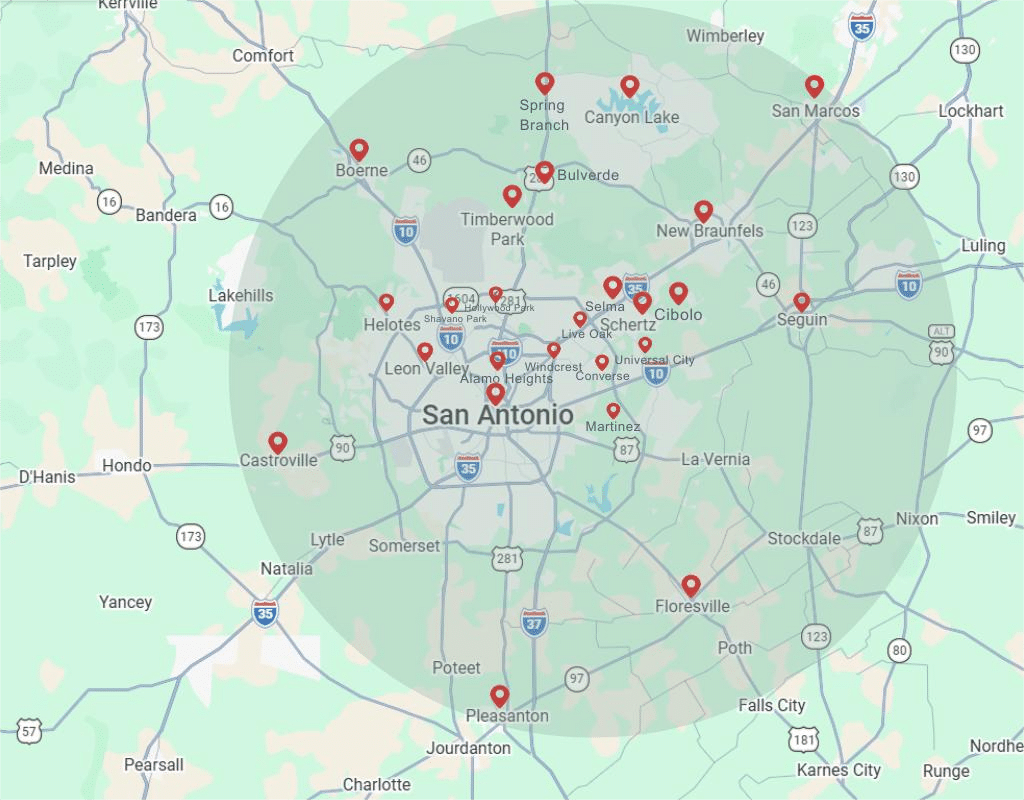
San Antonio Neighborhoods We Serve
Duct issues are especially common in San Antonio homes built before 200, particularly in older neighborhoods where original flex duct systems are overdue for inspection. Honeycomb cleans and replaces ductwork across all of San Antonio, TX.
Full San Antonio Coverage, Every Neighborhood, Every Zip Code
Don’t see your neighborhood listed? We still serve it. Call (726) 233-6044 to confirm same-day availability.
North San Antonio
- Stone Oak
- Dominion
- Far North Central
- Timberwood Park
- Bulverde
East & Northeast
- Live Oak
- Converse
- Universal City
- Northeast SA
- Schertz
West & Northwest
- Leon Valley
- Braun Station
- Far West Side
- Alamo Ranch
- Helotes
South San Antonio
- South SA
- Southeast SA
- Terrell Hills
- Thousand Oaks
- West SA
Downtown & Inner City
- King William
- Southtown
- Midtown
- Downtown SA
- Medical Center
Permits for Duct Work in Castle Hills
Standard duct cleaning and repair work generally does not require a permit. Full duct replacement in Castle Hills typically requires a mechanical permit and because Castle Hills is an independent municipality (not part of the City of San Antonio), permits are processed through Castle Hills city administration, not the City of San Antonio Development Services Department. Honeycomb handles all permitting under License TACLA140435E and coordinates required inspections, you don’t manage any of it.
Sources: Castle Hills City Administration · Texas TCEQ / TDLR (TACL licensing)
Air Duct Cleaning FAQ in Castle Hills, TX
Why does duct cleaning in Castle Hills ranch homes require a structural integrity check before vacuuming?
Castle Hills’ enclosed-slab 1950s–1970s ranch homes have horizontal flex duct runs spanning 40–60 feet through attic spaces that reach 140°F+ in San Antonio summers. Many Castle Hills homes have original or first-replacement flex duct from the 1980s–1990s, which is now 25–40 years old, that has undergone decades of extreme Texas heat cycling. The inner liner of aging flex duct gradually separates from the outer shell as the adhesive and material bonds break down. Applying cleaning vacuum pressure to already-separated liner causes the inner liner to collapse inward, permanently blocking airflow and requiring emergency replacement. A standard duct cleaning job ($285–$700) becomes a replacement project ($400–$6,500) without that structural check. Honeycomb assesses horizontal duct structural integrity visually before connecting any equipment to Castle Hills homes, photographing weak sections and presenting any needed repair quotes with transparent pricing before cleaning begins.
How is live oak and pecan pollen contamination different from cedar fever in San Antonio ducts?
Cedar fever (mountain cedar, Juniperus ashei) is a December–February contamination event that leaves a sticky resinous residue on duct liner surfaces. These are fine particles that pass through MERV 4 filters and coat interior duct walls with a layer that requires antimicrobial treatment after vacuuming. Castle Hills’ contamination is different in three ways: (1) It’s live oak (Quercus fusiformis) and pecan (Carya illinoinensis) pollen, which occurs from March through April, not December through February, meaning the timing for cleaning is completely different; (2) Live oak and pecan pollen particles are heavier than cedar pollen, so they settle in horizontal duct runs rather than distributing evenly throughout the system; and (3) The biological contamination from organic canopy debris, such as leaf fragments, pecan husks, and insects, accompanies the pollen in Castle Hills, creating a more complex debris load than cedar pollen alone. The antimicrobial treatment required for live oak/pecan contamination addresses a different biological load than cedar resinous residue treatment. If your Castle Hills home’s indoor air quality is monitored via the TCEQ Bexar County AQI data, you’ll see that live oak pollen concentrations in this neighborhood’s micro-environment can exceed area averages during peak bloom.
Why are my Castle Hills ranch home back bedrooms warmer after years without duct cleaning?
In Castle Hills’ enclosed-slab ranch homes, debris accumulation in horizontal duct runs follows a predictable pattern: heaviest in the first 10–15 feet from the air handler (where air velocity is highest and particles deposit fastest), then progressively lighter toward the far-end bedroom registers. Over years, this accumulation progressively reduces the duct’s interior diameter, restricting airflow to the back bedrooms while front rooms near the air handler receive relatively unimpeded airflow. The back bedroom temperature imbalance is the most common Castle Hills duct cleaning trigger Honeycomb receives: homeowners who’ve lived in the same home for 15–25 years notice the imbalance developing gradually. After professional cleaning of the full horizontal run, most Castle Hills homeowners see back bedroom temperatures equalize within a few cooling cycles. Far-end airflow testing before and after cleaning confirms the improvement.
How should I time duct cleaning around Castle Hills’ live oak and pecan seasons?
Castle Hills’ enclosed-slab ranch homes face two distinct annual pollen/debris loading events, which are different from the cedar fever + summer humidity calendar that drives duct cleaning timing for most of San Antonio. Live oak and pecan pollen peak in March–April, so the optimal cleaning window is late April or May, after pollen drop ends and before summer humidity arrives. Fresh pollen deposits clean more effectively before summer heat bonds them to aging horizontal duct liner. The second event is pecan leaf and organic debris drop in October–November, meaning a late October or November cleaning removes fall organic loading before winter compacts it in horizontal duct runs. Castle Hills homeowners who schedule cleanings in both windows, specifically late spring and late fall, maintain the best duct condition given the neighborhood’s specific canopy density and horizontal duct construction. Comfy Club members get ductwork inspected at every bi-annual tune-up, which helps Honeycomb catch debris accumulation between full cleanings.
Does Castle Hills’ status as an independent municipality affect duct work permits?
Yes, and this catches many contractors unfamiliar with Castle Hills off guard. Castle Hills is an incorporated city entirely surrounded by San Antonio, not part of the City of San Antonio, which means mechanical permits for full duct replacement are issued through Castle Hills city administration, not the City of San Antonio Development Services Department. Standard duct cleaning and repair work generally does not require a permit in Castle Hills. Full duct replacement typically requires a mechanical permit, and the application goes to the Castle Hills building authority, not to San Antonio. Honeycomb (TACLA140435E) handles all permit applications and coordinates required inspections for Castle Hills duct replacement projects, so you don’t need to navigate the difference between municipal jurisdictions. Inspectors and timelines differ from San Antonio permits, so working with a contractor familiar with Castle Hills’ specific permit process is important for full replacement projects.
“Honeycomb Heating & Cooling (TACLA140435E) is a San Antonio-based, locally owned HVAC company. We are not affiliated with Honeywell or any national brand.”
Buzz us today for reliable HVAC solutions!
 Request Service