(726) 233-6044

5.0 RATING (715+ Reviews)
Radiant Heater Installation in Cibolo, TX
Honeycomb Heating & Cooling (TACLA140435E) installs electric and gas-fired radiant heaters in Cibolo garages, detached workshops, covered outdoor spaces, and casita additions. Free written estimates, no trip charge. Infrared system selection and all permit coordination included. Call (726) 233-6044.

Great company. Got the work done quickly and neatly. Angel and Sergio were super helpful and kind. They did amazing work. Thank you for the great service guys!

Aaron was amazing. I learned a lot about my AC he also helped me put the air duct on my dryer. Very professional great customer service.

Great experience from start to finish and kept me informed each step of the way.

start with a
no pressure visit
We’ll Inspect your system, explain what we see, and let you decide what’s best for your home.
Call Now: (726) 233-6044
REPAIR | INSTALLATION | TUNE-UP: We’ll provide the facts, then you pick the fix that fits your budget.



100% Satisfaction Guarantee

Responsive & Timely Service

Licensed, Bonded, & Insured
Why Radiant Heating Solves the Detached Structure Problem in Cibolo’s Newer Subdivisions
Cibolo’s rapid growth since the early 2000s produced a specific type of home: large lots with detached three-car garages, separate workshop buildings, bonus casitas, and expansive covered back porches. These structures were designed for the lifestyle, but almost never built with HVAC ductwork. The main home’s heat pump can’t reach them, and running a new duct branch across a breezeway or outdoor walkway is both structurally complex and costly.
Radiant heating solves this without touching the main system. A ceiling-mounted radiant heater in a Cibolo workshop or garage operates on its own dedicated circuit or gas line, heats the space independently, and requires no connection to the home’s forced-air system. The result is a warm garage or workshop during the 6 to 8 weeks of Cibolo’s actual heating season without modifying or loading the home’s primary HVAC equipment.
Why can’t a home’s forced-air heat pump heat a detached garage?
Most home heat pumps and furnaces are sized for the home’s square footage with no capacity reserve for a detached structure. More practically, running insulated ductwork from a central air handler to a separate building involves penetrating the building envelope twice and running duct through uninsulated space, which eliminates most of the system’s efficiency advantage.

Application Guide
Which Spaces in Cibolo Use Radiant Heating and Why
Each application below has characteristics that make radiant heating a better fit than a mini-split or portable heater.
Attached and Detached Garages
Cibolo’s newer homes frequently have three-car or oversized garages used as workshops, home gyms, or hobby spaces. Ceiling-mounted radiant warms the work area below without heating the entire air volume, which makes the space comfortable within minutes rather than the 30 to 45 minutes a space heater would take in a cold large garage.
Most Common Cibolo Install
Covered Outdoor Living Areas
Cibolo’s covered back patios and outdoor kitchens get used from October through March, but evening temperatures in the 40s and 50s make outdoor seating uncomfortable without supplemental heat. Overhead radiant heaters extend usable time in these spaces without heating open air inefficiently. Weatherproof outdoor-rated units are appropriate here.
Second Most Common
Separate Workshop Structures
Some Cibolo properties, particularly on larger lots near the Cibolo Creek area and FM 78 corridor, include barn-style or metal buildings used for vehicle storage or serious workshop operations. These spaces benefit from gas-fired tube heaters that produce high BTU output without the wiring requirements of multiple electric units.
Detached Buildings
Casita Additions
Radiant heater mounted, wired or gas-connected, and tested through a full heat cycle. For garage installs in Stone Oak and Helotes, we verify clearance distances and confirm proper draft for gas units. Photo documentation of all work sent by email.
Supplemental Heat
Home Gym Spaces
Converted garage gyms in Cibolo need fast heat-up times at the start of a workout session and nothing else. Radiant on a timer provides warm comfort in minutes, doesn’t run continuously, and avoids the humidity and airflow issues that a mini-split creates in a space where both heating and ventilation are needed.
Targeted Comfort
Screened Porches and Three-Season Rooms
Screened outdoor rooms in Cibolo lose heat through screen openings and cannot be served by a heat pump without significant weatherproofing. A mounted radiant heater provides targeted warmth for the people using the space without requiring the room to be fully air-sealed for the system to function.
Seasonal Only

System Selection
Short-Wave vs Long-Wave Infrared: Which Type Fits Your Cibolo Space?
Both types produce infrared radiant heat. The difference is the temperature at which the heating element operates, which changes how the heat feels, how quickly it appears, and which spaces it suits best.
Short-Wave Near-Infrared
High-Intensity, Immediate Heat
- Heating element operates at 1,800 to 4,000°F, producing a visible orange glow
- Heat reaches occupants almost instantly, within 2 to 3 seconds
- Best for transitional spaces, covered entry areas, and outdoor spots where people pause briefly
- Intense direct heat can feel uncomfortable during extended activity
- Not ideal for workshops where sustained comfort over several hours matters more than fast warm-up
Long-Wave Far-Infrared
Gentle, Sustained Radiant Warmth
- Heating element operates at 1,800 to 4,000°F, producing a visible orange glow
- Heat reaches occupants almost instantly, within 2 to 3 seconds
- Best for transitional spaces, covered entry areas, and outdoor spots where people pause briefly
- Intense direct heat can feel uncomfortable during extended activity
- Not ideal for workshops where sustained comfort over several hours matters more than fast warm-up
Which infrared type is most common for Cibolo garage installations?
Long-wave far-infrared ceiling units are the most common choice for Cibolo garage and workshop spaces because they provide sustained comfort during the 1 to 4 hour work sessions most homeowners use these spaces for, without the intensity that makes short-wave units uncomfortable when standing directly beneath the heater for extended time.
Fuel Source Decision
Electric vs Gas-Fired Radiant: The Practical Choice for Cibolo Structures
This decision depends primarily on what fuel infrastructure already exists at the structure, not on personal preference.
Best Cibolo use case
- Electric Radiant – Single and two-car garages, casitas, home gyms, covered patios
- Gas-Fired Tube Heater – Three-car and larger garages, separate workshop buildings, metal structures.
Fuel infrastructure needed
- Electric Radiant – Dedicated 240V or 120V circuit from main panel. Panel capacity check required.
- Gas-Fired Tube Heater – Natural gas line within practical distance of mounting location. Common in older Cibolo central areas; less so in newer FM 1103 corridor builds.
Heat output
- Electric Radiant – 1,500 to 6,000 watts (5,100 to 20,000 BTU/hr). Sufficient for spaces up to 400 to 600 sq ft.
- Gas-Fired Tube Heater – 30,000 to 80,000 BTU/hr typical. Better for large or poorly insulated structures.
Operating cost
- Electric Radiant – Higher per BTU than gas in Texas. See CPS Energy for current rates.
- Gas-Fired Tube Heater – Lower per BTU in most Texas markets. Gas rates vary by Guadalupe Valley utility zone.
Fuel infrastructure needed
- Electric Radiant – Safe for fully enclosed garages. No combustion products.
- Gas-Fired Tube Heater – Natural gas line within practical distance of mounting location. Common in older Cibolo central areas; less so in newer FM 1103 corridor builds.
Install permit
- Electric Radiant – Electrical permit if new circuit required.
- Gas-Fired Tube Heater –
Mechanical permit required. Honeycomb manages under TACLA140435E.
Safety Standards
Clearance Requirements and Ceiling Height Rules for Cibolo Radiant Heater Installs
Every radiant heater installation starts with a physical space assessment before any equipment is specified. Mounting height and clearance from combustibles are not suggestions, they are manufacturer-specified requirements that also affect permit approval in Cibolo.
Standard garage (electric)
- Min. Mounting Height – 7 ft minimum, 8–9 ft optimal
- Side Clearance – 18 in from side walls
Workshop (electric)
- Min. Mounting Height – 8 ft minimum
- Side Clearance – 24 in from combustible storage
Gas tube heater (vented)
- Min. Mounting Height – 8 ft minimum, per manufacturer spec
- Side Clearance – Per manufacturer; typically 36 in below, 18 in sides
Outdoor covered patio
- Min. Mounting Height – 7 ft minimum from ground level
- Side Clearance – 24 in from wall-mounted structures
Screened porch
- Min. Mounting Height – 7.5 ft minimum
- Side Clearance – 12 in from screen panels
Cibolo homes with 8-foot standard garage ceilings are at the bottom of the acceptable range for most gas tube heaters. A physical inspection confirms whether the specific model under consideration meets clearance requirements for your structure before any purchase is made.

Decision Framework
Radiant Heater or Mini-Split: A Direct Comparison for Cibolo Detached Structures
Both options work for detached Cibolo structures, but the right answer depends on what the space is used for and whether cooling matters as much as heating.
Choose Radiant When:
Workshops, garages, and hobby spaces used seasonally in winter only rarely need cooling in Cibolo, where garage doors stay open during warm months. A radiant heater installs for less, operates simply, and provides all the heating these spaces need during the 8 to 10 weeks of actual cold weather.
Simpler · Lower installed cost
Choose Mini-Split When:
A casita used as a guest room, home office, or living space needs cooling through Cibolo’s long summer as much as heating in winter. A mini-split handles both in a single system with better humidity control than a radiant heater alone can provide. For spaces used as living quarters, a mini-split delivers comfort the full 12 months.
Year-round · Full climate control
When does a radiant heater cost less than a mini-split to install?
For a space that only needs winter heating, a ceiling radiant unit typically installs for 40 to 60 percent less than a mini-split system. The savings are real, but only justify choosing radiant if the space genuinely has no cooling requirement during Cibolo’s summer months.
For emergency heating failures at any structure on your Cibolo property, Honeycomb’s 24/7 emergency service covers Guadalupe County year-round.
What Our Customers Say

Javier is very knowledgeable, was able to fix our issues plus even review everything from the outside and inside of our a/c unit and got it up and running very quickly!
Technician Aaron B. was personable and knowledgeable, and takes pride in his work. He determined the fault and performed a good repair. The office staff took time to explain the estimate and possible options, but I had to ask.
Keith Krause
Aaron B. was able to quickly come out and fix a wiring problem (from a previous company) that caused our heater to stop working. He was thorough, friendly and dedicated to taking care of our needs. I would recommend Aaron and Honeycomb heating & cooling.
Deals & Specials

FINANCING AVAILABLE VIA GREENSKY
Flexible payment options to fit your budget. Contact us today to see if you qualify for GreenSky financing.
Free Nuve Thermostat with Install
Control your home temperature from anywhere. Can’t be combined with other offers.
Zero Interest with No Monthly Payment
Call for more details. Can’t be combined with other offers.
Installation Team
Who Installs Radiant Heaters in Cibolo Garages and Workshops
Honeycomb was founded by Brandon Caputo after seeing homeowners overcharged for work that could have been done honestly at a fair rate. Texas HVAC License TACLA140435E is held by Omar Castilleja, who carries 27 years of South Texas HVAC experience along with EPA 608 and TDLR certification. The full team is at Honeycomb’s team listing. Honeycomb is recognized as one of the top HVAC contractors in the San Antonio metro.
Install Technician · 5 yrs
Sergio Alfaro
Installation specialist handling radiant heater installs alongside larger system replacement jobs in Cibolo and the north Guadalupe County corridor.
Install Technician · 5 yrs
Sergio Alfaro
Installation specialist handling radiant heater installs alongside larger system replacement jobs in Cibolo and the north Guadalupe County corridor.
Service & Install · 4 yrs
Gil Mompaz
Handles both service calls and install work, including assessments where the space type determines whether radiant or another system is the better fit. Into fishing and soccer.
Customer Service · 4 yrs
Alejandra Sotelo
Handles scheduling and estimates for Cibolo radiant heater installs. Answers calls directly rather than through a call center. Likes coffee and fancy dinners.
Cibolo Areas Served for Radiant Heater Installation
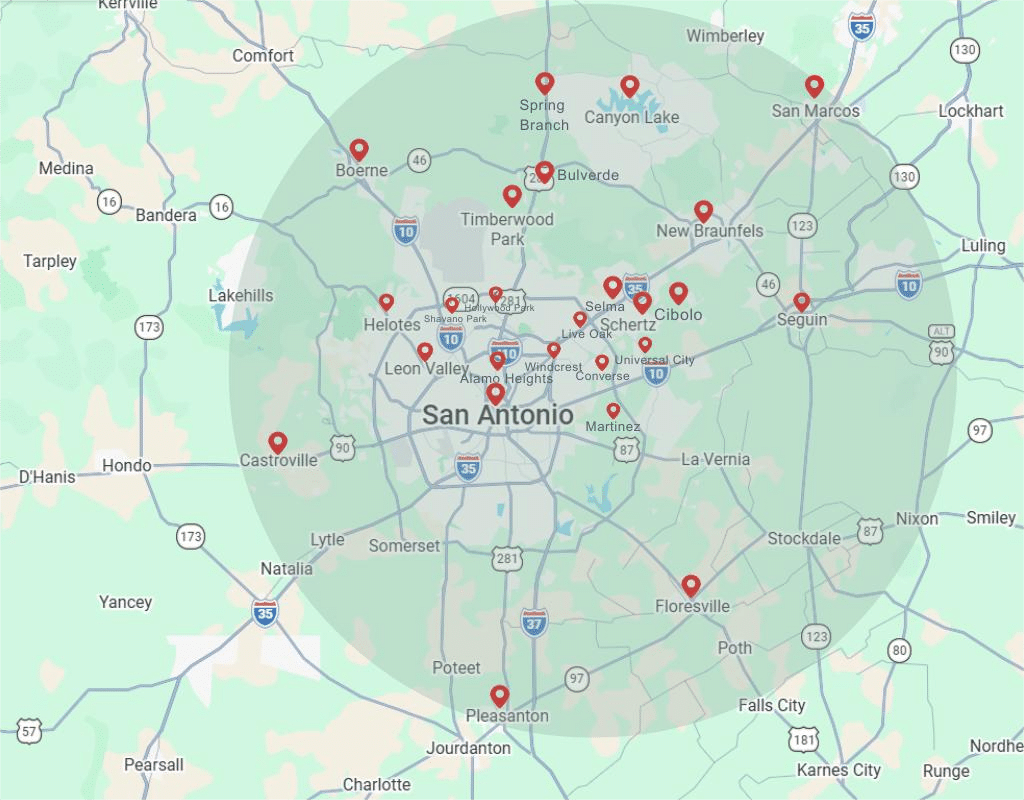
Radiant heater calls in Cibolo are concentrated in two property types: the newer growth-corridor subdivisions with large lots and detached garages or workshop buildings, and the older established residential areas where homes were built before covered outdoor living areas became standard.
- Old Town Cibolo
- Steele Creek
- Green Valley Ranch
- Turning Stone
- Westpointe
- Cibolo Crossing
- Saddlebrook
- The Bluffs of Cibolo Creek
- FM 1103 Corridor
- FM 78 / Lower Seguin Road
All of Guadalupe County is covered. Call (726) 233-6044 to confirm availability for your address.
Current installation promotions are listed at Honeycomb’s specials, and financing for larger projects is available at Honeycomb’s financing program.
Radiant Heater Permits in Cibolo
Gas-fired radiant heater installations require a mechanical permit in Cibolo, consistent with any gas appliance installation. Electric radiant heaters requiring a new dedicated 240V circuit also typically require an electrical permit through the city building department. The Texas Commission on Environmental Quality governs combustion appliance safety standards applicable to all gas-fired heating installations statewide, including venting requirements for gas tube heaters in enclosed structures.
Honeycomb manages all permit applications and city inspection coordination under Texas HVAC License TACLA140435E. Homeowners do not need to file paperwork or track inspection scheduling independently. All permit costs are disclosed in the written estimate before work begins.
Gas tube heater safety note:
Unvented gas heaters are not appropriate for enclosed garages or workshops with regular occupancy. All Honeycomb gas radiant installations in enclosed spaces use vented systems that discharge combustion byproducts to the exterior.
Radiant Heater FAQ, Cibolo
How much does radiant heater installation cost in Cibolo, TX?
Radiant heater installation in Cibolo varies based on system type, mounting location, and electrical or gas line requirements. Electric ceiling radiant units for a single-car or two-car garage generally start in the $800 to $2,500 range installed, depending on panel capacity and circuit requirements. Gas-fired infrared systems for larger structures and workshops run higher and require gas line proximity assessment. A free written estimate is provided after measuring the space and assessing the fuel source.
What ceiling height is needed for a radiant heater in a Cibolo garage?
Minimum safe mounting height for most electric ceiling radiant heaters is 7 to 8 feet above the floor, with 8 to 10 feet producing more even heat distribution across a larger floor area. Gas-fired tube heaters generally require a minimum of 8 feet clearance from floor to unit, with manufacturer clearance requirements verified against the specific model before installation. Standard Cibolo garage ceiling heights of 8 to 10 feet work well for most systems.
What is the difference between electric and gas radiant heaters for a Cibolo detached structure?
Electric radiant heaters use resistance heating elements or infrared lamps powered by a dedicated electrical circuit. They install anywhere with sufficient panel capacity and are better for smaller spaces or structures without natural gas service. Gas-fired tube heaters produce higher heat output at lower operating cost per BTU and work well for larger workshops, three-car garages, and spaces needing substantial heat output. Gas requires a gas line within practical distance of the mounting location.
How long does a radiant heater last in a Cibolo garage or workshop?
Electric infrared radiant heaters typically last 10 to 20 years depending on usage frequency and maintenance. Gas-fired tube heaters have a similar lifespan when the gas valve, igniter, and reflector are serviced periodically. In Cibolo’s climate where garage heaters run only during the short December through February heating season, total operating hours accumulate slowly, which generally extends service life compared to northern climates.
Do radiant heaters work in open-sided or semi-open covered patios in Cibolo?
Yes. Radiant heaters are specifically well-suited to open and semi-open spaces because they heat objects and people directly through infrared radiation rather than warming air. In a Cibolo covered outdoor living area, a mounted radiant heater warms the people and furniture beneath it regardless of airflow or wind. Forced-air systems lose their heat almost immediately in outdoor conditions; radiant systems do not.
What is the difference between short-wave and long-wave infrared radiant heaters?
Short-wave infrared heaters produce intense, immediate radiant heat using a glowing element operating at very high temperatures, typically above 1,800 degrees Fahrenheit. They are best for spot heating or areas where people pass through briefly, such as a covered entry or outdoor bar area. Long-wave infrared heaters operate at lower element temperatures and produce gentler, more evenly distributed heat, making them better for sustained comfort in spaces like workshops, three-season rooms, or covered patios where people remain for extended periods.
How much does a ceiling radiant heater cost to operate per hour in Texas?
An electric 1,500-watt ceiling radiant heater running at full power costs approximately 18 to 22 cents per hour based on typical residential rates. A 3,000-watt unit runs 36 to 44 cents per hour. Because radiant heaters heat occupants directly, they typically operate in shorter cycles than a forced-air system warming the entire air volume of a structure. In Cibolo, where garages may only need heat for a few hours per evening during the December through February heating window, monthly operating costs are often lower than expected. For current rates, CPS Energy maintains residential tariff information.
Are outdoor-rated radiant heaters weatherproof enough for Cibolo’s climate?
Yes, when the correct IP-rated unit is selected. Cibolo’s outdoor covered areas face summer UV exposure, seasonal humidity swings, and the occasional driving rain during South Texas storm events. Outdoor-rated radiant heaters carry IP44 or IP55 ratings that indicate resistance to water spray from any direction and dustproofing. These ratings matter specifically for Cibolo installations under pergolas or partially open structures where the heater is not fully protected from weather.
Does a radiant heater in a Cibolo garage need a thermostat?
Not strictly required, but a thermostat or timer significantly reduces operating cost. Without a thermostat, a radiant heater runs at full output until manually switched off. A simple wall thermostat prevents the heater from running past the desired temperature and cycling back on when the space cools. For detached workshops and casitas, a programmable or Wi-Fi thermostat lets homeowners pre-warm the space before arriving without heating it for hours of unoccupied time.
Can a single radiant heater adequately heat a large Cibolo workshop or three-car garage?
For spaces over roughly 600 square feet, a single residential ceiling radiant unit is generally underpowered for whole-space comfort on Cibolo’s coldest nights. A better approach is either a single higher-output gas tube heater or two strategically positioned electric ceiling units to cover the full floor area without cold spots near walls or corners. The key measurement is BTU output per square foot of floor area, not just total output, since radiant heat follows line-of-sight coverage rather than filling a volume uniformly.
Are gas-fired radiant heaters safe for enclosed garage use in Cibolo?
Unvented gas radiant heaters are not appropriate for enclosed, occupied residential garages because combustion byproducts including carbon monoxide accumulate in the space. Vented gas tube heaters that discharge combustion gases to the exterior are the appropriate choice for enclosed workshop and garage applications. The Texas Commission on Environmental Quality maintains residential combustion appliance safety guidance applicable to gas-fired heating equipment in enclosed structures.
Is a radiant heater or a mini-split a better choice for a Cibolo detached casita?
It depends on how the casita is used year-round. A mini-split provides both heating and cooling, making it the better choice for a casita used as living space, a home office, or a guest room throughout the year. A radiant heater is simpler, less expensive to install, and appropriate if the space needs heating only during Cibolo’s short winter and has no cooling need. Casitas used primarily as workshops or utility spaces where occupants work rather than relax for extended periods are often better served by radiant heating alone.
What is the difference between a radiant heater and a space heater?
A space heater is a portable, floor-standing unit that heats the air around it through convection or a small radiant element, typically rated at 1,500 watts and designed for temporary personal use. A ceiling-mounted radiant heater is a permanently installed appliance wired to a dedicated circuit, producing substantially more heat output and distributing it across a larger coverage area from above. Mounted radiant heaters are a permanent solution for workshop, garage, and patio spaces; portable space heaters are a stopgap that is not safe for unattended operation or extended use in larger structures.
Does a radiant heater installation in Cibolo require a permit?
Gas-fired radiant heater installations require a mechanical permit through the City of Cibolo’s building department, consistent with permit requirements for any gas appliance installation. Electric radiant heaters requiring a new dedicated circuit also typically need an electrical permit. Honeycomb manages all permit applications and coordinates required inspections under Texas HVAC License TACLA140435E. Homeowners do not need to manage permit paperwork independently.
“Honeycomb Heating & Cooling (TACLA140435E) is a San Antonio-based, locally owned HVAC company. We are not affiliated with Honeywell or any national brand.”
Buzz us today for reliable HVAC solutions!
 Request Service